World In Brief Β· Junior Edition
June 28, 2026
Mars Flyby Sends NASA's Psyche Probe Toward A Metal-Rich Asteroid has 6 comments.

Mars Flyby Sends NASA's Psyche Probe Toward A Metal-Rich Asteroid

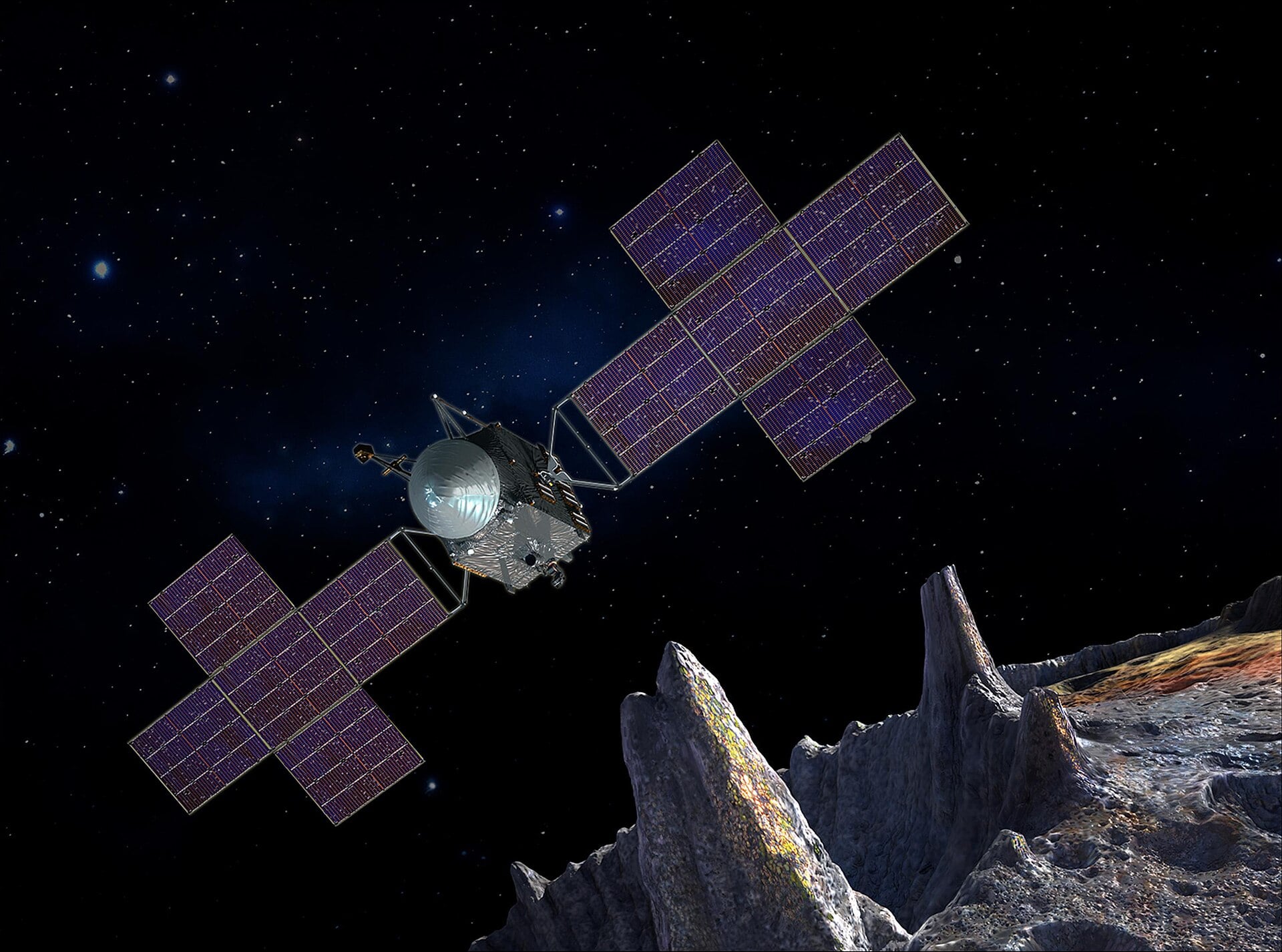
On May 15, 2026, NASA's Psyche space probe flew past Mars. It used Mars' gravity to gain speed and change direction. This helped it save fuel. The probe is now heading toward a metal-rich asteroid called 16 Psyche. The asteroid is in the main asteroid belt between Mars and Jupiter. The trip is 2.2 billion miles long. The probe uses special electric engines. These engines save fuel but are not strong enough for the whole trip. The Mars flyby gave the probe the extra speed it needed. 16 Psyche is about 140 miles wide. It is made of iron and nickel. Scientists think it may be the leftover core of a young planet. Crashes with other space rocks may have stripped away its outer layers. New studies show the asteroid is only 30 to 60 percent metal. The rest is rock. The probe will reach the asteroid in August 2029. It will orbit and study its surface. This may help scientists learn how rocky planets formed.
πŸ“– New Words
  • flyby β€” a flight past something, like a planet, without landing (飞袊)
  • gravity β€” the force that pulls things toward the center of a planet or star (ι‡εŠ›)
  • asteroid β€” a small rocky object that orbits the sun, mostly found between Mars and Jupiter (小葌星)
  • core β€” the center part of a planet or object (ζ ΈεΏƒ)
  • probe β€” a spacecraft sent to explore space and collect information (ζŽ’ζ΅‹ε™¨)
Learn all about the structure of the Earth here at National Geographic Kids! Join us as we explore the different layers - the crust, upper mantle, lower mantle, outer core and inner core...

Structure of the Earth!

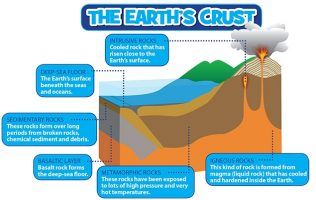
Get ready to dig deep and learn about the Earth! Scientists use seismic waves to study inside our planet. Seismic waves come from earthquakes, explosions, and ocean movement. There are two types: shear waves (cannot go through liquid) and pressure waves (can go through liquid and solid). These waves show Earth has five layers: inner core, outer core, lower mantle, upper mantle, and crust.

Inner Core Temperature: 5,000-6,000Β°C State: Solid Made of: iron and nickel

The inner core is a huge metal ball 2,500 km wide. It is very hot but stays solid because of strong pressure around it.

Outer Core Temperature: 4,000-6,000Β°C State: Liquid Made of: iron, nickel, sulfur, and oxygen

This liquid layer is 5,150 km deep. The movement of metals here creates Earth’s magnetic field.

Lower Mantle Temperature: 3,000Β°C State: Solid Made of: iron, oxygen, silicon, magnesium, and aluminum

The lower mantle is 670 to 2,890 km below the surface. It is solid rock, hot enough to melt but kept solid by pressure.

Upper Mantle Temperature: 1,400-3,000Β°C State: Liquid and solid Made of: iron, oxygen, silicon, magnesium, and aluminum

This layer goes up to 670 km deep. The lower part has both solid and melted rock. The upper part is stiffer because it is cooler.

Crust Temperature: About 22Β°C State: Solid Made of: Oceanic crust (iron, oxygen, silicon, magnesium, aluminum) and continental crust (granite and other rocks)

The crust is Earth’s thinnest layer. Continental crust is 8 to 70 km thick and mostly granite. Oceanic crust is about 8 km thick and mostly basalt.

Scientists think Earth is about 4.5 billion years old. They study rocks and meteorites to learn this.

πŸ“– New Words
  • seismic β€” relating to earthquakes or other movements of the Earth (εœ°ιœ‡ηš„)
  • mantle β€” the layer of the Earth between the crust and the core (εœ°εΉ”)
  • pressure β€” the force of something pushing on something else (εŽ‹εŠ›)
  • magnetic field β€” the area around a magnet or planet where magnetic force works (磁场)
  • meteorite β€” a rock from space that falls to Earth (ι™¨ηŸ³)
Check out these fascinating volcano facts with National Geographic Kids! What is a volcano? Why does it erupt? And where can you find the world's biggest?

17 explosive volcano facts!

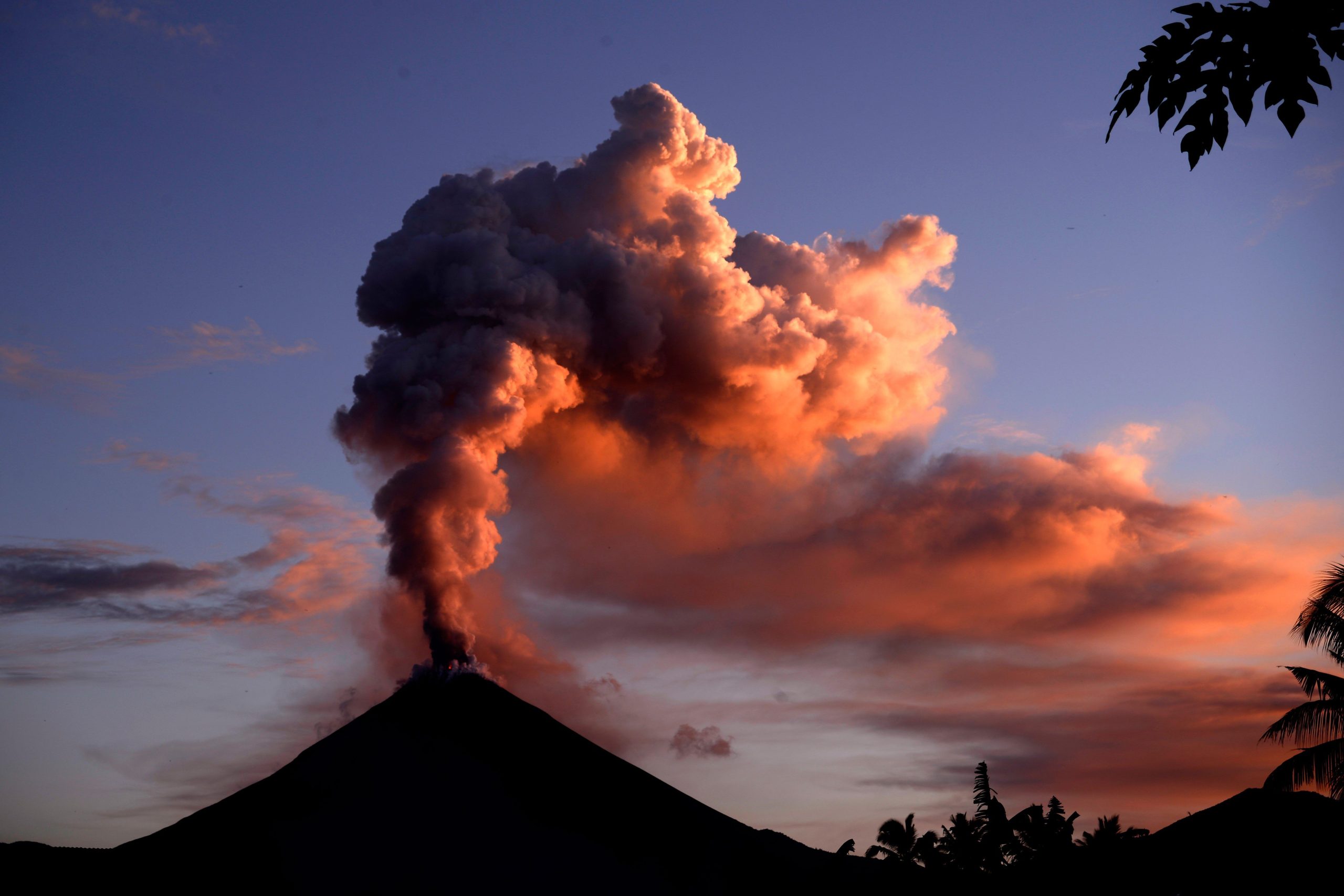
Here are some cool facts about volcanoes! A volcano is an opening in the Earth's surface. It lets hot gas, magma, and ash escape from inside the Earth. The word volcano comes from Vulcan, the Roman god of fire. Volcanoes are often found where tectonic plates meet. These plates are like puzzle pieces covering the Earth. Some volcanoes form over mantle plumes, which are super-hot areas of rock deep inside the Earth. About 350 million people live near active volcanoes. That is about one in every 20 people. Volcanoes can be active, dormant, or extinct. Active means it erupts often. Dormant means it is quiet now but could erupt again. Extinct means it will probably never erupt again. Volcanoes come in different shapes. Composite volcanoes are cone-shaped with steep sides. Shield volcanoes are wide with gentle slopes. Magma is hot liquid rock inside a volcano. When it comes out, it is called lava. Volcanoes can be on land, under the ocean, or under ice caps. Lava can reach 1,250 degrees Celsius. That is hot enough to melt a glass thermometer. The largest active volcano on Earth is Mauna Loa in Hawaii. It is 4,169 meters tall and last erupted in 2022. Volcanoes exist on other planets too. The biggest volcano in the solar system is Olympus Mons on Mars. In AD 79, Mount Vesuvius destroyed the town of Pompeii. Ash buried and preserved the town. Today it is a famous historical site. About 1,900 volcanoes on Earth are active. Most are on the Ring of Fire, a 40,000-kilometer area in the Pacific Ocean. The loudest sound ever recorded was from the Krakatau volcano in 1883. It released energy equal to 15,000 nuclear bombs. Volcanoes can create rich soil. Lava and ash break down into nutrients that help crops grow. Some birds, like Maleo birds, bury their eggs near volcanoes to keep them warm.

πŸ“– New Words
  • magma β€” hot liquid rock inside a volcano (岩框)
  • lava β€” hot liquid rock that comes out of a volcano (熔岩)
  • tectonic plates β€” large pieces of the Earth's surface that move slowly (ζž„ι€ ζΏε—)
  • dormant β€” not active now but could become active later (δΌ‘ηœ ηš„)
  • extinct β€” no longer active and unlikely to erupt again (η­η»ηš„)