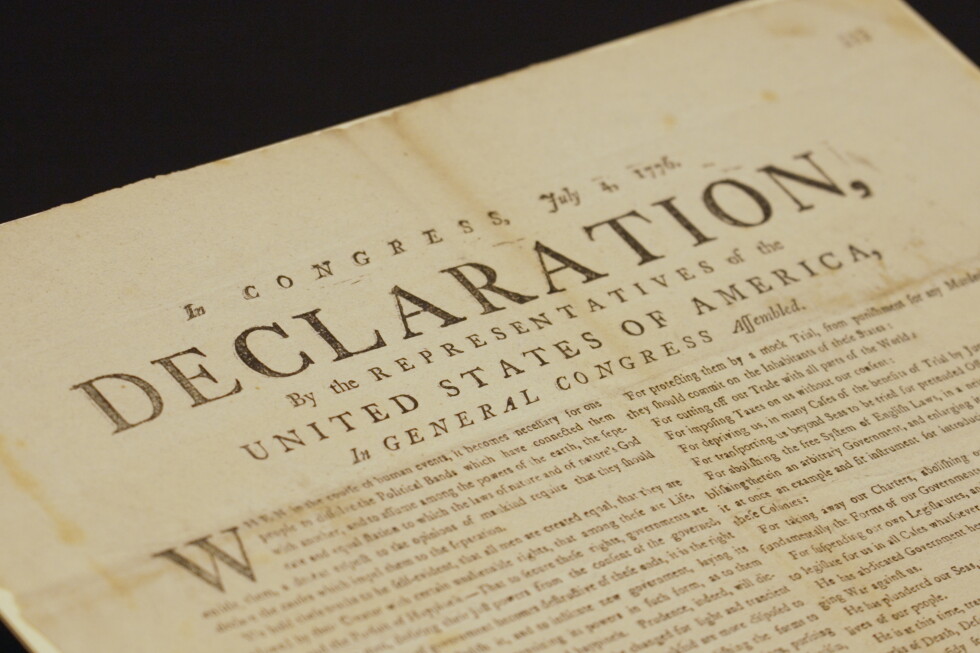
Rare Copy of Declaration of Independence Found in British Archives — Captured on a Ship in 1776
A volunteer at the UK National Archives stumbled upon a rare 1776 printing of the U.S. Declaration of Independence while cataloging letters from a Royal Navy captain. The document was found in the papers of the Dalton, an American privateer captured by the British on Christmas Eve 1776. Michael Scurr, a retired insurance executive who has volunteered for 11 years, was sifting through the captain's correspondence last May when he unfolded a paper labeled only as "another paper" and saw the word "Declaration" printed across the top. Researchers have since identified it as one of just 11 known copies of the so-called Exeter printing, produced in Exeter, New Hampshire, between July 16 and 19, 1776, to spread the news of independence after the original was signed on July 4. This copy is the only one found outside the United States. The document is significant not only for its age but because it was captured from a ship operating under the Continental Congress with orders signed by John Hancock. Amanda Bevan, head of the National Archives' project cataloging Royal Navy correspondence from the American Revolution, notes that while the public knows about the Continental Army's hardships at places like Valley Forge, little attention has been paid to Americans who went to sea to disrupt British trade and fight the Royal Navy. The discovery suggests how the declaration was used: Bevan believes the Dalton's captain would have read the declaration aloud to the crew, reminding them they were fighting for an ideal, not just personal grievances. The Dalton, an 18-gun privateer, was chased for seven hours by the 64-gun HMS Raisonnable and captured off Portugal. Its 120-man crew was imprisoned in Plymouth, England, under harsh conditions. Charles Hebert, a 19-year-old crew member, described hunger, illness, and punishment in his journals before being released in a prisoner exchange over two years later. Historians in the United States are also excited. Matthew Skic of the Museum of the American Revolution in Philadelphia calls the find "not just a document, it's an artifact" that provides a tangible link to the past. He adds that after 250 years, there are still discoveries to be made about the American Revolution.