World In Brief · Junior Edition
July 18, 2026
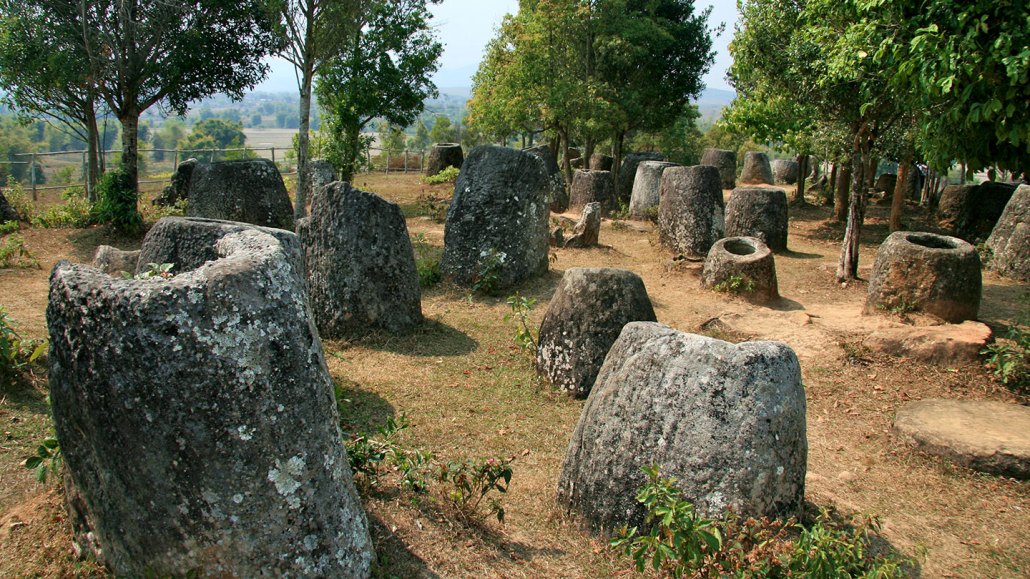
The Plain of Jars in Laos is a collection of thousands of large, ancient stone vessels. Local legend says they stored rice wine for giants. Some thought they may might once have stored food and water. Now researchers say they’re part of a vast burial complex. iannomadav/iStock/Getty Images Plus

The mystery of the ‘Plain of Jars’ in Laos may now be solved

In Laos, there is a place called the Plain of Jars. It has thousands of big stone jars. Local stories say giants used them to store rice wine. Some people thought they held food and water. Now scientists say the jars were used for burial. They found bones of at least 37 people inside one jar. The bones are over 1,000 years old. This jar is more than two meters wide. It is in a forest in northern Laos. Scientists think the jar was a burial site for many generations. People may have first put bodies in smaller jars. After the flesh came off, they put the bones in the big jar. This is called a secondary burial. The discovery helps solve a long mystery. Earlier explorers thought the jars stored food. But a French archaeologist named Madeleine Colani said they were for burial. New studies show she was right. Some jars also had ashes from burned bones. That shows later people used the jars for cremation. Scientists are still learning about the people who made the jars. They wonder where those people lived.
📖 New Words
  • archaeologist — A scientist who studies ancient people and objects from the past. (考古学家)
  • vessel — A container, like a jar or pot, used to hold things. (容器)
  • burial — The act of putting a dead body into the ground or a tomb. (埋葬)
  • ancestor — A family member from long ago, like a great-grandparent. (祖先)
  • cremation — The act of burning a dead body to ashes. (火化)
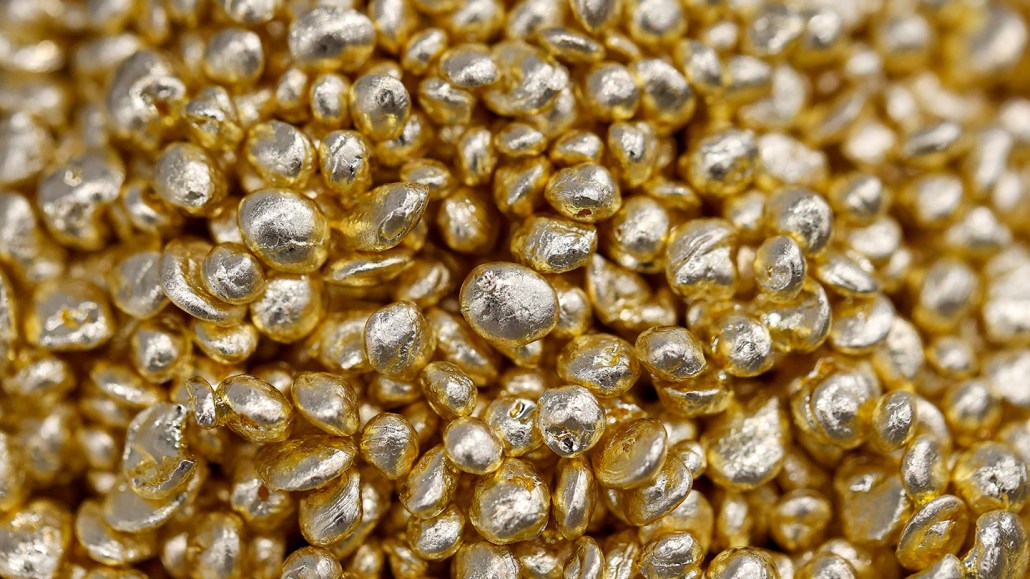
Unlike other metals, which tarnish in air, gold (pictured) doesn't react much with oxygen. Now scientists better understand why. Bloomberg Creative/Getty Images

Physics explains why gold doesn’t ‘rust’

Gold stays shiny forever. Other metals like steel and copper can rust or turn green. Scientists now know why gold does not rust. Rust happens when a metal meets oxygen. Gold atoms on the surface move into a new shape. This shape makes it hard for gold to react with oxygen. If gold atoms did not move, gold would start to rust in seconds. Researchers studied two common shapes of gold atoms. One shape is squares. The other shape is hexagons. Hexagons are worse at splitting oxygen. To split oxygen, hexagons must change back to squares. That slows down rust a lot. It makes oxidation a billion to a trillion times slower. This finding could help scientists make better catalysts. Catalysts speed up chemical reactions.

📖 New Words
  • oxidation — A chemical reaction where a substance combines with oxygen, often causing rust or tarnish. (氧化)
  • atom — The smallest unit of a chemical element, like gold or oxygen. (原子)
  • hexagon — A shape with six equal sides. (六边形)
  • catalyst — A substance that makes a chemical reaction happen faster. (催化剂)
  • tarnish — To become dull or discolored on the surface, often due to a reaction with air. (失去光泽)
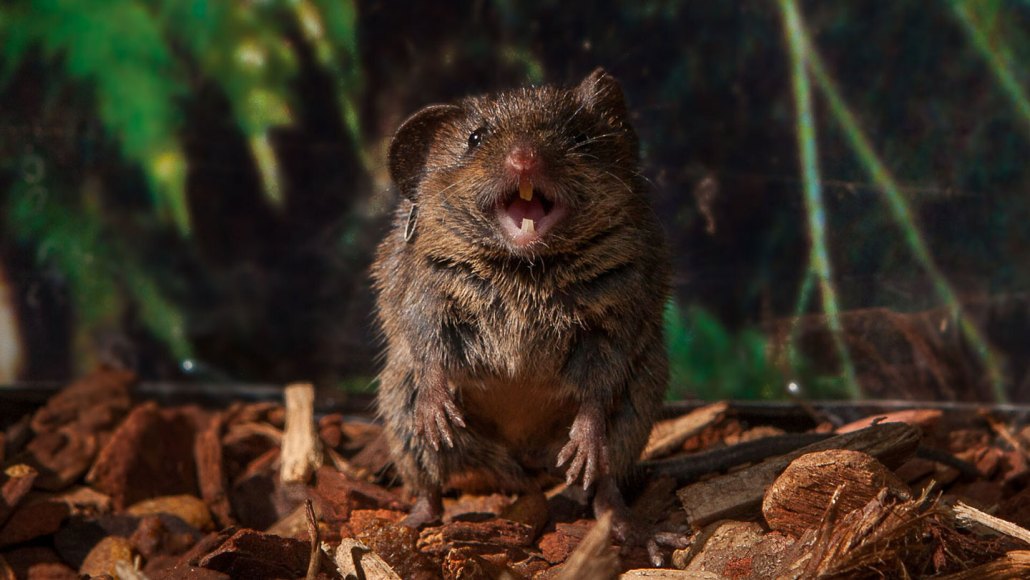
Singing mice (one shown) use inflatable sacs in their airways to create dramatic, whistling tunes. Cold Spring Harbor Laboratory

How 'Singing' Mice Make Their Tiny Tunes

Some mice can sing. They are called Alston's singing mice. They live in forests in Mexico and Central America. These mice make whistling sounds. They use small air sacs in their throats. The sacs are like balloons. When the mice blow air into them, they make music. The songs are fast and long. A mouse can sing about 100 notes in just 10 seconds. The songs help mice find friends and warn other mice to stay away. Scientists wanted to know how the mice sing. They studied the voice box of the mice. The voice box is a tube with a valve. When air goes through, the sac puffs up. If the sac is blocked, the mouse cannot sing. This shows the sac is very important. Other animals have air sacs too, but they do not use them to sing. The scientists are not sure how the sac makes the whistle sound. It might be like wind blowing past a car sunroof. Or it might be like a flute. The mouse song is special because the sac itself makes the sound. This is different from other animals. Learning about this helps us understand how animals talk to each other.

📖 New Words
  • sac — a soft, bag-like part of an animal's body (囊)
  • whistle — a high, clear sound made by blowing air (口哨声)
  • voice box — the part of the throat that helps make sounds (喉)
  • rodent — a small animal like a mouse, rat, or squirrel (啮齿动物)
  • inflate — to fill with air so something becomes bigger (充气)