World In Brief · Senior Edition
August 6, 2026
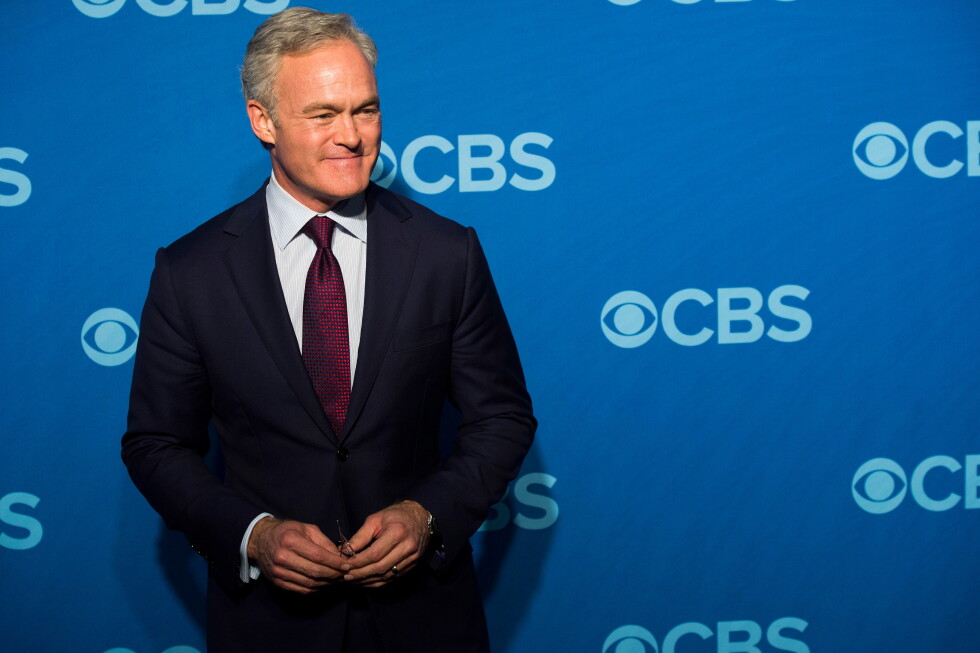
Sharyn Alfonsi and Scott Pelley, two correspondents recently ousted from "60 Minutes," will be moving from the newsroom to the classroom.

From '60 Minutes' to the Classroom: Veteran Journalists Become Teachers

Two well-known TV journalists, Scott Pelley and Sharyn Alfonsi, are trading the newsroom for the classroom. The former "60 Minutes" correspondents will be Journalists in Residence at Columbia Journalism School for the next academic year.

Pelley and Alfonsi lost their jobs at "60 Minutes" about two months ago. Their exits came during a big shakeup at CBS News, led by editor-in-chief Bari Weiss. The changes included replacing the show's executive producer, Tanya Simon, with Nick Bilton, who had little broadcast television experience.

The journalism school announced the appointments on Monday. In a part-time role, Pelley and Alfonsi will advise and mentor students, give lectures, and write for the Columbia Journalism Review.

Jelani Cobb, the dean of Columbia Journalism School, said he reached out to Pelley the day after Pelley was fired in early June. Cobb told the AP that he is always looking for talented people who become available. "The caliber of their investigative work was just unparalleled," he said. "'60 Minutes' is the preeminent investigative broadcast news show for a reason."

The decision to hire them was made quickly, but the school kept it quiet until closer to the start of the school year.

In a statement, Alfonsi called the new job "an extraordinary privilege, especially at a time when deep, rigorous and fearless reporting has never been more vital." She spent more than a decade reporting for "60 Minutes" before the show did not renew her contract. She said she is excited to work with young journalists "who are eager to ask the tough questions that hold power accountable."

Pelley spent 37 years at CBS News, including 27 at "60 Minutes," and also anchored the "CBS Evening News." He said this is "a critical time for a free press." He added, "Columbia is leading the way in training the next generation of great journalists."

Later this year, on November 11, Pelley and Alfonsi will take part in a public conversation led by Dean Cobb. According to Cobb, they will talk about the stories that shaped their careers, the lessons they have learned, and how they handled ethical challenges.

Meanwhile, "60 Minutes" has announced a new set of correspondents for its 59th season. But for two of its most experienced reporters, the next big story may be the future of journalism itself.

Think Critically
Do you think experienced journalists like Pelley and Alfonsi are more valuable as teachers and mentors than as reporters? Use evidence from the article and your own ideas to explain your opinion.
See It Differently
How might the story look different from the perspective of Bari Weiss or Nick Bilton, the people making the changes at CBS News? What reasons might they have for wanting a new direction at '60 Minutes'?
Write About It
Imagine you are a journalism student at Columbia. Write a short letter to Pelley or Alfonsi asking them one question about their careers, and explain why that question matters to you.

Cambridge risks losing 'unbelievable talent' as PhD funding drops

The University of Cambridge is warning that it could lose 'unbelievable talent' because funding for PhD students is shrinking sharply. Deborah Prentice, who became the university's vice-chancellor in 2023, called PhD students 'the lifeblood' of Cambridge's research and innovation. She said the money available from research councils — the government-funded bodies that pay for academic research — has 'dropped off significantly.' The warning arrives at the same time as plans to create a UK 'Silicon Valley' between Oxford and Cambridge, a project that would depend on a steady flow of highly trained researchers and inventors.

PhD students are advanced researchers. They work on the day-to-day experiments and studies that lead to new discoveries, from medical treatments to computer technology. They are also the next generation of scientists, engineers, and entrepreneurs. Without enough funding, many brilliant students may choose to study in other countries or leave academia entirely. That would be a huge loss for Cambridge and for the UK's place in the global race for knowledge.

Prentice didn't give exact numbers, but her warning suggests the cuts are serious. She is arguing that PhD programs are not just a luxury for the university — they are essential to the country's future. The planned 'Silicon Valley' between Oxford and Cambridge makes the timing even worse. If the UK wants to become a world leader in technology, it needs to keep the people who can make that happen.

Think Critically
Do you think the British government should spend taxpayer money to fund PhD research, even when budgets are tight? Use evidence from the article and your own ideas to explain your position.
See It Differently
Imagine you are a PhD student at Cambridge who relies on a research council grant. How might your feelings about this news be different from the vice-chancellor's? What specific worries would you have?
Write About It
Write a short letter to the UK government from the University of Cambridge, arguing for more PhD funding. Include one emotional appeal and one factual reason why it matters.

UK’s First ‘Super-University’ Is Coming: What That Means for Students

Imagine two universities joining forces to create one massive institution with over 50,000 students. That’s exactly what’s happening in the UK this September. The University of Greenwich and the University of Kent are merging to form the UK’s first “super-university.” The new group is called the London and South East University Group, or LASEUG for short. It will have campuses in London, Medway, and Kent, making it the third largest higher education institution in the UK.

The official launch date is 7 September, exactly one year after the plans were first announced. The Department for Education already gave the green light a few months ago. But here’s a twist: even though the two universities are merging, they will keep their own names and identities. Students will still attend, study, and graduate from their chosen university. The big change is that staff from both universities will now be employed by the same umbrella group.

The leader of this new group is Professor Jane Harrington, who is currently the vice-chancellor of the University of Greenwich. She said that the team has been working hard all year to build a brand-new university model that has never been tried before. She says the group is starting with a smooth transition, a strong senior team, and a clear direction so they can become a successful super-university.

The two universities have been working together for over 20 years already. They believe this merger is a “blueprint for others to follow.” It’s also meant to give them a solid financial foundation. That matters because universities in the UK are dealing with serious money problems. The Office for Students, which regulates higher education in England, has warned that 24 universities could go bankrupt within a year. It also said 45% of higher education providers might be in debt by 2025-26.

In May, MPs on the education select committee said the sector was facing a financial crisis, and there was a real chance a university could close. Many schools have already cut jobs, sold buildings, or dropped courses. The committee warned that the consequences would be severe for students, staff, local economies, and the UK’s global academic reputation.

A government spokesperson welcomed the merger, saying it will create a strong combined institution that can reinvest in students and support the economy of the south east. They said the government is committed to making sure universities have a secure future and are expected to take smart decisions to stay sustainable. They also mentioned steps already taken, like making the Office for Students focus more on tracking the financial health of universities.

This merger is part of a bigger trend. Earlier this year, King’s College London and Cranfield University also announced plans to merge in 2027. So while the idea of a “super-university” may sound futuristic, it’s becoming a real solution for schools trying to survive tough times. The big question is: will other universities follow this blueprint, and what will that mean for students?

think critically
Do you think merging universities is a smart way to solve financial problems, or could it create new issues for students? Use evidence from the article to support your opinion.
see it differently
Imagine you are a student at one of these universities. How might your experience change if your school merges with another, even if both names stay the same? What would you want to know before it happens?
write about it
Write a short news article announcing a merger between two fictional schools in your town. Explain why they are merging and how students might be affected.
✻ ✻ ✻
📝 Read & Respond
Read. Think. Write.
1 Comprehension Check
1. Based on "From '60 Minutes' to the Classroom: Veteran Journalists Become Teachers", what is the main idea of this article? Write one sentence.
2. Based on "Cambridge risks losing 'unbelievable talent' as PhD funding drops", what is the main idea of this article? Write one sentence.
3. Based on "UK’s First ‘Super-University’ Is Coming: What That Means for Students", what is the main idea of this article? Write one sentence.
4. What evidence does the article provide to support its main argument?
2 Vocab Builder
WordDefinition / Sentence
...
Write a word from this week's reading that was new to you:
...
Use it in a sentence:
...
Write another word and its definition:
...
Use it in a sentence:
3 Critical Thinking
Do you think experienced journalists like Pelley and Alfonsi are more valuable as teachers and mentors than as reporters? Use evidence from the article and your own ideas to explain your opinion.
4 See It Differently
How might the story look different from the perspective of Bari Weiss or Nick Bilton, the people making the changes at CBS News? What reasons might they have for wanting a new direction at '60 Minutes'?
5 Quick Write
Imagine you are a journalism student at Columbia. Write a short letter to Pelley or Alfonsi asking them one question about their careers, and explain why that question matters to you.