World In Brief · Senior Edition
August 8, 2026
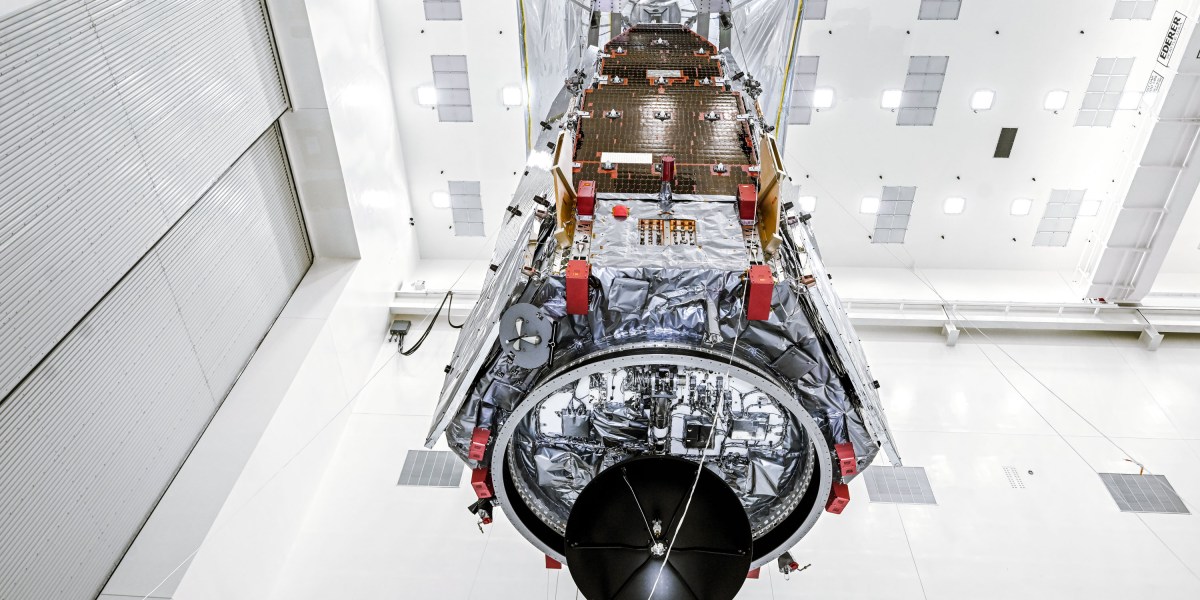
The Nancy Grace Roman Space Telescope, set to launch at the end of August, is uniquely well placed to help us spot any dangerous rocks heading our way.

This new space telescope hunts dark energy — and killer asteroids

At the end of August 2026, NASA plans to launch the Nancy Grace Roman Space Telescope from Kennedy Space Center in Florida. Its main job is to explore dark matter and dark energy, the invisible ingredients that help shape our universe. But the telescope may also become a planetary guardian, helping spot asteroids that could threaten Earth.

Roman is named after NASA’s first chief astronomer. It carries a 300-megapixel infrared camera with an extremely wide field of view, about 100 times wider than the Hubble Space Telescope’s. That means it can scan huge patches of sky at once, discovering new planets, exploding stars, and more than a billion galaxies. While it stares deep into the universe, it will also look through our solar system, making it uniquely good at catching space rocks.

Roman wasn’t built for planetary defense. But last summer, when the mission faced possible funding cuts, scientists suggested emphasizing this extra skill. A proposal to be presented at the Europlanet Science Congress in The Hague explains that Roman’s wide field of view and infrared vision could detect small asteroids about 60 feet long, similar to the meteor that exploded over Chelyabinsk, Russia in 2013, injuring 1,500 people. That kind of object isn’t a global killer, but it can still cause real damage.

There’s a catch: Roman’s software normally discards moving streaks in its images because they may be cosmic rays or glitches. Astronomers would need to adjust the software and study those streaks to identify asteroids. Roman won’t replace dedicated asteroid hunters, but it can work with other telescopes. The James Webb Space Telescope can zoom in on a single asteroid, but Roman’s huge field of view lets it examine many suspicious objects quickly. If one seems dangerous, other telescopes can follow up.

Planetary defenders mainly worry about asteroids 460 feet or larger. About 25,000 of those are estimated to have near-Earth orbits, and more than half haven’t been found. A hit from one could destroy a city. There are also roughly 230,000 asteroids around 165 feet wide near Earth, and fewer than 10% have been located. They could cause damage similar to a large atomic bomb, though without the radiation. We might deflect or vaporize such threats, but only if we know where they are first. Ground telescopes can’t see everything because Earth’s atmosphere gets in the way.

That’s why NASA is also launching the NEO Surveyor space telescope in 2027. Positioned between Earth and the sun, it will use infrared light to find many elusive asteroids, including up to 90% of city-killer-sized near-Earth objects. It will work alongside Roman, JWST, and ground-based observatories like the Vera Rubin Observatory in Chile, which is expected to discover 89,000 near-Earth asteroids.

Here’s how the team could operate: If NEO Surveyor spots a few potentially dangerous asteroids but can’t pin down their orbits, Roman can scan a wide patch of sky and improve the precision in just days. Because Roman sits in a different part of space, its viewing angle helps narrow orbits even faster. Then other telescopes, such as JWST, can study the one object that still looks risky. Roman’s infrared scope can also estimate an asteroid’s size and tell whether it’s rocky, carbon-rich, or metallic. As one NASA official said, Roman will offer vast opportunities for additional science. In this case, it might also help save Earth.
Think Critically
Do you think it’s wise to use a telescope designed for dark energy research as part of planetary defense? Why or why not? Use examples from the article to support your opinion.
See It Differently
How might having a telescope with two jobs change the way space agencies decide which missions to fund? What if scientists had to choose between learning about the universe and protecting Earth?
Write About It
Imagine you are a scientist writing a short proposal to convince lawmakers to keep funding the Roman telescope. What two reasons would you give, and what evidence from the article would you use?
To reach a deal with Iran that reopens the economically vital Strait of Hormuz, President Donald Trump may need to do something out of character — compromise.

Trump might have to give in to make a deal with Iran over the Strait of Hormuz

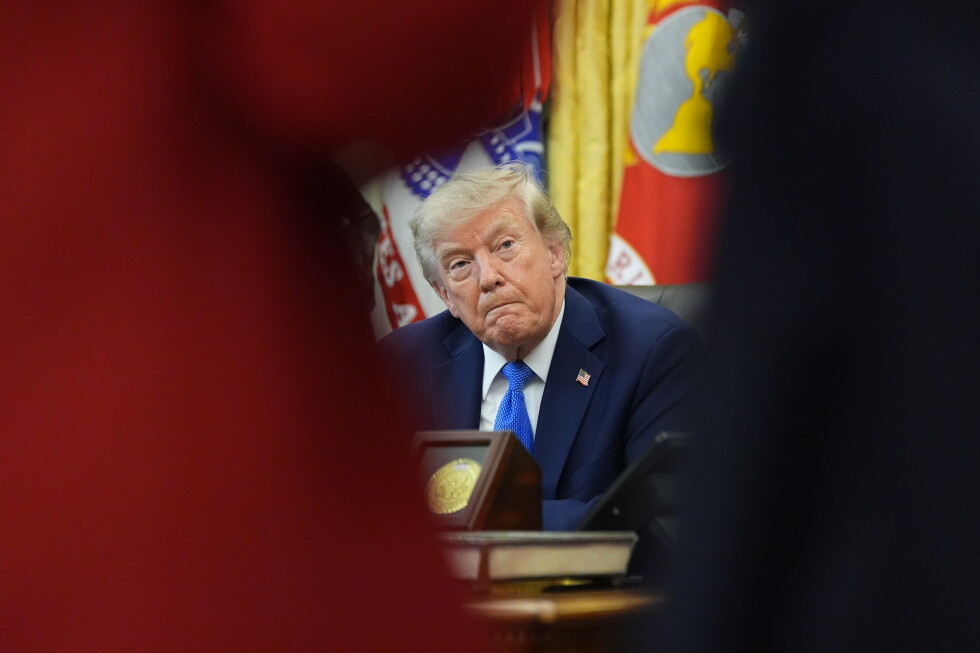
To get a deal with Iran that reopens the Strait of Hormuz, President Donald Trump might have to do something that doesn't come naturally to him: compromise.

That's a big deal for Trump, who says his poll numbers are great, the economy is fine, and the U.S. military has plenty of weapons — even though the Iran war he started with Israel more than five months ago has drained key supplies. He sees the world in terms of winners and losers, and giving in would make him look like a loser, says Eliot Cohen, a former State Department official under George W. Bush.

The argument is over who controls the Strait of Hormuz, a narrow waterway between Iran and Oman that about 20% of the world's oil normally passes through. Both sides say a deal is close, but the Trump administration has ruled out any agreement that would let Iran control the strait or charge fees. Iran, however, wants some measure of control. It says the strait won't go back to being an open international waterway like it was before the war. Even after thousands of U.S. strikes, Iran can still fire drones and missiles at ships, which gives it a chokehold on commercial shipping.

Cohen says giving ground to Iran would be tough for Trump, even if the conflict keeps gas prices high and hurts Republicans in the November midterm elections. But David Schenker, who worked in the State Department during Trump's first term, thinks the economic pressure might actually push Trump to compromise. "There will be a lot of spin both ways," he says, "but my guess is that the president has tipped his hand as to the urgency for him of resolving the crisis. This is a concession he may very well be willing to make."

Trump hasn't admitted much about the war's costs. This week he posted on social media that the U.S. military still has "massive amounts" of weapons and that more are being made. He even threatened jail time for people who leak information about weapons stockpiles. That came after a Washington Post story said he was frustrated with Defense Secretary Pete Hegseth over shrinking inventories of advanced weapons. A senior administration official said there was a "robust and healthy" discussion about Iran at Camp David, but not a "knock-down, drag-out fight." The official spoke anonymously.

Experts say the U.S. is running short on things like advanced missile interceptors that protect troops from Iranian attacks. The Center for Strategic and International Studies, a Washington think tank, has reported declining inventories based on budget documents and other public information. When asked, Trump told reporters that "we need more all the time." He said some munitions are in "virtually unlimited supply" and others are "a little bit tighter," but he didn't give specifics. He insisted "we're in great shape" but "we always want more."

Hegseth was on Capitol Hill this week, meeting with Republican senators to ask for billions of dollars in extra Pentagon spending as part of a big GOP budget package. Sen. Mark Kelly, an Arizona Democrat and former Navy pilot, said the weapons shortfall is the result of a war without a clear goal beyond striking more than 14,000 targets. "If you knew what the goal is, maybe the target list would have been 500 targets," he said. He added that the Pentagon wants "billions and billions of dollars to fix their self-inflicted problem."

Trump has also claimed his poll numbers are the best they've ever been, citing employment and the "Denuclearization of Iran." But about two-thirds of U.S. adults say the war with Iran hasn't been worthwhile, according to a late July poll by the Associated Press-NORC Center for Public Affairs Research. That includes most Democrats and independents, plus about 37% of Republicans. On jobs, the U.S. had a record nearly 159 million jobs in June, but job growth has slowed a lot in Trump's second term.

Trump keeps saying the Strait of Hormuz is open to commercial shipping. He said Thursday it's "sort of open right now" and pointed to the Navy's blockade of Iranian ports. But he also admitted Iran can still cause trouble: "They can always shoot something, they always have something or drop a mine. And if you have one mine sitting out there, you sort of mess things up because people don't want to take their billion-dollar boats and accidentally get hit by a mine." At least two ships were hit in the strait in the past week, and several others reported near misses or warnings from groups claiming to represent Iran's Revolutionary Guard, according to maritime data company Lloyd's List Intelligence. Vessel traffic went up to 84 transits last week from 45 the week before, but that's still far below the 700-plus transits in a normal pre-crisis week.

Now both U.S. and Iranian officials say they're close to a deal to reopen the strait. The U.S. military insists the strait is already open via a route it helps oversee near Oman's coast. The potential deal would be a temporary fix: ships could enter the Persian Gulf through an Iranian-controlled route and exit through an Omani-controlled route. The Trump administration has said it strongly opposes any arrangement where Iran would charge fees. According to an Associated Press report, any temporary routes won't have tolls or other impediments.

So the big question is whether Trump can accept a compromise. It might be the only way to get a deal — but it could also make him feel like a loser. And for a president who divides the world into winners and losers, that's a hard pill to swallow.

Think Critically
Do you think Trump should compromise with Iran to reopen the Strait of Hormuz, even if it means giving Iran some control? Use evidence from the article to support your view.
See It Differently
Imagine you are an Iranian leader. Why might you insist on keeping some control over the strait? How would you justify that to the world?
Write About It
Write a short speech from President Trump to the American people explaining why he has decided to either accept or reject a compromise deal with Iran. Make sure to address the concerns about weapons, gas prices, and image.
✻ ✻ ✻
📝 Read & Respond
Read. Think. Write.
1 Comprehension Check
1. Based on "This new space telescope hunts dark energy — and killer asteroids", what is the main idea of this article? Write one sentence.
2. Based on "Trump might have to give in to make a deal with Iran over the Strait of Hormuz", what is the main idea of this article? Write one sentence.
3. What evidence does the article provide to support its main argument?
2 Vocab Builder
WordDefinition / Sentence
...
Write a word from this week's reading that was new to you:
...
Use it in a sentence:
...
Write another word and its definition:
...
Use it in a sentence:
3 Critical Thinking
Do you think it’s wise to use a telescope designed for dark energy research as part of planetary defense? Why or why not? Use examples from the article to support your opinion.
4 See It Differently
How might having a telescope with two jobs change the way space agencies decide which missions to fund? What if scientists had to choose between learning about the universe and protecting Earth?
5 Quick Write
Imagine you are a scientist writing a short proposal to convince lawmakers to keep funding the Roman telescope. What two reasons would you give, and what evidence from the article would you use?