World In Brief · Junior Edition
August 27, 2026
"Gus" The T. rex Fetches A Staggering $50.1 Million At Auction has 35 comments.

Gus the T. rex Sells for a Huge $50.1 Million

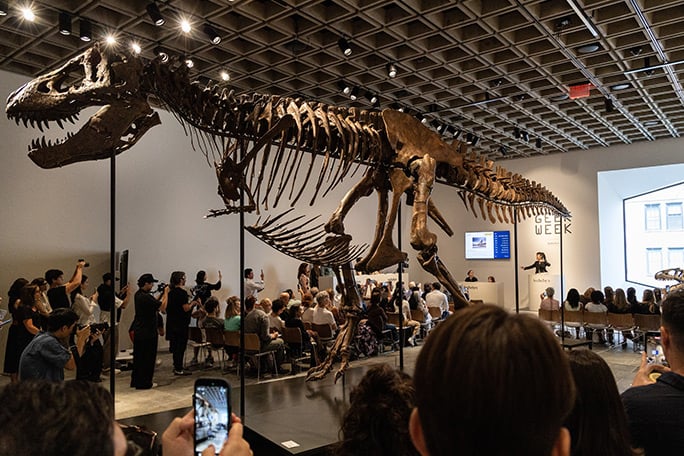
A T. rex skeleton named Gus has been sold for a record-breaking $50.1 million at an auction in New York. This happened on July 14, 2026. The sale came after a very close bidding fight that lasted 10 minutes. The final price was much higher than the expected $20 to $30 million. It also broke the old record for a dinosaur fossil, which was $44.6 million for a Stegosaurus named Apex.

Gus was found by chance in 2021. A team of fossil hunters was finishing a dig on a cattle ranch in South Dakota. They decided to explore a new area on a whim. Within hours, they found a toe bone from the T. rex. Over the next three summers, they dug up the rest of the bones. Then, they spent three more years cleaning and putting the skeleton together.

The skeleton was named after the ranch owner, Gary Gus Licking, who passed away during the dig. Gus is one of the biggest and most complete T. rex fossils ever found. It stands 12.5 feet tall and is 38 feet long. It has 183 bones, which is about 61 percent of the full skeleton. By weight, it is up to 80 percent complete. Gus's real skull was so heavy that the auction house used a light copy on the skeleton. The real skull was shown in a separate glass case.

Gus has some very rare parts. It has 30 of its 32 belly ribs, which are called gastralia. These bones are usually not preserved in fossils. Gus also has healed breaks and bite marks from another T. rex. These marks show some of the hard times the dinosaur faced in life.

We do not know if scientists can study Gus. The buyer chose to stay unknown. This makes researchers unsure where the fossil will go. But there is hope. Some other buyers of famous fossils have lent them to museums. Scientists hope the new owner will do the same. Still, this sale has started a big debate. Researchers worry that very high prices will lead more fossils to be kept in private homes, where they cannot be studied or seen by the public.

New Words: auction — a public sale where people bid to buy items — 拍卖 estimate — a guess about the price or value of something — 估价 replica — an exact copy of something — 复制品 preserved — kept safe from damage or decay — 保存 anonymous — with a name that is not known — 匿名的
📖 New Words
  • auction — a public sale where people bid to buy items (拍卖)
  • estimate — a guess about the price or value of something (估价)
  • replica — an exact copy of something (复制品)
  • preserved — kept safe from damage or decay (保存)
  • anonymous — with a name that is not known (匿名的)
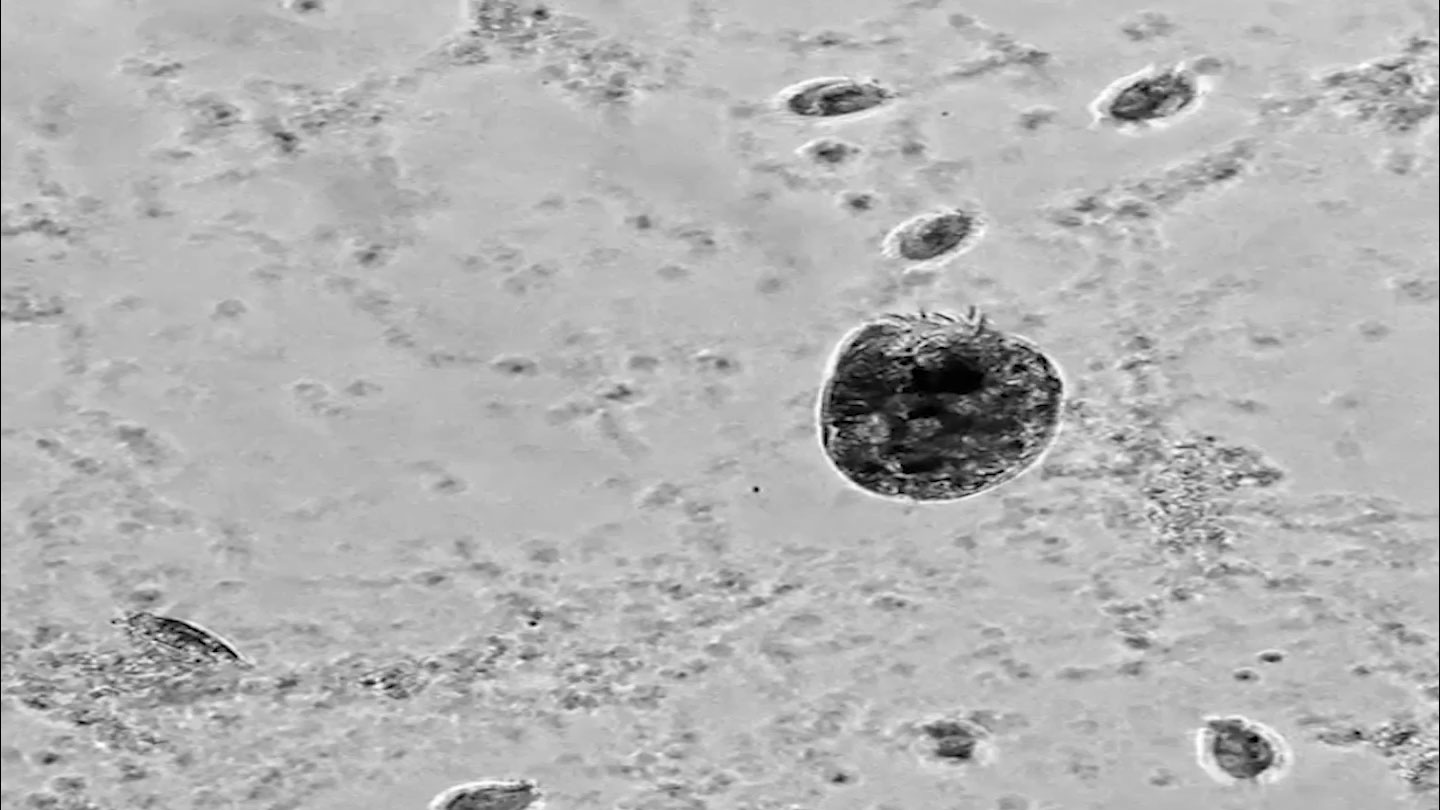
A single-celled life form named Euplotes gigatrox sometimes transforms into a supergiant that eats its regular-size siblings. Ben T. Larson

This tiny creature can turn into a 'Hulk' and eat its own family

Scientists found a tiny creature that can change into a giant. It is a single-celled life form called Euplotes gigatrox. It looks a bit like a bug. Normally, it eats bacteria and other small germs. But sometimes, a few of these creatures grow very big. They become more than twice their normal size. When they grow big, they turn into cannibals. That means they eat their own kind. They eat their smaller brothers and sisters. Scientists are not sure what makes them change. But it happens when there is lots of food. A scientist named Ben Larson found these creatures. He scraped gunk from a filter at an aquarium. The aquarium is in Curaçao, an island in the Caribbean Sea. The change happens in steps. First, the cell gets a big mouth. Then, it runs around very fast. At first, it is not good at catching others. But once it catches a sibling in its big mouth, its whole body changes. It grows into a huge cannibal giant. The normal-size cells can walk and swim. The giants can only walk in circles. The giants can shrink back to normal size. They do this by splitting in a strange way. Normal cells split once a day. Giants can make nine normal-size babies in one day. Over five days, they can make up to 16 babies. Each time a giant splits, it gets smaller. Finally, it returns to normal size and acts normal again. Up to 42 percent of the creature's genes are involved in this change. Learning how these creatures change may help us understand how simple life forms do complex things. It might even help us learn how animals with many cells first appeared.

📖 New Words
  • microbe — A very tiny living thing that you can only see with a microscope. (微生物)
  • cannibal — A creature that eats others of its own kind. (同类相食者)
  • supergiant — Much bigger than the normal size of something. (超级巨人)
  • transform — To change completely in form or appearance. (转变)
  • offspring — The babies or young of a person, animal, or plant. (后代)
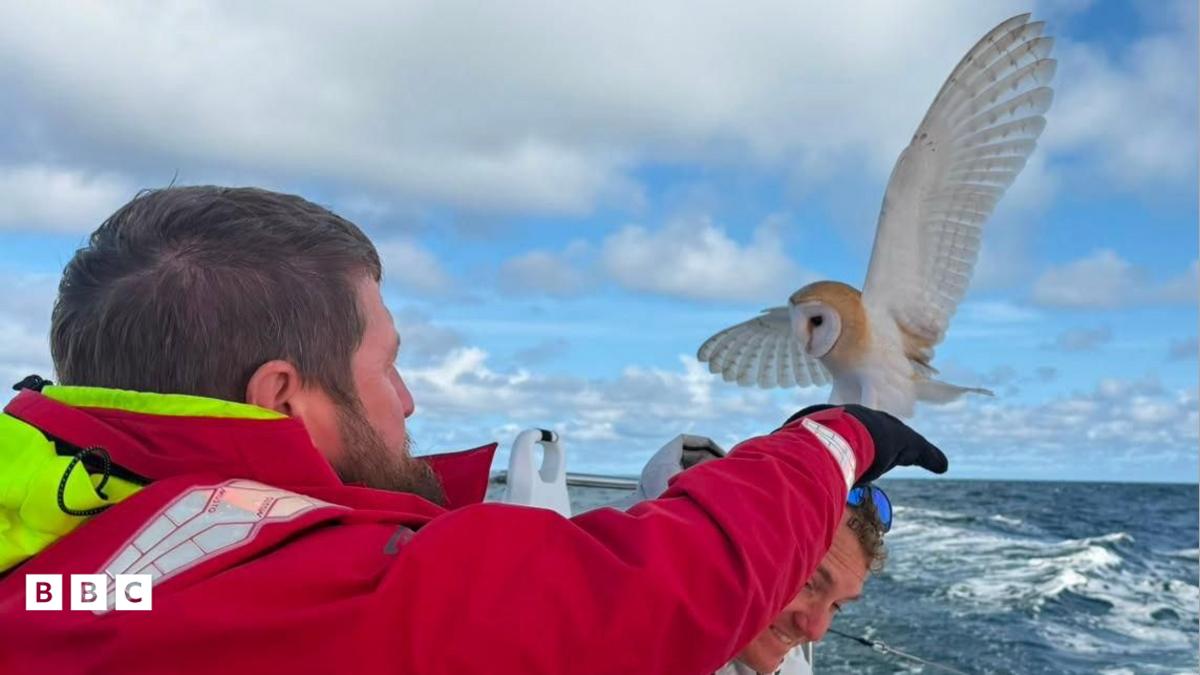
Little Reg was saved by an Army crew after being found about 70 miles from shore.

Tiny Owl Saved After Big Sea Adventure

A small barn owl had a very big adventure. Barn owls usually live on farms or in open fields. But this owl was found about 70 miles from land. That is very far out at sea.

Some British Army soldiers saw the owl during a sailing race. The owl looked very tired. It tried to land on their boat many times. It even fell into the water. At last, it landed on the deck. The soldiers picked it up and put it in a box. They named the owl Little Reg.

Little Reg stayed on the boat for 24 hours. The soldiers kept it safe and warm. Then, a lifeboat crew came to help. They took Little Reg to the RSPCA East Winch Wildlife Centre. That is a place where hurt animals get better.

One soldier named Mark Petherbridge said, "We saw it behind the boat. It was clearly tired. It flew alongside and tried to find a place to land. It fell in the water a couple of times. Then it collapsed on deck, so we picked it up."

A conservation officer thinks Little Reg was sleeping on a fishing boat. That boat carried the owl far out to sea. Now, Little Reg is safe at the wildlife centre. The staff there say the owl is actually a girl. She has already eaten a mouse. They hope she will get better and go back to the wild.

New Words:

conservation — the act of protecting animals and nature — 保护

exhausted — very, very tired — 精疲力竭的

rescued — saved from danger — 获救的

collapsed — fell down because of weakness — 倒下

released — set free — 释放

📖 New Words
  • conservation — the act of protecting animals and nature (保护)
  • exhausted — very, very tired (精疲力竭的)
  • rescued — saved from danger (获救的)
  • collapsed — fell down because of weakness (倒下)
  • released — set free (释放)