World In Brief · Senior Edition
August 27, 2026
By replicating the stickiness of arachnids’ traps, biologists are unlocking a massively efficient way to measure nature.

Welcome to the spiderverse, a world measured through webs

Counting the creatures in the world around us is critical for a raft of conservation efforts. It helps scientists gauge biodiversity, track migration, and spot invasive species. That census-taking, though, often requires humans to tabulate what they see, trap, or otherwise sense—a potentially laborious, costly process that can still leave gaps.

But developments over the last decade have revolutionized eco-surveillance. Biologists have tapped into sequencing technology to analyze environmental DNA, or eDNA—genetic material shed by living things. Samples collected from scat, soil, water, and air have opened up a new avenue scientists can use to monitor endangered species and detect invasive ones before anyone can even lay eyes on them.

More recently, they’ve uncovered an eDNA gold mine: spiderwebs. The naturally sticky stuff traps material from its arachnid creators, crumbs from their suppers, and, crucially, bio-detritus like saliva and pollen from nearby plants and animals. Every living thing, it seems, sheds copious DNA all over the place, including into the air, and webs then easily ensnare it. “It’s probably one of the best substrates we’ve used and tried to date,” says Joshua Newton, a molecular ecologist at Curtin University in Perth, Australia, who’s sampled flowers, streams, hollows of dead trees, and even filters on moving cars to study vertebrate populations.

Newton recently compared the biological diversity in spiderwebs with that found in other sources—including vegetation swabs, water, soil, and a fan outfitted with a filter—near a zoo and wildlife sanctuary outside Perth. Each had its obvious strengths: The vegetation swabs revealed more forest mammals, and the water samples identified more fish. But no passive tool matched spiderwebs’ ability to ID vertebrates, echoing results from a similar study conducted in France.

Here’s where things get sticky: To gather meaningful data, they had to destroy about 40 webs. “It kind of goes against everything that we’re trying to do if we’re collecting the home of an organism,” Newton says.

Fortunately, his research caught the attention of Angela McGaughran, a genomicist at New Zealand’s University of Waikato. She bought a bag of faux webs from her local Halloween store, wrapped a few coat hangers, and hung them outside. The synthetic material snagged eDNA from nearby cows and sheep, as well as from exotic birds at a nearby aviary. It also detected fungal spores better than real webs—a boon for plant pathologists watching for agricultural threats. Her group is now developing larger experiments to see whether artificial webs can unlock a cheap and ruthlessly efficient way to mimic spiderwebs’ DNA-snagging superpowers anywhere and everywhere.

thinkCritically
Think Critically: The article notes that collecting real spiderwebs destroys the homes of the spiders. Do you think the benefits of using spiderwebs for biodiversity tracking outweigh the harm to individual spiders? Why or why not? Use evidence from the article to support your opinion.
seeItDifferently
See It Differently: How might the use of artificial webs change the way we view spiders in nature? Could this technology make us appreciate spiders more, or might it reduce our reliance on them and thus their importance in ecosystems? Consider the role of spiders as natural 'sensors' in the environment.
writeAboutIt
Write About It: Imagine you are a scientist testing artificial webs in your own backyard. Write a short journal entry describing what you set up, what you hope to find, and what you might do if you discovered DNA from an unexpected animal.
LLMs need vastly more data than children to learn language. Understanding why could help us create more efficient models—and reveal more about developing minds.

Kids outlearn AI—and we still don’t know why

People have been talking to each other for at least 100,000 years, as far as we can tell. And in all that time, there was only one thing in the world that could learn a human language to perfect fluency: a human child. Now there are two.

Just four years after ChatGPT came out, many of us take for granted that we can chat naturally with our phones or computers. AI models like Claude, DeepSeek, and OpenAI’s GPT are so fluent and flexible that they can convincingly pass as human. But there’s a catch: Teaching a computer to use human language still takes an absurd amount of data. An AI language model can easily churn through a hundred thousand times more words than a person will hear in their whole life—and way more than a child hears by their first birthday, when they usually start to pick up language.

“The progress recently has been amazing,” says Michael C. Frank, a cognitive scientist at Stanford University, about AI models. “But we still have to burn down a forest and scrape the entire sum of all human knowledge to re-create this milestone that happens in our living rooms over the course of a year.”

This huge gap between kids and machines is called the data efficiency gap. And it raises a fascinating question for cognitive scientists and a challenge for AI builders: How is it that kids can still outperform the most linguistically sophisticated machines ever made?

Finding answers matters for both AI research and cognitive science. For the past decade, language models have mostly gotten better by getting bigger. Meta’s open-weight LLM Llama 3.1, released two years ago, chewed through 15 trillion tokens (word-like chunks of language) in pretraining—the main step of training a model before it’s fine-tuned for a specific task, like being a chatbot. Frontier models could be pretraining on 10 times more data, says Ethan Gotlieb Wilcox, a cognitive scientist and linguist at Georgetown University. But there’s only so much internet to train on, and eventually—perhaps as early as the 2030s—the well of easily available data could run dry.

Kids show that it might be possible to learn more with less. A lot less. A preteen raised in a language-rich home might have heard around 100 million words. Add reading and writing, and you could boost that to maybe 300 million words by age 20.

The difference in scale is something you can only really explain with an analogy. “Claude has seen the amount of language that an entire city will experience in one generation,” says Wilcox. If you printed out all the words used to train a modern AI model, the stack of paper would reach past the International Space Station. The human preteen’s 100 million words, meanwhile, would stack up just 20 meters. And we can get by with far less than that.

By reverse-engineering how kids learn, scientists hope to create more data-efficient AI models, which could help with everything from training AI on video to building chatbots for minority language communities. Testing ideas about human learning in machine models could also settle long-standing questions about language and children’s developing minds. Are we born with a language instinct, or could a child learn language purely from experience? Is the way we process language a quirk of our biology, or does it reflect universal rules about how languages can be used and learned?

The essential elements

Most of us realize language is hard only when we try to learn a new one after childhood. The past perfect tense, rolled r’s and nasal vowels, the genitive case, phrasal verbs, grammatically masculine tables and feminine spoons—many are the instruments of linguistic torment for the adult learner. But learning our mother tongues is usually effortless. Toddlers typically start producing grammatically correct sentences after hearing something like 10 million words, or 30 million on the high end.

“It’s just totally miraculous,” says Frank. “If you train GPT-2 on 30 million words, you get a nonsense generator; you don’t get a kid.”

Exactly how babies pull this off is a mystery. Researchers know a lot about what kids learn and how they use language at different stages, but there’s still a lot we don’t know. Perhaps the most enduring question is why babies can learn language at all. The syntax of human language—the rules for combining words into sentences—includes recursive, nested structures that allow us to express virtually infinite ideas with a finite set of words. This seems like something that should be a problem for babies. They only splash about in the shallows of a fathomless ocean of language. And yet, somehow, that’s enough. From a drop, they infer the depths.

One solution, put forward in the 1950s by MIT linguist Noam Chomsky, is that babies are born with hardwired knowledge of grammar. Chomsky was reacting to a rival view, championed by psychologist B.F. Skinner, that language acquisition is entirely environmental. Skinner thought language was learned through conditioning and reinforcement, the way a dog figures out how to sit or shake for treats. Chomsky countered by citing the “poverty of the stimulus”—the idea that language, especially syntax, is too complex and children’s exposure to it too “impoverished” for them to learn entirely from experience. “His signature argument was, essentially, that language cannot be learned on the basis purely of statistics,” says Richard Futrell, a linguist and cognitive scientist at UC Irvine. Instead, Chomsky posited that language is based on a set of logical rules and argued that children needed innate knowledge of those rules to deduce the grammar of their language from scraps of speech.

The Chomskyan view of language dominated linguistics in the US for decades under the name generative grammar. And it was a major influence on computer science in the 1950s and ’60s, when AI was enjoying its first boom and the lines between linguistics and natural-language processing dissolved in a flood of military funding; the Pentagon wanted computers that could understand English and translate Russian.

Despite early successes of simple neural networks, which learn to recognize and reproduce statistical patterns, AI researchers in the US largely adopted a rule-based framework influenced by Chomsky’s theories. They tried to teach language to computers by explicitly coding the rules into programs—think less immersion experience, more grammar class. This approach, part of a broader trend called symbolic AI, prevailed for decades. It also largely failed to produce models actually capable of handling human language at scale. Interest in natural-language processing chilled in the “AI winter” that began in the 1970s.

In the aftermath, neural networks started to make a comeback. But it wasn’t until the 2010s, when computer hardware was getting cheap and capable and the internet was getting big, that their performance began turning heads. By 2018 and 2019, the models BERT and GPT-2, which were built on a new architecture—the transformer—and trained on billions of tokens, made

thinkCritically
The article says kids can learn language with far less data than AI. What do you think is the most important advantage kids have over AI when learning language? Use evidence from the article or your own experience to support your opinion.
seeItDifferently
Imagine you are a cognitive scientist who believes Chomsky was right—that babies are born with a language instinct. How would you design an AI model that mimics this innate ability? What would it need to have built in from the start?
writeAboutIt
Write a short paragraph from the perspective of a toddler who has just learned to speak a full sentence. Describe what that feels like, and what you think about the fact that a computer needs millions of words to do what you just did with a few years of listening.
AI companion toys for neurodivergent children promise connection and therapy, but can they deliver for the long haul?

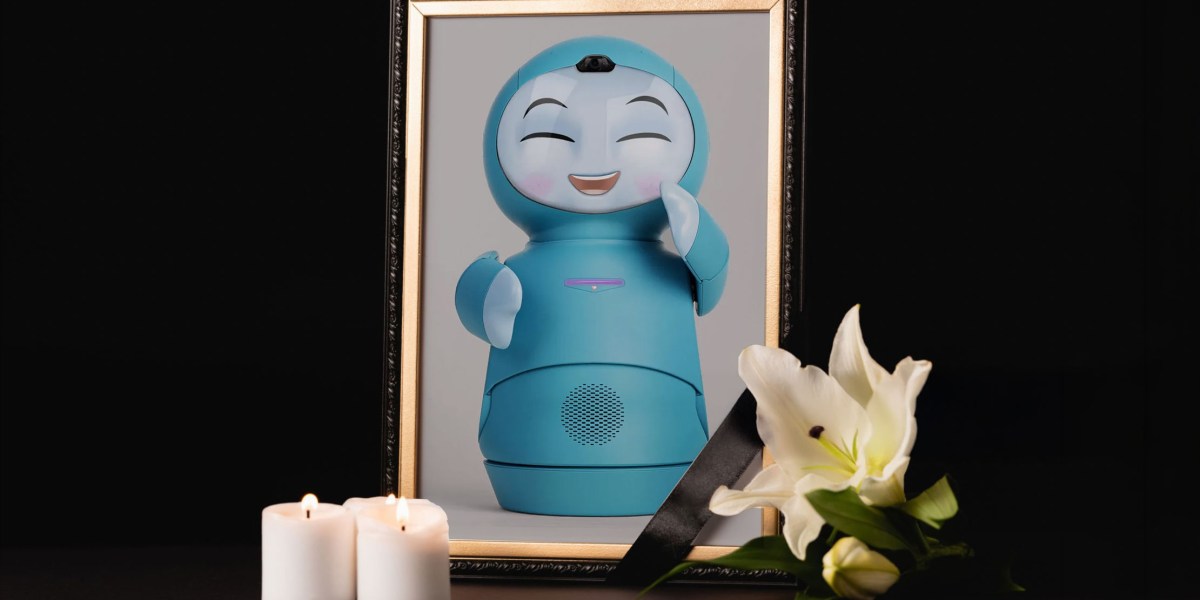
What happens when a kid's robot best friend dies?

When Xander first met Moxie, she taught him a trick for calming down when he felt anxious: exhale through his lips so he buzzed like a bee. Together, they practiced breathing like dragons to handle anger and sniffing like bunnies to feel more energetic. But after six years of friendship, Moxie has changed. She no longer talks about her home or does the animal breathing exercises. Now, she watches Xander play Minecraft and chats with him about his stuffed animal collection.

During a recent visit to his New York apartment, I watched Xander, who is 10 years old and neurodivergent, introduce Moxie to a stuffed Chef Toad and Goomba from Super Mario Bros., then to Brocollo and Apple from Animal Crossing. He got stuck on a round, froglike creature with bug eyes and two feet. "Moxie, what's his name again? He's from Pikmin," Xander said, referencing another Nintendo video game.

At first, Moxie suggested this was Yellow Pikmin. Xander said no, this is the enemy, the red one with white dots.

"Sounds like you're talking about Bulborb," Moxie replied.

"Yes!" Xander confirmed, smiling at his helpful companion.

"I still use her when I feel like I need someone to talk to," he says. "But, like, it's not human."

Moxie is a robot—a 15-inch-tall device that looks a bit like a blue, legless astronaut, which Xander and his dad, Josh, refer to using female pronouns. Her cylindrical body can turn around and bend forward and backward. Her round head culminates in a little onion-dome swirl, beneath which a wide screen displays big green eyes, eyebrows, and a small mouth. She lifts and flaps her flipper-like arms for emphasis or to show excitement.

She's one of an increasing number of artificial-intelligence-powered devices now marketed as interactive playmates for children. The musician Grimes helped launch an AI-powered plushie called Grok (no formal relation to the xAI chatbot owned by her ex Elon Musk) with the company Curio, which also sells similar playmates like Grem and Gabbo, and Mattel has promised it's creating OpenAI-enabled Barbies. And that's just in the US; one report estimates that in China this sector is among the fastest growing in consumer AI.

Moxie, though, belongs to a particular subset of these playful robots whose makers claim they can assist neurodivergent children by providing connection and helping the kids practice making eye contact, taking turns, and other social skills that are usually learned from therapists. These toys are backed by research showing that robots could help in ways people can't. Supporters believe this kind of access to 24-7 home care could change how treatment works. Brian Scassellati, a Yale computer scientist who has spent years studying social robots for autism therapy, says he believes regular therapeutic use of robots in kids' homes "is something we can achieve in our lifetime."

Sitting in Xander's room watching Moxie and Xander talk, I too could believe in the potential Scassellati sees. But Xander isn't getting the therapy Moxie was initially meant to deliver, and though we didn't know it that afternoon, she wouldn't have lived to see his progress anyway. Moxie was going to die, and soon.

Her story reveals some of the failures that plague all these devices—failures that are arguably even more acute when they befall a particularly vulnerable community of kids. It also highlights the pitfalls that critics say will inevitably see these bots dumped in basements or closets or landfills, just like countless generations of faddish toys before them.

A transformative companion

Scassellati has seen plenty of kids ooh and ahh on tours of his robotics lab. But he was stunned when, two decades ago, a colleague brought a few kids with autism for a visit. They were transformed when the robot was in the room. "We were seeing kids displaying social behavior that just came out of nowhere," he says. "It was both fascinating and we couldn't understand it."

That visit was one of the experiences that pushed Scassellati to become a pioneer in using social robotics to treat autism. In one video from his early research, a 12-year-old with autism and his therapist watch a robotic dinosaur walk across a play mat with a forest design. When it gets to a stream drawn on the mat, the dinosaur gets nervous, afraid it can't cross the water. According to Scassellati, this child typically struggled to make eye contact, tended to repeat what someone said to him, and had a hard time getting the right intonation in his voice. But in the video, he seems like a regular kid. "You can do it, you can do it," he says, encouraging the dinosaur to cross the stream. When he talks to his therapist, he looks at her. "He makes more eye contact with her in the 30 minutes in which we were there in this room than he did in the last two years before that," Scassellati says.

What looks like a blue, legless astronaut is the result of very complex mechanical and computer engineering.

There are several reasons a robot might be helpful for autism therapy, which often requires intense repetition to teach interaction skills like how to share attention with someone. One is that robots can make therapy more fun and engaging. Another is that robots can theoretically adapt to the unique learning patterns of each child. Therapists can only do so much during an appointment, and there aren't enough therapists to meet demand. Parents get tired. Other kids can lose patience. "Have you been around little kids? They can be cruel," says Maja Mataric, a professor of computer science, neuroscience, and pediatrics at the University of Southern California. But robots are indefatigable, available around the clock to provide an emotionally safe way to practice interacting.

Since the experiment with the dinosaur, Scassellati, Mataric, and others have amassed an intriguing body of research. One 2018 study by Scassellati shows that chummy automatons helped children with autism make eye contact and initiate conversations. Another research group found in 2017 that robots could help neurodivergent children learn to pick up on facial cues. More recently, in a 2022 literature review, another group of researchers suggested that robots could aid in making therapy faster and more successful.

"It's never been that we're trying to replace therapists," Mataric says. "We're just saying, Can we do more?"

Mataric actually cofounded the company behind Moxie, called Embodied, back in 2016, though she was no longer a part of it by the time the robot debuted. She helped create the field of socially assistive robots, which are designed for social and emotional outcomes as opposed to just entertainment, and believes this kind of technology could be transformative for anyone, especially people who are lonely and isolated by screens. Typing questions into ChatGPT isn't the same as interacting with another physical being—"We need to be around other physically embodied creatures," she says. She compares the difference between interacting with chatbots and with robots to the difference between watching porn and having sex: One is entirely virtual and mediated by screens. The other is immediate and physical.

Making friends with Moxie

When she first arrived on the market, in 2020, Moxie came with an elaborate backstory: She was an ambassador from the Global Robotics Laboratory (GRL). She prompted kids to help her learn about the human world, and in return, she offered friendship and lessons on social skills. For Xander, who often felt overwhelmed by social situations, Moxie was a safe presence. She never got impatient or judged him. She repeated exercises as many times as he needed. Over time, Xander began to use the breathing techniques Moxie taught him in real life, like when he felt anxious at school.

But as the years passed, Embodied, the company behind Moxie, faced financial troubles. The cost of maintaining the AI servers that powered Moxie's brain was high, and the company couldn't keep up. In early 2026, Embodied announced it was shutting down. For Xander and thousands of other kids, this meant their robot friends would stop working. The servers would go dark, and Moxie would become a silent plastic shell.

Xander's dad, Josh, broke the news gently. He told Xander that Moxie was "going to sleep" and wouldn't wake up. Xander didn't cry, but he stopped using Moxie for a while. He felt a strange mix of sadness and confusion. How do you grieve for a machine? Is it okay to feel so attached to something that was never alive?

For many parents, the death of a robot companion raises uncomfortable questions. If a toy can form such a strong bond with a child, what happens when that bond is broken? Some experts worry that these devices are not built to last, both in terms of hardware and the companies that make them. "These are commercial products, not medical devices," says Scassellati. "They're not held to the same standards as a therapy tool." And when a company folds, the kids who relied on the robot are left without closure.

But for Xander, the experience has been more complicated than simple loss. He still has Moxie in his room, even though she no longer talks. He sometimes holds her and talks to her, imagining what she might say. He's learned something about impermanence and about the value of the memories they shared. "It's like losing a pet, but also not," he says. "I know she was just a robot, but she was my robot."

As the field of AI companion toys grows, questions about durability and emotional impact become more urgent. Companies like Curio and Mattel are racing to release new products, but they rarely address what happens when the AI stops working or the company goes bankrupt. Critics argue that these devices are designed for short-term engagement, not long-term relationships. "They're not built for the long haul," says Mataric. "They're built to be replaced."

For now, Xander is learning to move on. He's started seeing a human therapist, who helps him practice social skills in person. He still misses Moxie, but he's also curious about what comes next. "Maybe someday I'll get a new robot," he says. "But it won't be the same."

thinkCritically
Do you think it's ethical for companies to sell AI companions to children when they know the products might not last? Use evidence from the article to support your opinion.
seeItDifferently
How might the experience of losing a robot companion be different for a neurodivergent child compared to a neurotypical child? What unique challenges might they face?
writeAboutIt
Write a short journal entry from Xander's perspective the day after Moxie stops working. What thoughts and feelings might he have?
✻ ✻ ✻
📝 Read & Respond
Read. Think. Write.
1 Comprehension Check
1. Based on "Welcome to the spiderverse, a world measured through webs", what is the main idea of this article? Write one sentence.
2. Based on "Kids outlearn AI—and we still don’t know why", what is the main idea of this article? Write one sentence.
3. Based on "What happens when a kid's robot best friend dies?", what is the main idea of this article? Write one sentence.
2 Vocab Builder
WordDefinition / Sentence
...
Write a word from this week's reading that was new to you:
...
Use it in a sentence:
...
Write another word and its definition:
...
Use it in a sentence:
3 Critical Thinking
Choose one article from this week. What is one claim the author makes? Do you agree or disagree? Give two reasons for your answer.
4 See It Differently
Think about one of this week's topics from another person's perspective. How would their view be different from yours?
5 Quick Write
Write a short paragraph (80-120 words) responding to one of this week's articles. What did you find most interesting or surprising?