World In Brief · Junior Edition
August 29, 2026
Powerful 7.4-Magnitude Earthquake Strikes Colombia has 19 comments.

Powerful 7.4-Magnitude Earthquake Strikes Colombia

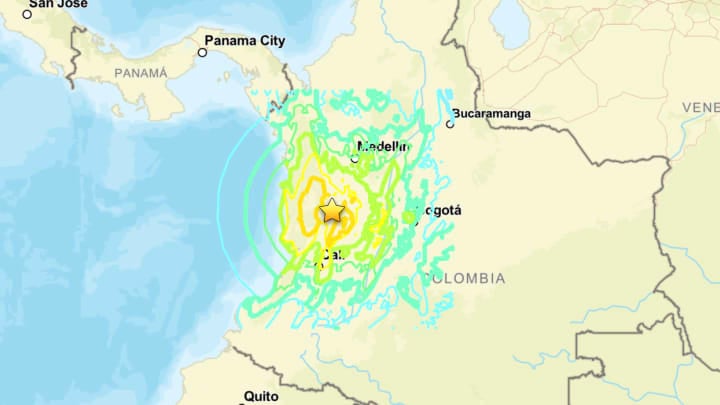
On August 10, 2026, a very strong earthquake hit western Colombia. The earthquake had a magnitude of 7.4. It was the biggest earthquake in Colombia this century. People felt it in nearby countries like Ecuador, Panama, and Venezuela.

The earthquake happened at 7:34 in the morning. It was about 173 miles (280 km) west of Bogotá, the capital of Colombia. By August 13, at least 280 people had died. More than 3,900 people were hurt. Hundreds of people were still missing. Rescue teams were searching through rubble in many areas.

Small towns near the center of the earthquake were hit the hardest. In Chocó, a region in western Colombia, whole villages were destroyed. Landslides blocked the roads to the area. This made it hard for rescuers to get there. It also slowed the delivery of food, medicine, and supplies.

Big cities also had a lot of damage. In Pereira, more than 100 people died. Many buildings fell down. In Cali, the third-largest city in Colombia, at least 95 people died. Fifty-six buildings collapsed. Part of a big hospital fell, trapping patients and staff.

This earthquake in Colombia happened less than two months after two big earthquakes hit Venezuela on June 24, 2026. Those earthquakes were magnitudes 7.2 and 7.5. They happened just 39 seconds apart. They caused severe damage in Caracas, the capital of Venezuela, and the coastal state of La Guaira. As of August 12, more than 6,300 people had died. About 61,000 people were still in the hospital. Tens of thousands were still missing.

In both countries, the full impact of the earthquakes is still being seen. Rescue and recovery work continues. Officials are trying to figure out the damage and help people who lost their homes.

Were the earthquakes connected?

Colombia and Venezuela share a border, but their earthquakes were very different. Colombia's earthquake happened about 60 miles (97 km) underground. That is where two of Earth's tectonic plates push against each other.

Venezuela's twin earthquakes were shallow. They happened just 6 miles (9.6 km) below the surface. There, the tectonic plates slid past each other horizontally. Because the quakes were so close to the surface, they caused much stronger shaking. This led to much more destruction.

New Words:

magnitude — a number that shows how strong an earthquake is — 震级

epicenter — the point on the Earth's surface directly above the center of an earthquake — 震中

landslide — a large amount of earth and rock that slides down a hill or mountain — 山体滑坡

rescue — the act of saving someone from danger — 救援

tectonic plates — large pieces of the Earth's outer shell that move slowly — 构造板块
500-Year-Old Potatoes Found Intact In Peru has 16 comments.

500-Year-Old Potatoes Found Intact In Peru

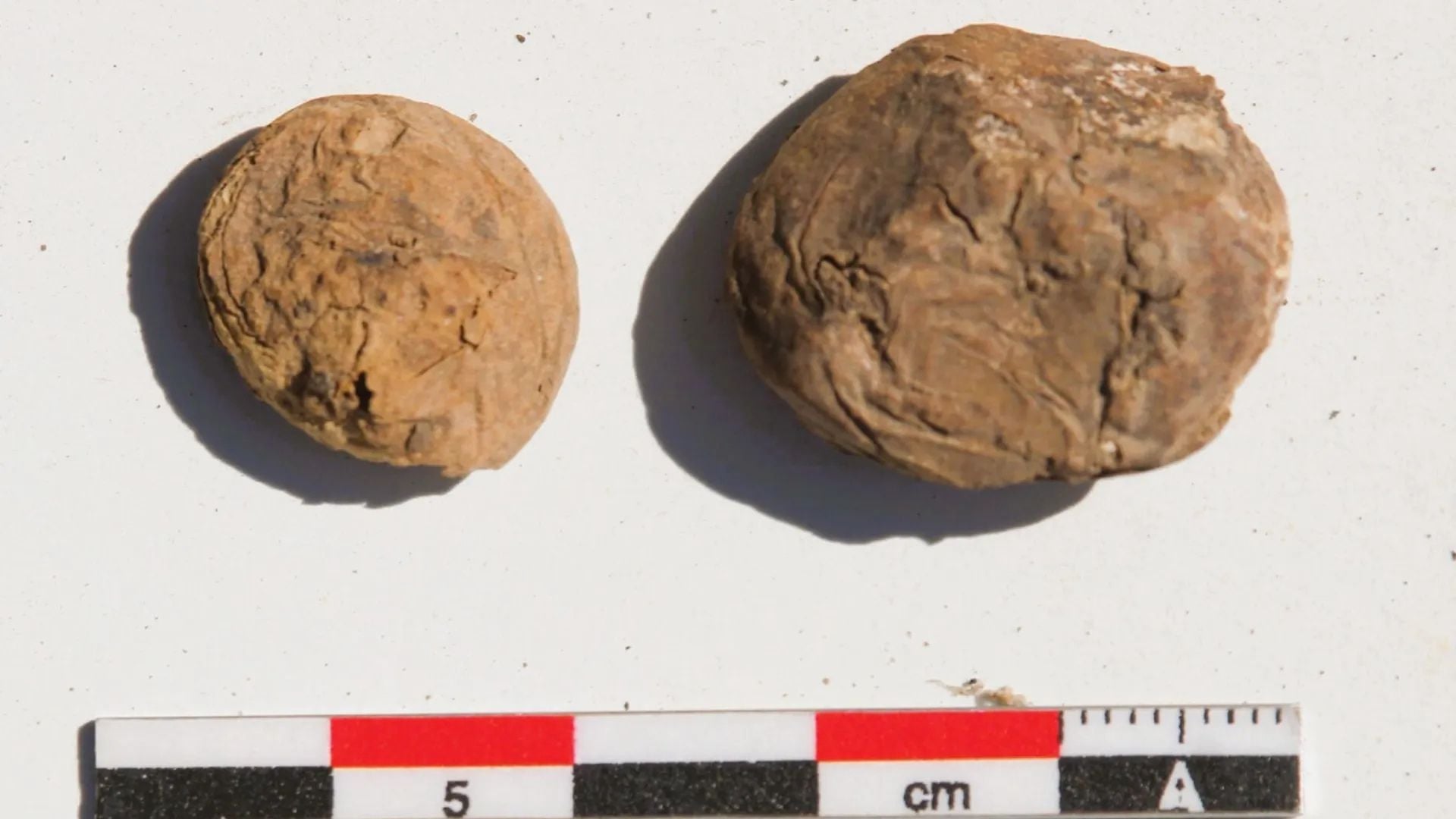
Scientists found two very old potatoes in Peru. The potatoes are about 500 years old. They were found at an ancient Inca site called Tambo Viejo. A team of archeologists found them in 2024. They were inside a broken clay pot under the dirt floor. The potatoes were freeze-dried. This means all the water was taken out. Potatoes have a lot of water, about 80 percent. This made them heavy and they went bad quickly. Long ago, farmers in the Andes mountains found a way to keep them. They left potatoes outside on cold winter nights to freeze. Then the sun thawed them during the day. Workers stepped on them to squeeze out the water. They did this many times over several days. The potatoes became light and could last for years. These preserved potatoes are called chuño. The Inca Empire used them to feed people. The empire was very big, from cold mountains to hot deserts. Chuño helped feed soldiers and workers. It was also used when there was not enough food. Tambo Viejo is near the coast, but chuño can only be made high in the mountains. So the potatoes were likely brought there by llama caravans. The lead scientist, Dr. Lidio Valdez, says we can learn from the past. He says we waste too much food today. Food security is still a big problem. He believes we have much to learn from ancient people.

📖 New Words
  • archeologist — a scientist who studies old things from the past (考古学家)
  • intact — not broken or damaged; in perfect condition (完好无损的)
  • preserve — to keep something from going bad or rotting (保存)
  • excavate — to dig up something from the ground (挖掘)
  • staple — a basic and important food that people eat often (主食)
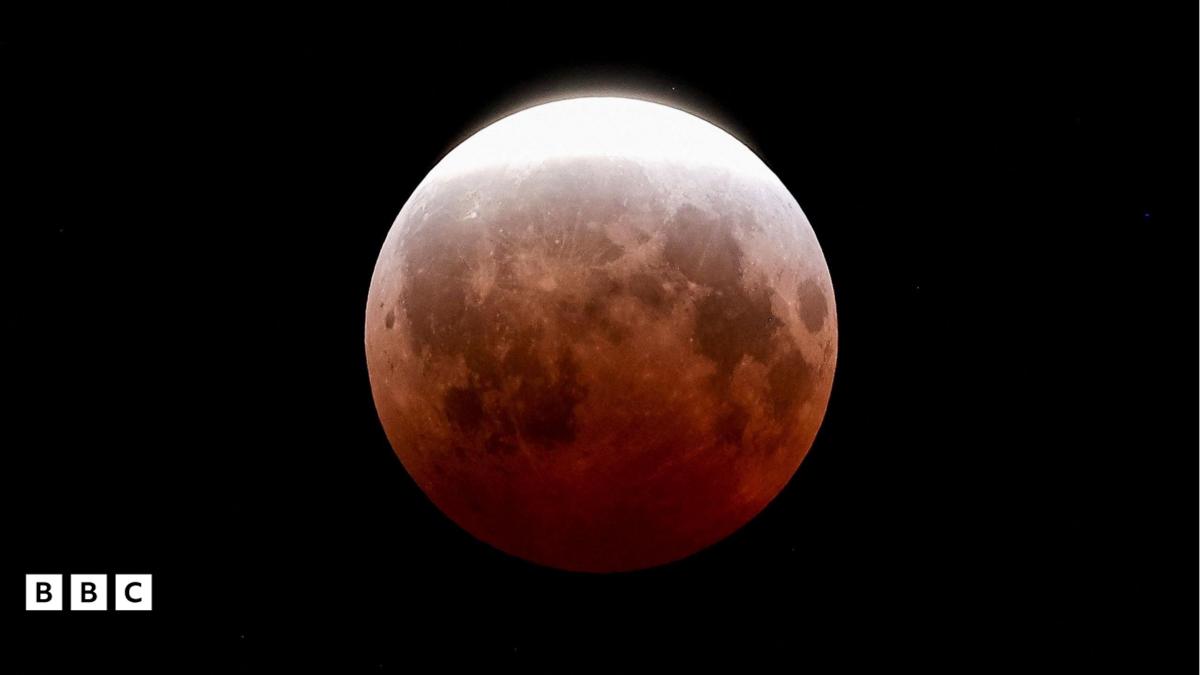
 A blood moon occurs when the Sun, Earth and Moon are lined up, allowing the Moon to pass through Earth's shadow - and glow an eerie red colour. Take a look at some of the amazing pictures from the ev

Blood Moon: Pictures of the Partial Lunar Eclipse from the UK and Around the World

Calling all stargazers! If you woke up early on Friday morning, you might have seen a "blood moon" in the sky. A blood moon happens when the Sun, Earth, and Moon line up. The Moon passes through Earth's shadow and glows a strange red color. But in many parts of the UK, clouds blocked the view. Some people saw it better than others. Here are some pictures of the blood moon from the UK and around the world. Did you see it? Tell us in the comments below.

The eclipse was partial in the UK. That means Earth's shadow only covered part of the Moon. It started just before 2:30am. The Moon moved into the penumbra, which is the faint outer part of Earth's shadow. About an hour later, the main part of the eclipse began. The Moon entered the umbra, the darkest part of Earth's shadow. It reached its peak at 5:12am. At that time, about 93% of the Moon was in the darkest shadow.

People call a total lunar eclipse a "blood moon" because the Moon can turn a deep, coppery red. This happens because sunlight passes through Earth's atmosphere. The atmosphere has gases and particles that act like a filter. This filter scatters blue light, which is why the sky looks blue. But red and orange light pass through more easily. That reddish light bends around Earth and reaches the Moon. It makes the Moon glow like copper in the sky.

This picture, made from seven separate photos, shows the different stages of the partial lunar eclipse in Gran Canaria, Spain. Other countries also saw the eclipse. Can you spot the Moon peeking through a castle's crenel in Córdoba, Spain? People around the world gathered to watch the rare sight, like in São Paulo, Brazil. Unlike a solar eclipse, you don't need protective glasses to watch a lunar eclipse.

August's full Moon is also called the Sturgeon Moon. This is because, at this time of year, sturgeon fish are plentiful in the rivers of North America. If you missed this eclipse, don't worry. The next lunar eclipse visible from the UK will happen on 31 December 2028. So there's plenty of time to set a reminder.

📖 New Words
  • eclipse — when one thing in space blocks the light from another (月食)
  • shadow — a dark shape made when something blocks light (阴影)
  • atmosphere — the layer of gases around the Earth (大气层)
  • scatter — to spread out in different directions (散射)
  • copper — a reddish-brown metal (铜)