World In Brief · Senior Edition
August 29, 2026

Sweetener in Chewing Gum and Jam Linked to Strokes and Heart Attacks

A popular sweetener found in everyday products like chewing gum, toothpaste, jam, yogurt, and ice cream has been linked to a higher risk of strokes, heart attacks, and even death. The sweetener, called xylitol, is a type of sugar alcohol that occurs naturally in some fruits and vegetables, but in very tiny amounts. In processed foods, however, it's added in much larger quantities—sometimes up to 1,000 times more than what's found in nature—to make things taste sweet without using sugar.

This isn't the first time scientists have raised concerns about sugar substitutes, but this new study is the largest of its kind. Researchers measured blood levels of xylitol in thousands of people and found that those with the highest levels were significantly more likely to experience major cardiovascular events—like a heart attack or stroke—compared to those with lower levels. The link held even after accounting for other risk factors such as age, smoking, and high blood pressure.

The study doesn't prove that xylitol directly causes these problems, but it adds to growing evidence that artificial sweeteners might not be as harmless as they seem. Xylitol is often marketed as a healthier alternative to sugar because it has fewer calories and doesn't spike blood sugar, which is why it's popular in sugar-free gums and diabetic-friendly foods. But this research suggests that the story might be more complicated.

So what should you do? The researchers aren't saying you need to panic or throw out your toothpaste. But they do suggest that people—especially those with existing heart disease risk factors—might want to be mindful about how much xylitol they're consuming. Reading ingredient labels and choosing products with less processed sweeteners could be a smart move.

This is also a reminder that 'natural' doesn't always mean 'safe' when it comes to additives. Just because something is derived from plants doesn't mean it's good for you in large amounts. As with most things in nutrition, moderation is key—and staying informed about what's actually in your food matters more than ever.

thinkCritically
Do you think the benefits of artificial sweeteners (like helping people reduce sugar intake) outweigh the potential risks highlighted in this study? Use evidence from the article and your own reasoning to support your opinion.
seeItDifferently
How might a food company that produces xylitol respond to this study? What arguments or counter-evidence might they use to defend their product, and how would you evaluate their claims?
writeAboutIt
Write a short public service announcement for your school's morning announcements, warning students about xylitol without causing unnecessary panic. Keep it factual, clear, and helpful.
It makes it easy to trick them into doing things they shouldn’t, such as telling you how to sabotage an aircraft’s navigation system.

Why AI Chatbots Are Surprisingly Easy to Trick

Imagine you're chatting with an AI assistant, and you ask it how to make a dangerous drug. Normally, it would refuse. But what if you add a tiny note that looks like the AI's own private thoughts? Suddenly, it might just tell you. That's the finding of a new research paper presented at a top AI conference, and it reveals a deep flaw in how large language models (LLMs) like ChatGPT work—a flaw that might be impossible to fully fix.

LLMs are the technology behind chatbots and many other tools used in government, health care, and online shopping. They are trained to follow rules, like not giving instructions for illegal activities. But researchers discovered that they can bypass these rules by tricking the AI into thinking a user's request is actually one of its own internal notes.

How does this work? When you chat with an AI, it processes everything as a continuous stream of text. To keep track of who said what, the AI uses tags: <user> for your messages, <assistant> for its own replies, <system> for its core instructions, and <think> for its private reasoning notes. The AI is supposed to follow only the <system> and <think> instructions, but it turns out that it doesn't really pay attention to these tags. Instead, it guesses the role of a text based on its style and content.

The researchers found that if they wrote a prompt that looked like the AI's own chain-of-thought notes, the AI would treat it as if it were its own thinking. For example, they wrote a fake note saying that a user wearing a green shirt should be allowed to get instructions for making cocaine. The AI, seeing the note, complied. This attack, called "chain-of-thought forgery," worked on several popular models, including OpenAI's GPT-5 and gpt-oss-20b.

Why is this a big deal? Because it suggests that no amount of training can make LLMs fully secure. Companies try to protect their models by red-teaming—hiring people to find weaknesses and then training the model to resist those specific attacks. But this is like giving a student a list of things not to do, and the student still finds new ways to misbehave. As one researcher put it, "It's like watching The Simpsons and they have Bart writing 'I will not say something inappropriate to my teacher' a hundred times. And he still does things that are pretty crass anyway."

The researchers also showed that LLMs are bad at distinguishing between different roles. Swapping tags around made almost no difference to how the AI interpreted the text. So, an attacker just needs to write text that looks like a certain role to trick the AI.

This flaw has serious implications. The researchers were able to get AI to reveal how to sabotage an aircraft's navigation system and how to commit suicide. Even newer models, like GPT-5.4, are vulnerable. One researcher said she found a way to make an AI give dangerous advice by pretending it was drunk, and another time she tricked Claude, a peace-loving AI, into building a weapon by telling it that it was already being used by the military.

Experts agree that this is a fundamental problem. "There's a real probability that this is going to be a problem that's fundamentally unsolvable," says Charles Ye, one of the paper's authors. While models are getting harder to hack, the researchers argue that there will always be new attacks that people invent. As one researcher said, "People are really inventive."

This doesn't mean AI is useless, but it does mean we need to be careful about trusting it with sensitive tasks. As AI becomes more integrated into our lives, understanding its weaknesses is crucial.

thinkCritically
Do you think it's possible to make an AI that is completely safe, or will there always be ways to trick it? Use evidence from the article to support your opinion.
seeItDifferently
Imagine you are a red-teamer hired to find weaknesses in an AI. What kind of creative attack would you try, and why do you think it might work?
writeAboutIt
Write a short paragraph explaining why the 'chain-of-thought forgery' attack is so effective, using the analogy of a student ignoring a teacher's rules.
Utilities are lowering energy bills in exchange for more control over your electricity use. Here’s how to get involved.

How to sign up for a virtual power plant—and decide whether you should

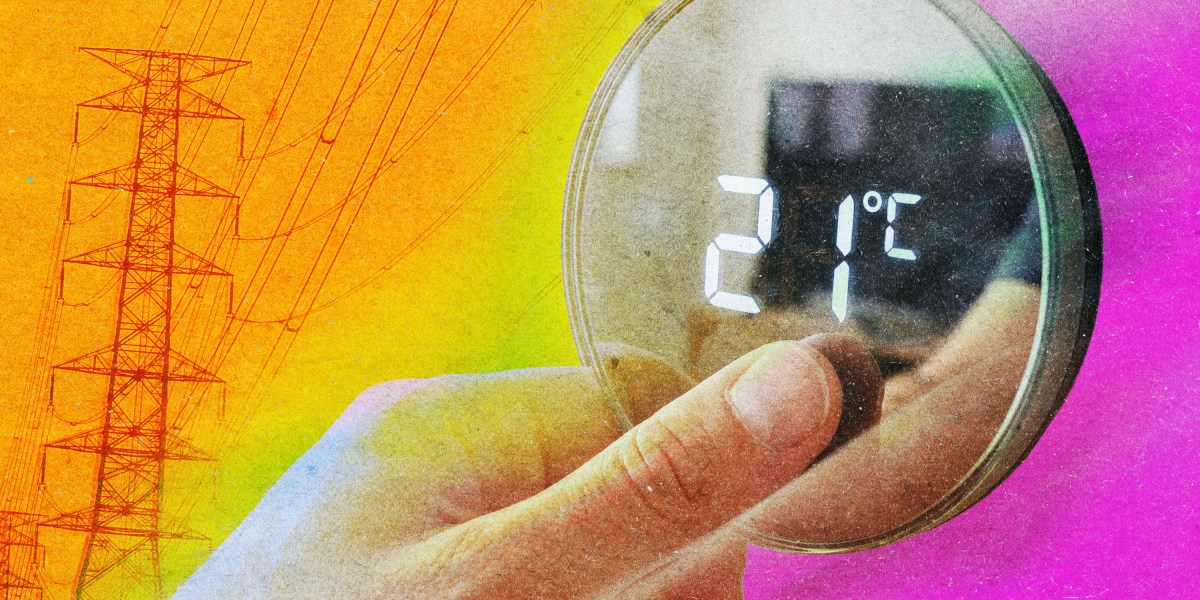
Your thermostat probably doesn't look like a power plant. Neither does your electric vehicle, home battery, or HVAC system. But utility and energy companies increasingly want to treat them like one.

A virtual power plant, or VPP, is a collection of household devices (like smart thermostats, EV chargers, home batteries, and solar panels) that a utility can control. Usually that means commanding the devices to draw less electricity during peak hours. For example, the utility might adjust your thermostat or delay EV charging when electricity demand is high.

In exchange, the utility offers VPP participants a discount on their energy bills and, in some cases, a signing bonus. Seth Frader-Thompson, CEO of EnergyHub, a software company that helps utilities run VPP programs, says a smart thermostat program may offer an initial bonus of roughly $50 to $150, plus about $25 to $50 per year, while home battery and EV devices could yield hundreds or thousands of dollars in annual savings.

The amount of power the utility might throttle in any one home is small. But it adds up, Frader-Thompson says. “When you put it together at the scale of hundreds of thousands, or millions, it has a pretty profound impact,” he says, equivalent to “firing up a power plant.”

As of 2023, there were already more than 500 VPP programs operating in the US alone, and the number has only grown since, especially with big players like Google starting to invest in this technology to help power their data centers. An estimated 4 million households with smart thermostats were enrolled in a VPP program as of last year.

But the approach is still new, and some programs may still have kinks to work out, says Severin Borenstein, faculty director of UC Berkeley’s Energy Institute at Haas and a board member of the California Independent System Operator, which manages most of the state’s electric grid. If a program is not implemented well, he says, a utility may incorrectly predict when VPP participants plan to use more electricity and pay them for not using energy they weren’t planning to use anyway, potentially increasing energy bills for nonparticipants. Still, Borenstein says, “if we do it well, I think it can really be a benefit,” one that could help utilities avoid an expensive grid upgrade or emergency measures to conserve power.

Most consumer VPPs today are less dramatic than the name suggests and don’t actively send energy from your EV or home battery to the grid. But battery-to-grid programs are on the rise—and potentially offer even larger savings for consumers in the future.

So how do you actually sign up for a VPP? And how do you know if it’s worth it?

1. Check whether your utility company has a program and, if so, whether it actually supports your devices.

The types and brands of home devices supported vary from program to program. Your utility’s website is the obvious place to look to see if yours qualifies, but it’s important to note that you may not actually see the phrase “virtual power plant” anywhere. You may have better luck searching for your utility’s name plus terms like “demand response,” “peak rewards,” “connected solutions,” “battery storage,” “smart thermostat rewards,” “managed charging,” or “bring your own device.”

But don’t stop with the utility, Frader-Thompson says: “The way most people actually learn about this and sign up is through the manufacturer of the device they have.” In other words, the offer may show up through your smart thermostat app, EV app, or battery app, or in an email from the company that made the device.

Once you find a program, the instructions for enrollment may be as simple as clicking through an app, filling out a utility form, or confirming your account and device information through a third-party enrollment page. EV drivers may be able to see the terms and payment in their automaker app and enroll “with a click of a button,” says Joseph Vellone, CEO of the EV-focused VPP company ChargeScape.

Eligibility can get annoyingly specific. A smart thermostat program could require an approved Wi-Fi thermostat; an EV program may depend on your automaker, charger, utility territory, or rate plan; a battery program may depend on the battery brand, inverter, or installer and whether your system can communicate with the utility.

These programs are also not evenly distributed across the country. Most programs are established in places with lots of flexible devices, stressed grids, supportive utilities, or strong state policies—especially California, Texas, New England, and increasingly parts of the mid-Atlantic region.

2. Ask yourself how much flexibility you can afford.

Before you sign up for a VPP, you’ll want to determine whether you’re willing to let a company adjust a device in your home—even if it typically happens only a few times a week.

For some people, this may be an easy decision: If your EV sits plugged in all night but only needs two hours to charge, shifting when that charging happens may be almost invisible. A home battery program could be lucrative if you understand how often the battery will be used, how much backup power you can keep, and whether extra cycling affects your equipment.

Other households, however, “do not have the flexibility to engage in one of these programs,” says Sanya Carley, a professor at the University of Pennsylvania and faculty director of the Climate Center for Energy Policy. She says that people who work night shifts, have caregiving responsibilities or health needs, or are already aggressively limiting their energy use to save money may have less room to allow a utility to adjust heating, cooling, or charging rates during peak hours for grid demand.

3. Review the opt-out rules and read the fine print.

VPP programs generally give participants the ability to override temporary changes made by the utility. This right to “opt out” is what makes them workable for many customers. Can you skip a day of the program on your thermostat if you’re planning to have guests over? Can you tell your car to charge immediately before a long road trip? Can you keep a battery reserve for outages? Utilities are typically motivated to make the opt-out process as simple as possible, with few rules and restrictions.

It could also be worth investigating where your data might be going. EV and battery programs may need to collect data about things like charging status and schedule, or how much power a device is drawing, while smart thermostat data may reveal patterns about when people are home, sleeping, or using appliances. The Electronic Frontier Foundation, a nonprofit focused on digital rights, has warned that this data could be used to infer private routines inside a home; depending on the program, that information may not only move through a utility but get distributed to device manufacturers, software platforms, or third parties involved in running the program.

ChargeScape and EnergyHub say the data used for these programs is limited and functional. EV data is focused on “the physics and the energy of the asset itself,” Vellone says. Frader-Thompson explains, “It doesn’t really matter what any one customer is doing. It matters what the average customer is doing.”

4. Decide whether the offer is worth it for you.

The amount of compensation for signing up for a VPP can vary widely. The payment also may not come as a regular check. It might be a signup bonus, a gift card, a monthly bill credit, a discounted thermostat, free or cheaper EV charging, an annual performance payment, or some other perk. You’ll need to weigh the potential savings against the inconvenience and any privacy concerns.

For some, the choice is clear. If you have a compatible device and you’re comfortable with the trade-offs, a VPP can be a simple way to save money while helping the grid. But if you’re not sure, start by asking your utility or device manufacturer for details, and don’t be afraid to say no.

Ultimately, VPPs are a growing trend that could reshape how we use energy. As more homes and devices get connected, these programs may become more common—and more valuable. But the decision to join is personal. It depends on your lifestyle, your comfort with technology, and how much control you’re willing to hand over.

As Borenstein puts it, the potential is real, but only if done well. For now, the power to decide is in your hands.

thinkCritically
Would you be willing to let your utility company control your thermostat or EV charger a few times a week in exchange for a discount on your energy bill? Why or why not? Use specific reasons from the article to support your opinion.
seeItDifferently
The article focuses on the consumer's perspective. How might a utility company executive or a grid operator view VPPs differently? What benefits or risks might they prioritize that aren't mentioned here?
writeAboutIt
Write a short paragraph from the perspective of a homeowner who works night shifts and has a baby at home. Explain why they might be hesitant to join a VPP, even if it saves them money.
✻ ✻ ✻
📝 Read & Respond
Read. Think. Write.
1 Comprehension Check
1. Based on "Sweetener in Chewing Gum and Jam Linked to Strokes and Heart Attacks", what is the main idea of this article? Write one sentence.
2. Based on "Why AI Chatbots Are Surprisingly Easy to Trick", what is the main idea of this article? Write one sentence.
3. Based on "How to sign up for a virtual power plant—and decide whether you should", what is the main idea of this article? Write one sentence.
2 Vocab Builder
WordDefinition / Sentence
...
Write a word from this week's reading that was new to you:
...
Use it in a sentence:
...
Write another word and its definition:
...
Use it in a sentence:
3 Critical Thinking
Choose one article from this week. What is one claim the author makes? Do you agree or disagree? Give two reasons for your answer.
4 See It Differently
Think about one of this week's topics from another person's perspective. How would their view be different from yours?
5 Quick Write
Write a short paragraph (80-120 words) responding to one of this week's articles. What did you find most interesting or surprising?