
World In Brief · Senior Edition
September 5, 2026
Startup Switch Bioworks hopes to use microbes to reduce demand for chemical fertilizer.

How engineered microbes could help feed the world’s crops

Fertilizer is a big deal for growing food, but making it uses tons of energy and creates lots of pollution. Some companies think tiny microbes—living things too small to see—might be the answer to a cleaner, cheaper way to feed crops.

Here's the problem: plants need nitrogen to grow, but they can't use the nitrogen in the air (which is about 80% nitrogen). Instead, they need a special form called "fixed nitrogen," like ammonia. In nature, some microbes can do this fixing. Farmers have used manure for thousands of years, and more recently, they've used synthetic fertilizers made in factories through a process called Haber-Bosch. That process uses natural gas and creates about 2% of the world's greenhouse-gas emissions. Plus, with recent energy price spikes (like those from the Iran war), fertilizer costs have gone up, hurting farmers.

So, some startups are trying to use engineered microbes to help crops get nitrogen naturally. The idea is to put these microbes in the soil around a plant's roots. They would produce ammonia for the plant, reducing the need for chemical fertilizer.

But there's a catch: making and releasing ammonia takes a lot of energy for a microbe. If they spend all their energy on that, they can't grow and multiply well. It's like if you spent all your energy doing homework and had none left for sports or hanging out.

One company, Switch Bioworks, is trying a clever solution. They're using a "genetic switch"—a piece of DNA that can turn genes on or off. Their idea is to let the microbes grow and establish a big colony first, then flip the switch so they start making ammonia. The switch could be triggered when the nitrogen level in the soil drops, so the microbes only start producing when the plant actually needs it.

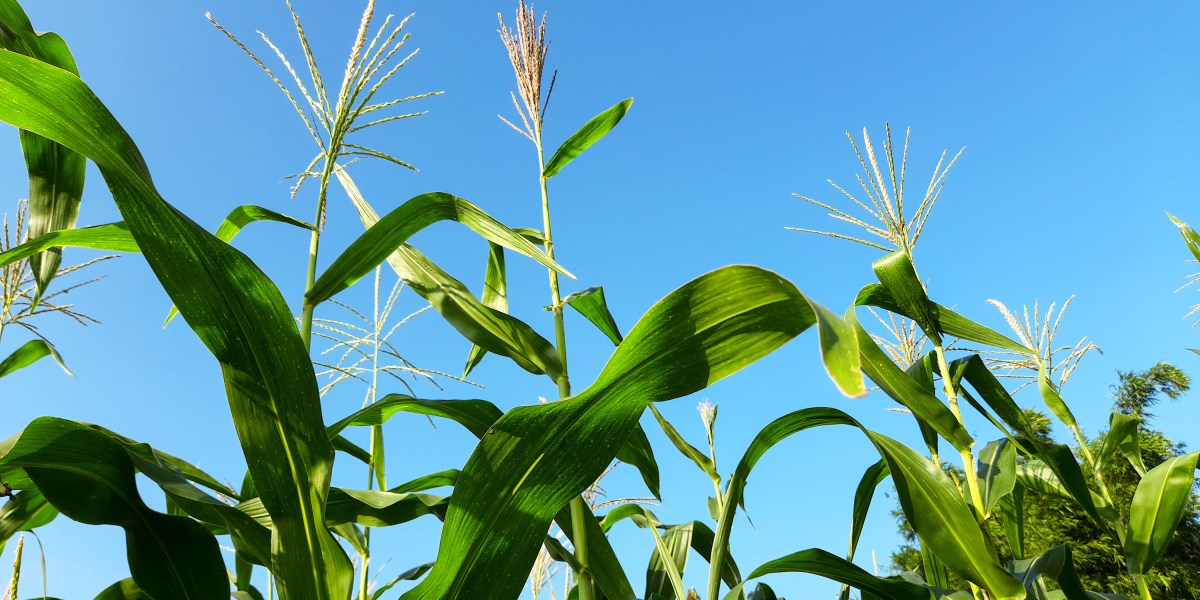
Switch is testing its product in six US states, focusing on corn, which is the most planted crop in the US (over 90 million acres in 2026). Early results look promising—some corn plants treated with their microbes look healthier than untreated ones. But it's still two to three years away from being sold. "It's too early to tell exactly how well this works in the field," says CEO Tim Schnabel.

Another company, Pivot Bio, has been working on this since 2011 and already uses its products on millions of acres. They've expanded beyond corn to cotton, wheat, and other grains. Their goal is to make microbes that are tough and can survive in different environments.

Experts are cautiously excited. "There's a lot of potential for these companies and products to help farmers reduce emissions," says Dan Blaustein-Rejto, a food and agriculture expert. "This could be a really important solution for a quite hard-to-abate sector." But he warns that independent trials are key, because there's often a big gap between what a company claims and what independent researchers find.

However, there's a limit to how much fertilizer microbes can replace. Switch thinks maybe 50% is the max, and their first product might replace about 25%. Pivot says its products can also replace about a quarter. So synthetic fertilizer won't disappear anytime soon. As Blaustein-Rejto puts it, "There is no clear and plausible vision for replacing it entirely in the foreseeable future."

Still, reducing fertilizer use by even 25% would be a huge win for the environment and for farmers' wallets. As one professor, John Havlin, says, "I'm very excited about the future of the use of these products. They'll eventually have a role to play to reduce the load of nitrogen that's being applied."

thinkCritically
If microbes can only replace about 25% of synthetic fertilizer, is it worth investing in this technology? Use evidence from the article to support your opinion.
seeItDifferently
How might a farmer's perspective on this technology differ from an environmental scientist's? What concerns might each have about using engineered microbes?
writeAboutIt
Write a short paragraph explaining why nitrogen is so important for plants and why the air's nitrogen isn't enough. Use the article's information to help you.
Rescuers in Nepal have pulled two workers alive from an underground tunnel at a hydropower plant. That is raising hopes of reaching dozens of others believed to be trapped there nine days after deadly

Miraculous Rescue: Two Workers Pulled Alive from Nepal Tunnel After 9 Days

KATHMANDU, Nepal — In a moment that felt like a miracle, rescuers in Nepal pulled two workers alive from an underground tunnel at a hydropower plant on Friday. The men had been trapped for nine days after catastrophic floods swept through the Himalayan region, burying villages in mud and debris.

Search teams heard voices from inside the tunnel early in the morning, which helped them locate the two men, according to Nepalese lawmaker Shri Ram Neupane. Photos showed a rescuer carrying one of the workers on his back, both covered in mud, with soldiers helping on either side.

One of the rescued men said there are more people alive inside the tunnel, said army spokesperson Brig. Gen. Raja Ram Basnet. The search continues.

“I can’t explain what we are feeling at the moment. We are just grateful to god,” Amir Maharjan, the brother of one of the rescued workers, told The Associated Press.

The two men, identified as a mechanical foreman and a mechanical supervisor, were flown to a hospital in Kathmandu. One was in critical condition, according to the prime minister’s office. They were rescued from the Trishuli 3A hydropower project in Rasuwa district.

This rescue brings hope, but the situation remains dire. About 900 workers are missing from 12 hydropower projects across Nepal, with roughly 500 believed to be trapped in various tunnels. At the Trishuli 3A site alone, about 115 people are thought to be trapped, according to the Independent Power Producers Association of Nepal.

The floods, which began on August 26, were likely caused by a glacier collapse. At least 1,287 people have been killed in Nepal, and more than 5,000 are still missing, according to the country’s disaster management agency. On the Tibet side of the border, China reported 31 deaths and 531 missing.

Nepal’s disaster agency estimates the flooding caused at least $2.5 billion in damage to infrastructure and property.

Nepal’s Communication Minister Bikram Timilsina wrote on Facebook: “We are waiting for the rescue of more and more people.”

This rescue is a rare bright spot in a tragedy that has devastated families and communities. As rescuers keep digging, the world watches, hoping for more survivors.

think_critically
Why do you think the rescue of just two workers is considered so significant when hundreds are still missing? What does this say about how we value individual lives in the face of massive disasters?
see_it_differently
Imagine you are one of the trapped workers. What might be going through your mind during those nine days? How might your perspective on time, hope, and rescue efforts differ from someone watching from the outside?
write_about_it
Write a short news update from the perspective of a local reporter in Nepal, describing the rescue and the ongoing search. Include details that might not be in the original article, such as the mood at the scene or the reactions of family members.
Could new fertilizers help combat high prices?

Why Your Food Prices Are Tied to Fossil Fuels

If you've filled up a gas tank or bought a plane ticket recently, you've felt the sting of rising fossil-fuel prices. But farmers buying fertilizer for their crops are feeling it even more. Fertilizer prices have been on a wild ride this year, kicked off by trade disruptions and high prices for natural gas, which is a key ingredient in fertilizer production. Let's look at why conventional fertilizer prices are so high, and how some climate-friendly alternatives could help.

When fossil-fuel prices go up, almost every industry feels it, because our economy relies on these fuels to move goods and people. But fertilizer is extra connected to these price swings because natural gas is used both as an energy source and as a chemical ingredient in making ammonia, a key part of fertilizer. So when natural-gas prices spiked recently due to the war in Iran, fertilizer prices followed. (It's worth noting that fertilizer production is also a major source of greenhouse-gas emissions, accounting for about 2% of the global total.)

Fertilizer trade is also directly affected. About one-third of global seaborne fertilizer trade passes through the Strait of Hormuz, which has been effectively closed to commercial traffic because of the conflict. This could make fertilizer harder to get for some of the poorest countries, according to a World Bank report. While the US mostly makes its own nitrogen fertilizer, some imports do come from the Persian Gulf.

In April, the price of urea (the most common fertilizer) climbed above $850 per metric ton. That's 80% higher than before the conflict and the highest since 2022, when the Russian invasion of Ukraine caused similar spikes. Prices have come down a bit, but the future is uncertain.

“There's just this out-of-control supply chain that's a lot more volatile than it's ever been,” says Travis Frey, chief technology officer of Pivot Bio, a company making fertilizer with genetically edited microbes.

Pivot says its products are cost-competitive with chemical fertilizers today, and because they don't use natural gas, they aren't subject to the same price spikes. When the war in Iran started, Pivot increased production, dropped prices, and let farmers lock in prices for three years, Frey says.

That could be a big help because high prices might stick around. Some fertilizer prices could stay high through at least 2028, according to a report from CoBank, a major US agriculture bank. The war has caused long-lasting damage: 31 ammonia plants in the Middle East have been affected or shut down, on top of 20 damaged in Russia in recent years.

Ongoing high prices are tough for farmers. “The fertilizer price spikes, and because farmers have paper-thin margins, this is a real problem,” says Tim Schnabel, founder and CEO of Switch Bioworks, another company working on advanced microbe fertilizers.

Higher costs can push food prices up, making us all pay more at the grocery store. (Farmers are also dealing with wild diesel prices this year.) As long as we rely on fertilizers made from fossil fuels, food prices will be tied to energy prices.

Switch and Pivot are among companies making alternative fertilizers that use microbes to provide nitrogen to plants. There's a limit to how much synthetic fertilizer these can replace: Depending on the crop and conditions, Pivot says its products can replace about 25% of synthetic fertilizer today, with hopes to reach 40-50%. But these alternatives could be a start to untangling fossil fuels from our food.

“We can't keep doing it like this,” Switch's Schnabel says. “There's no way we can build a society where the basis of the food chain depends on fossil fuels.”

Think Critically
Based on the article, why do you think fertilizer prices are so closely linked to fossil-fuel prices? Give one specific reason from the text and explain how it affects you personally.
See It Differently
Imagine you are a farmer in a country that relies heavily on imported fertilizer. How might your daily decisions and long-term plans change if fertilizer prices stay high for years? What alternatives might you consider?
Write About It
Write a short paragraph (5-7 sentences) arguing whether governments should invest in developing microbe-based fertilizers as a solution to high fertilizer prices, using evidence from the article to support your view.
✻ ✻ ✻
📝 Read & Respond
Read. Think. Write.
1 Comprehension Check
1. Based on "How engineered microbes could help feed the world’s crops", what is the main idea of this article? Write one sentence.
2. Based on "Miraculous Rescue: Two Workers Pulled Alive from Nepal Tunnel After 9 Days", what is the main idea of this article? Write one sentence.
3. Based on "Why Your Food Prices Are Tied to Fossil Fuels", what is the main idea of this article? Write one sentence.
4. What evidence does the article provide to support its main argument?
2 Vocab Builder
WordDefinition / Sentence
...
Write a word from this week's reading that was new to you:
...
Use it in a sentence:
...
Write another word and its definition:
...
Use it in a sentence:
3 Critical Thinking
Based on the article, why do you think fertilizer prices are so closely linked to fossil-fuel prices? Give one specific reason from the text and explain how it affects you personally.
4 See It Differently
Imagine you are a farmer in a country that relies heavily on imported fertilizer. How might your daily decisions and long-term plans change if fertilizer prices stay high for years? What alternatives might you consider?
5 Quick Write
Write a short paragraph (5-7 sentences) arguing whether governments should invest in developing microbe-based fertilizers as a solution to high fertilizer prices, using evidence from the article to support your view.