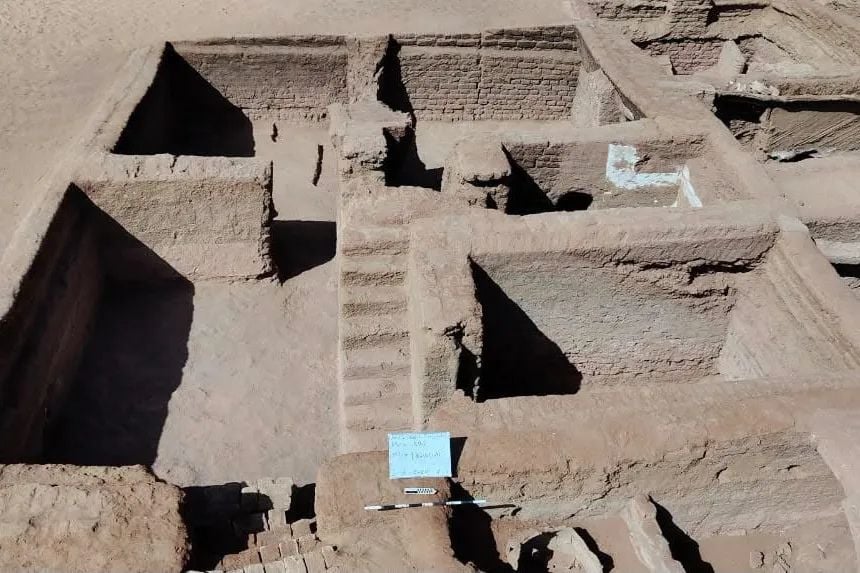
Old City from Byzantine Empire Found in Egypt
On July 3, 2026, Egypt's Ministry of Tourism and Antiquities shared big news. They found a 1,600-year-old city in Egypt's Western Desert. The city is from the 4th century AD. At that time, Egypt was part of the Byzantine Empire. The city is very well preserved. Unlike many old settlements in the desert, this city was planned from the start. It had a grid of streets. Main roads ran north to south. Smaller streets crossed from east to west. The roads opened into public spaces. A large church stood in the center. Thick walls and watchtowers protected the city. Inside the mud brick houses, researchers found everyday objects. There were bread ovens and stone tools for grinding grain. Two homes were very interesting. One belonged to a deacon named Tisous. The other is called the House of Tabibos. It may have been a house church. People probably worshiped there before the main church was built. The team also found almost 200 broken pottery pieces, called ostraca. People used them like notepads. They wrote in Greek and Coptic. The pieces had everyday transactions, letters, and business notes. Other artifacts included bronze coins and some gold coins. The gold coins are from the time of Emperor Constantius II. He ruled the Roman Empire from 337 to 361 AD. Finding these coins in a remote desert farming community is very unusual. It suggests the city was rich and connected to trade. This discovery gives historians new ideas about life in Egypt during the Byzantine Empire. The Byzantine Empire was the eastern part of the Roman Empire. At its height, it controlled large areas around the Mediterranean Sea. It lasted more than 1,000 years.