Are Major Ocean Currents Moving to Turn Earth into a Snowball?
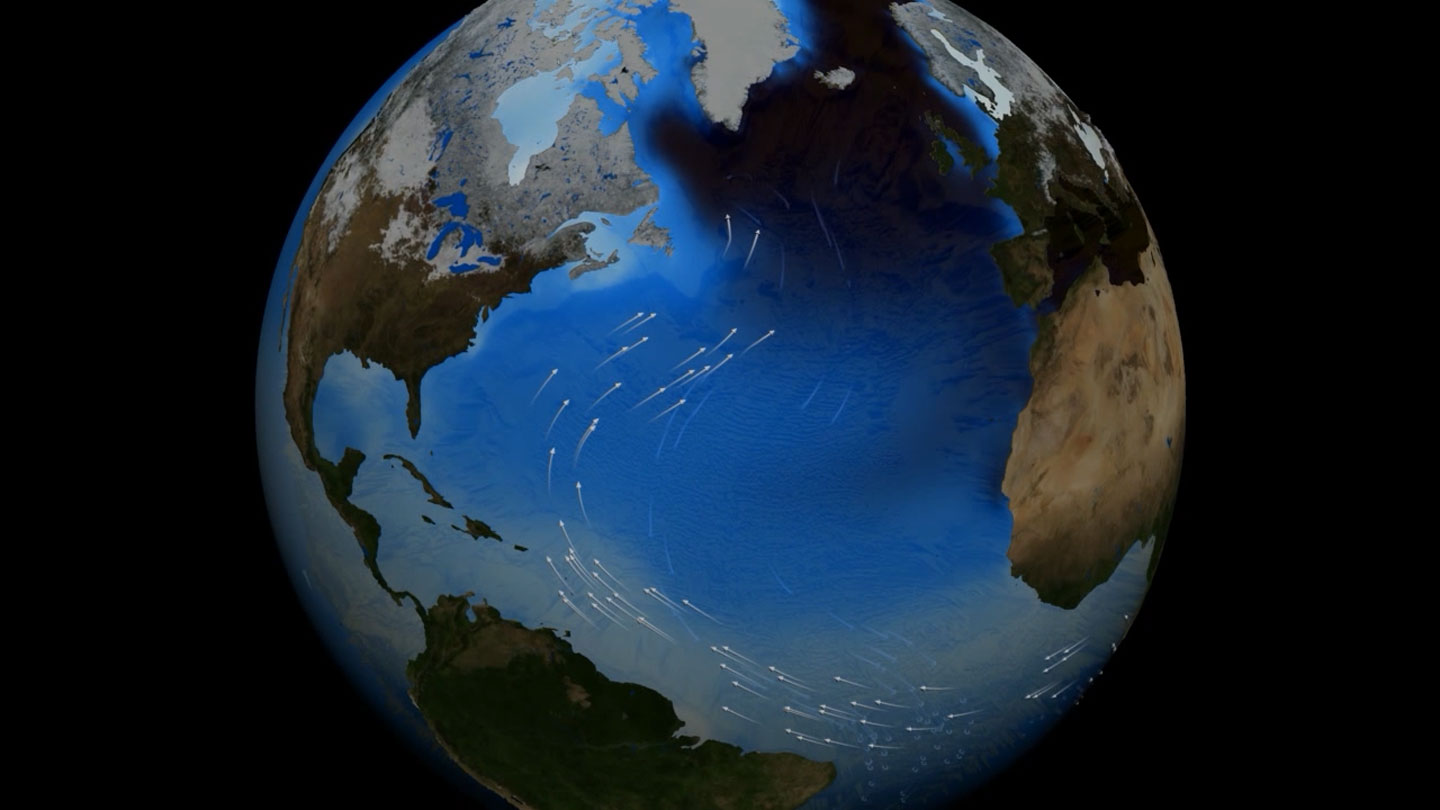
A big ocean current that warms Europe is getting weaker. This could make Europe much colder. Scientists call it AMOC. It moves warm water from the tropics to Europe. Recent studies say it could weaken by half in 75 years. If it shuts down, Earth could become very cold, like a snowball. This might cause more extreme weather. Europe could have very cold and very hot days. The Southern Hemisphere would get even warmer. There would be stronger storms in the North Atlantic. Drought in Africa's Sahel would get worse. Summer rains in Europe could decrease, hurting farmers. Scientists have warned about this for many years. The movie The Day After Tomorrow showed this idea. But predictions have been very different. Now, scientists have more data. They think AMOC is weakening. Some scientists suggest building dams to stop water from flowing into the AMOC. This might help stabilize it. But such ideas are controversial. No one knows what might happen. The AMOC works like a conveyor belt. Water density drives it. Saltier water sinks. Colder water sinks. This keeps the current moving. As AMOC releases heat, water gets cold and sinks. Then it flows south along the seafloor. Warmer water moves north to replace it. For decades, scientists worried that climate change could weaken AMOC. Computer models suggested this. But models had trouble predicting when and how much. Now, scientists have about 20 years of direct observations. A new study says AMOC will be 50% weaker by 2100. Predicting AMOC is hard. It's not like predicting global temperature. The problem is that different climate models give different answers. The IPCC uses about 50 models. They take the average. But for AMOC, the results vary a lot. The biggest problem is predicting how salty the ocean will be. Saltier water sinks more, which drives currents. To predict salinity, scientists must predict rain. Rain can dilute ocean salt. But predicting rain is hard because clouds are uncertain. Past models varied widely. The average drop is about 32%, but it could be 37% more or less. Portmann's team used statistics to get a better idea.