World In Brief ยท Junior Edition
September 26, 2026
There have been lots of big animal discoveries this year, so here are five of them from around the world

Five New Animals Found in 2026

In 2026, scientists found many new animals. Here are five of the most amazing discoveries.

A monkey with a mask-like face was found in Congo. It has light patches around its eyes and mouth. Only five new monkey species have been found in Africa in 75 years. Locals call it Likweli. Scientists call it Colobus congoensis.

Four tiny bugs from Australia were named after Taylor Swift and her fans, the Swifties. The group is called Swiftiephylus. The species names come from her albums like Fearless and The Tortured Poets Department. The scientist hopes this will make more people care about insects.

A new wildcat was found in Bolivia. It is the first new wildcat in over 100 years. It is about the size of a house cat. Its spotted and striped coat made it hard to identify. DNA tests showed it is a new species. It is called Leopardus tilcayo.

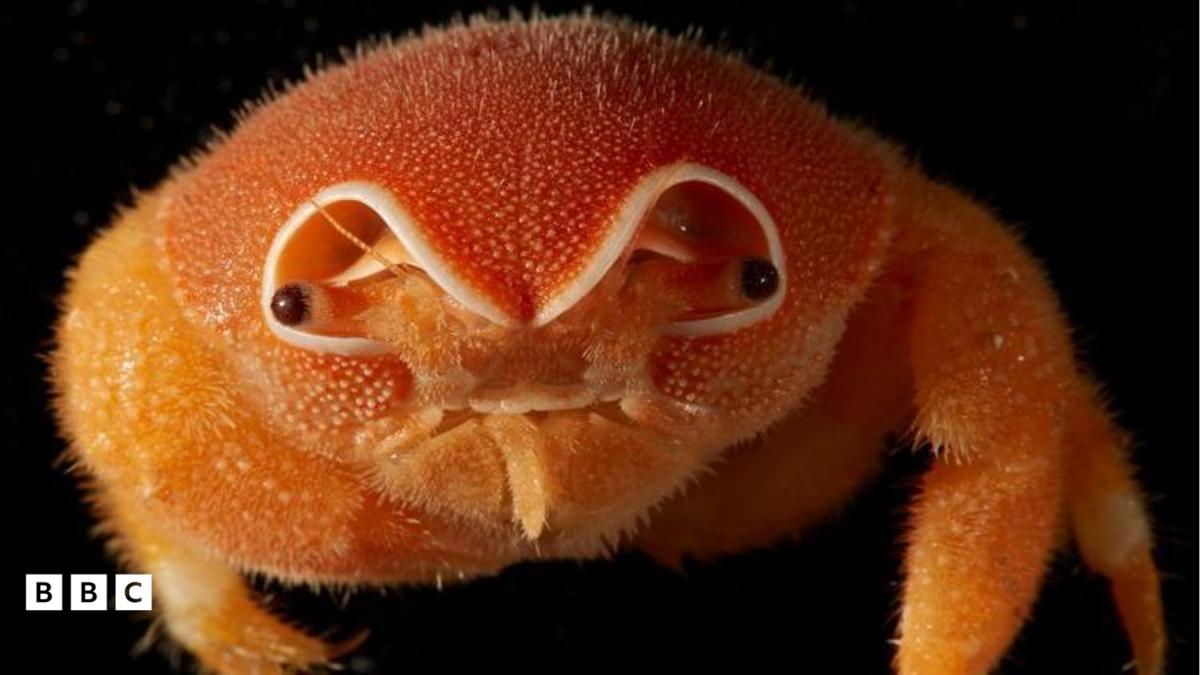
A crab that wears a sponge like a hat was found in the Indian Ocean. It is one of 149 sea creatures discovered there. Scientists published their study in June. The crab is called Sphaerodromia brizops. The specimens are now in museums.

Scientists found 1,121 new sea creatures this year. One is a ghost shark, which is not a real shark. It is a chimaera, a relative of sharks and rays. It lives deep in the ocean off Australia, up to 838 meters down.
๐Ÿ“– New Words
  • species โ€” a group of animals or plants that are similar and can have babies together (็‰ฉ็ง)
  • identify โ€” to recognize and name something (่ฏ†ๅˆซ)
  • invertebrate โ€” an animal without a backbone, like a crab or insect (ๆ— ่„ŠๆคŽๅŠจ็‰ฉ)
  • expedition โ€” a journey made for a special purpose, like exploring (ๆŽข้™ฉ)
  • chimaera โ€” a deep-sea fish related to sharks and rays (้“ถ้ฒ›)
Teen Inventor Creates A New Way To Fight Microplastics has 10 comments.

Teen Invents a New Way to Fight Tiny Plastic Bits

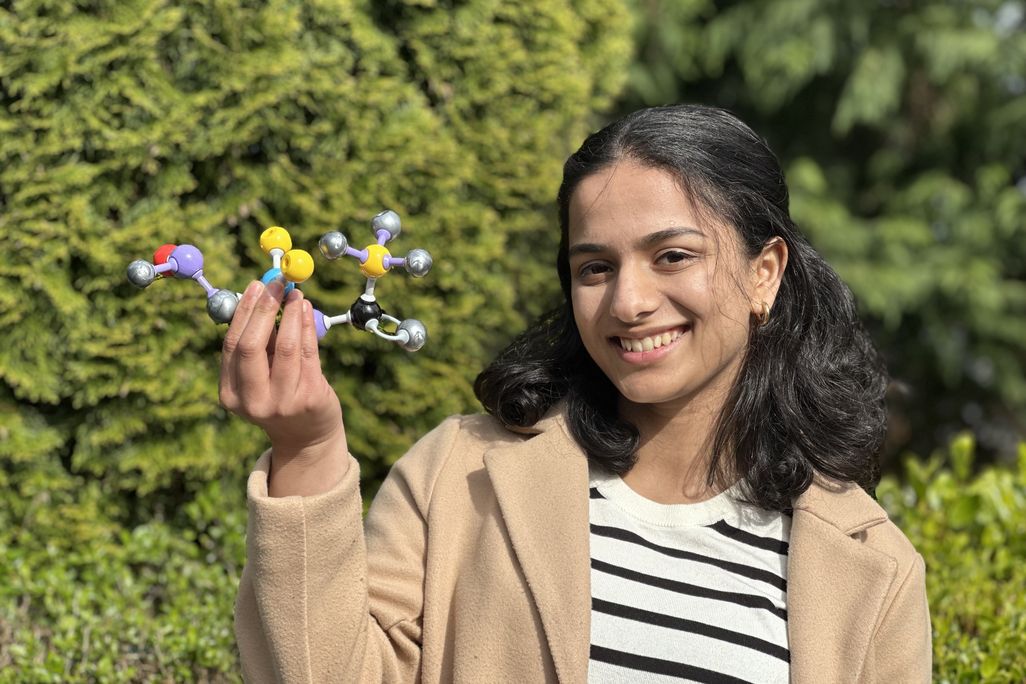
Microplastics are tiny pieces of plastic. They are in oceans, soil, food, and even the air. They are very hard to remove. Arya Satheesh is 18 years old. She lives in Ireland. She made a new thing called Eco Purge. It is a plant-based plastic. It breaks down naturally. It also helps break down microplastics in the environment.

Arya got interested in microplastics in 2024. She made a water sensor for a science contest. It could find microplastics in water. But it could not remove them. She wanted to fix that. So she started making Eco Purge. She needed two natural enzymes. She asked some companies for samples. Some said they would sell them. But they cost too much for a high school student. She did not give up. She asked Professor Kevin O'Connor for help. He works at BiOrbic in Ireland. He got her the enzymes. He also let her use a lab at a local university.

By early 2026, Arya had a first model. She tested it. She put some microplastics and Eco Purge in soil, salt water, and fresh water. She watched them for six weeks. At the end, both the microplastics and Eco Purge had broken down in all three. Her invention won the European title at The Earth Prize in May 2026. She also got $12,500 and help from experts.

Arya still has challenges. The enzymes only work on some plastics. High heat can damage them. Making a lot of enzymes can be costly. But Arya is determined. She wants to keep making Eco Purge better. She says, "Science isn't just about understanding the world. It's about leaving it better than we found it."

๐Ÿ“– New Words
  • microplastics โ€” very small pieces of plastic that are hard to see (ๅพฎๅก‘ๆ–™)
  • enzymes โ€” natural substances that help chemical reactions happen (้…ถ)
  • bioplastic โ€” plastic made from plants, not oil (็”Ÿ็‰ฉๅก‘ๆ–™)
  • decompose โ€” to break down naturally into smaller parts (ๅˆ†่งฃ)
  • prototype โ€” a first model used for testing (ๅŽŸๅž‹)
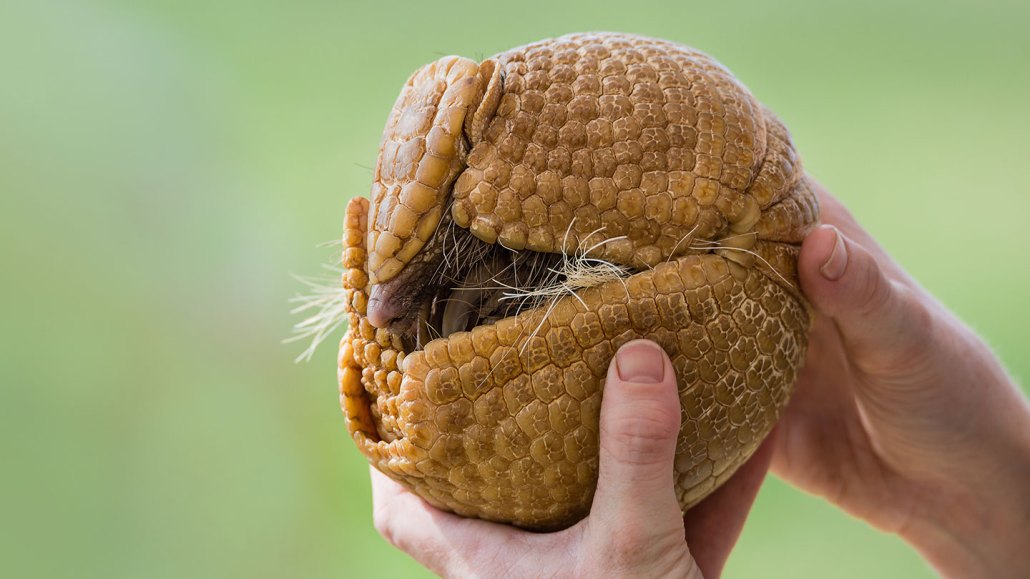
To protect itself, an armadillo (shown) can curl up so that only its armored shell is exposed. Inspired by this animal, researchers have engineered a new device that can do much the same thing. leekris/iStock/Getty Images Plus

A New Robot Rolls Up Like an Armadillo to Stay Safe

The three-banded armadillo has a special way to stay safe. When it feels scared, it rolls into a ball. Its hard plates make a strong ball that is hard to break. This clever idea helped scientists build a new robot. The robot can protect fragile things, like electronics.\n\nThe robot starts out flat. But when something touches it, it rolls up into a wheel. It has a hard, 3D-printed shell on the outside. This shell keeps the inside safe from sharp things, drops, or crashes. The robot can also hold small objects inside to protect them. The team at North Carolina State University shared their robot in a science journal on May 27.\n\nThe robot was inspired by animals like armadillos and pangolins. These animals have armor that can change shape. They can roll into a nearly perfect ball. Even though they can move, their shell is still hard and protective.\n\nIt took the scientists over a year to make the robot. They used layers. The outside is a hard shell with plates that bend. Inside, there are layers of soft material that act like muscles. One layer grows when heated. Another shrinks when heated. The innermost part is like a skeleton that locks together when it rolls up. It's like origami.\n\nThe robot also has a sensor. When it feels a vibration, even a light touch, it sends a signal. That turns on a tiny heater. The heat makes the muscle-like material contract. This pulls everything together into a wheel shape. The whole process takes about a minute.\n\nNina Attias is a scientist who studies armadillos. She loves them. She is happy that armadillos inspired this robot. She says only three of the 20 kinds of armadillos can roll into a ball. The three-banded armadillo from South America is one. It can feel vibrations very well. It can sense termites underground and jaguars that want to eat it. The new robot also rolls up when touched. Its contracting material works like the armadillo's strong muscles.\n\nThe robot passed many tests. Researchers dropped it from a few feet onto sharp tacks. Glass balls and raspberries inside it were not harmed. The scientists are excited about combining hard and soft parts. They say the armadillo gives a good balance between working and protecting. In the future, they will look at other animals for more ideas.

๐Ÿ“– New Words
  • armadillo โ€” a small animal with a hard shell that can roll into a ball (็Šฐ็‹ณ)
  • fragile โ€” easily broken or damaged (ๆ˜“็ขŽ็š„)
  • morphing โ€” changing shape (ๅ˜ๅฝข็š„)
  • rigid โ€” hard and not bending (ๅš็กฌ็š„)
  • actuator โ€” a part that makes something move (่‡ดๅŠจๅ™จ)