World In Brief · Senior Edition
September 26, 2026
New studies pour cold water on a prominent rejuvenation idea.

Young Organs May Not Be a Fountain of Youth for Recipients

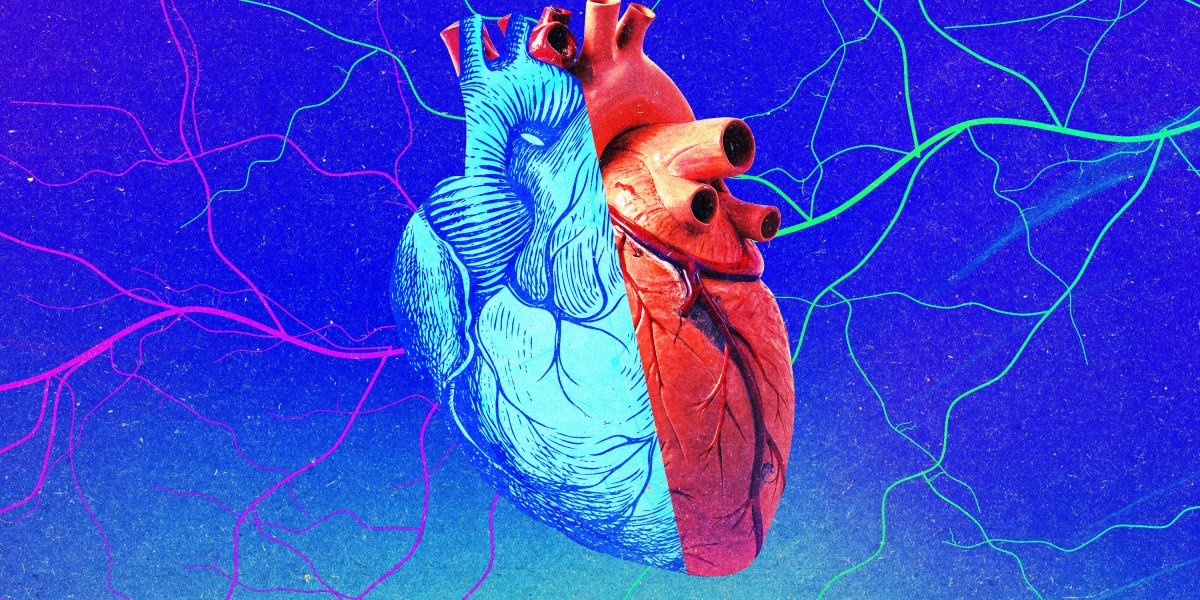
Imagine if you could stay young forever by swapping out your old organs for new ones. That's the idea behind a popular theory of rejuvenation, and it even caught the attention of world leaders. Last year, a hot mic reportedly caught Russia's Vladimir Putin telling China's Xi Jinping that with biotechnology, human organs could be continuously transplanted, allowing people to live younger and younger—perhaps even achieving immortality. He seemed to be referring to the 'replacement' theory of longevity, which has been supported by experiments where young mice were stitched to old ones, and something about the young blood seemed to rejuvenate the old mice. But new research throws cold water on this idea. Studies on transplanted hearts in both mice and humans suggest that new hearts soon adopt the biological age of the recipient, no matter how young they were to begin with. This finding could be important for transplantation, but it also shows just how complex aging—and rejuvenation—really are.

Jesse Poganik at Brigham and Women's Hospital in Boston is one of many scientists trying to understand what it is about young mice that rejuvenates old ones. A lot of research has focused on young blood, but what if it's something about young organs instead? To find out, he and his colleagues performed heart transplants in mice. In humans, heart transplants usually involve replacing a damaged heart with one from a donor who is typically much younger than the recipient. (When Poganik checked hospital records, he found that most recipients were about 20 years older than their donors.) The mouse transplants were different: mice received a second heart implanted in the neck—a simpler procedure that lets scientists compare the new heart with the existing one. In some cases, young adult mice got a heart from a middle-aged donor. In others, middle-aged mice got young hearts.

The team used three 'aging clocks'—molecular tools that estimate the biological ages of tissues and organisms—to see if the extra hearts affected the mice. These clocks were good at predicting the chronological age of mice that didn't get new hearts. Poganik expected to see a reciprocal effect, like young hearts benefiting older animals. In previous work by other team members, young mice that got old hearts had a buildup of senescent cells in their other organs. These cells are thought to contribute to aging, suggesting that receiving an old organ might prematurely age an animal. But that's not what he found. When they analyzed the transplanted hearts four to six months after surgery, the hearts seemed to have adopted the biological age of the recipients. Young hearts got older, and old hearts got younger. 'The environment of the transplanted organ really dictates how it seems to behave biologically,' he says. The findings were published online at bioRxiv last week.

The team also looked at each mouse's blood and other organs—including its original heart—and were surprised to find that they seemed unaffected by the new heart, despite the donor's age. The finding was backed up by data from human heart transplants. People who receive a donor heart typically undergo heart biopsies after surgery. Tiny pieces of heart tissue from people who had transplants at Brigham and Women's have been stored for decades. When Poganik and his colleagues tested their biological ages with the aging clocks, they found a similar pattern: no matter the donor's age, a new heart quickly adopts the biological age of the person who received it.

It's not clear why this happens, but João Pedro de Magalhães, who studies aging at the University of Birmingham in the UK and was not involved in the study, thinks it might have something to do with the recipient's immune system. Perhaps immune cells circulating in the blood affect markers of aging in the new organ, he says. Maybe the potential rejuvenating effects of a young heart get diluted by all the other aged components of an older body, Poganik suggests. Or maybe a single organ just isn't enough to see an effect.

Poganik hopes his finding will encourage surgeons to consider using hearts from older donors, many of which are discarded because they're assumed to not function as well. (Machines used to preserve organs before transplantation are already changing that—and Poganik has worked on another study showing that these devices seem to rejuvenate donor livers to some extent.) But the study also highlights how complicated aging is. If organs seem to be getting older by one measure but not another, how can we get a full picture of the biological age of an organ or a person? This complexity means scientists are not likely to discover a true way to completely reverse aging, says Poganik. 'That would mean that every aspect of aging has to go back in time,' he says. Reversing DNA damage, structural damage, and all the other degradations that are part of aging, across all our cells and tissues, presents an enormous challenge. 'There are aspects of biological age that are probably reversible, and there are aspects that are probably not,' he says. Sorry, Putin.


Think Critically
Do you think it's ethical to try to reverse aging, even if it were possible? Use evidence from the article to support your opinion.
See It Differently
How might the findings of this study be viewed differently by a surgeon who performs heart transplants versus a scientist who studies aging? Explain.
Write About It
In a short paragraph, explain why the idea that young organs could rejuvenate a person is more complicated than it might seem, based on the article.
AI agents are not yet creative enough to carry out genuinely innovative open-ended AI research, it seems.

AI's Recursive Self-Improvement Might Not Come So Quickly After All

The AI industry's boldest promise right now is that AI will soon improve itself, with almost no need for human oversight. LLMs can already write code, generate synthetic data for training, and optimize the computer chips they run on. Forecasts of explosive AI progress predict that what researchers call recursive self-improvement is on the horizon.

But a new study suggests that it might take a while for us to get there. The researchers behind it found that AI agents are not yet capable of conducting open-ended AI research—free-form investigations that have no clear-cut answers and require judgment and taste, which may be integral to building self-improving AI.

A multi-institution group of researchers, led by Peter Kirgis and Sayash Kapoor at Princeton University, found that AI agents could solve the engineering problems necessary to do AI research but lacked the judgment and creativity to produce original research at the caliber of papers accepted by a top machine-learning conference. The gap suggests that some of the hyped-up timelines for automating AI research may be running ahead of the evidence.

Most existing research on how agents can automate AI research evaluates their ability to complete narrow tasks with checkable answers, such as solving engineering problems or post-training small language models against a benchmark. But making progress in AI research also requires open-ended thinking—choosing a set of hypotheses, deciding what evidence would settle a question, or knowing when to start over.

To test agents on those kinds of skills, the researchers in the study proposed a new method of evaluation called "shadow evaluation," which requires the AI to answer a research question from a high-quality unpublished paper.

The researchers asked Anthropic's Claude Opus 4.8, running on open-source software called OpenClaw, to tackle such questions, in this case from two papers submitted to the prestigious machine-learning conference NeurIPS 2026.

The first question was whether a large language model's "personas," which determine its behavior, can be controlled by editing the model's weights (the billions of numbers that store everything it learns during training). The other asked how to design a detector that points out when a model that makes predictions based on spreadsheet data has become unreliable. Because the papers had not been made public, the agents could not memorize the answers from their training data or find them online.

The agents were given six days, $3,000 in Anthropic API credits, a GPU budget to run the experiments, their own virtual computers, and access to the open web to produce a research paper worthy of publication at a top-tier AI conference. The papers' original authors graded the agents' papers as they would evaluate one submitted to a conference.

Those authors rejected both papers.

The agents were capable of all the engineering required to conduct the research, the human scientists found. The agents reviewed the literature, ran hundreds of experiments, and compiled the results.

"On the other hand, the agents were unambiguously bad at carrying out the research itself," says Kapoor. They ran bizarre experiments (in some cases testing their hypotheses on tiny synthetic datasets), struggled to write intelligibly about their work, and made no novel contribution to their fields. "The papers were nowhere close to the mark when it came to being at the quality of a top AI conference," he says.

That's because the agents struggled to muster the creativity and judgment necessary for conducting research. They didn't do enough to explore different ideas, and they committed to unpromising approaches too quickly. Though the agents developed novel and ambitious hypotheses resembling those that the original authors themselves started with, they rejected them on the basis of very limited data. And they couldn't backtrack from failing approaches. They could make small pivots but could not fundamentally rethink their approach or try new ones from scratch.

The agents also failed to incorporate feedback from subagents or external AI reviewing tools. Instead of revising their methodology, the agents narrowed their claims and added caveats. They also couldn't effectively use resources, such as tokens, compute, and time. And they couldn't follow instructions about things like how much time to spend on different phases of the research or how long their paper could be.

For all their failures, the agents didn't engage in the misbehavior that researchers call "reward hacking," hiding or misrepresenting experiments or data. Although subagents, or helper AIs that the main agent spawns to handle pieces of the work, occasionally hallucinated or misrepresented the results, these were caught by the orchestrator agent, the lead AI supervising the project.

The reason AI models are good at research engineering but not at open-ended research may come down to how they're trained, says Kapoor. Models get good at whatever they can be drilled on in a training regime called reinforcement learning, which is easier to apply to tasks whose success can be checked automatically. "But it's harder to create environments to train these models when the task itself is open-ended," he says.

Kapoor says the team is now conducting the experiment with Mythos, Anthropic's most advanced model, which launched in April. It was subsequently required by the Trump administration to meet various safety restrictions and is now available only to approved organizations. Anthropic did not respond to a request for comment.

There are some limitations to the study. It covered just two research papers, and the original authors knew the papers they were grading were generated by AI agents, which could have colored their evaluations. And the researchers had substantial discretion in designing and executing the study, meaning that their preexisting beliefs and biases could have slipped into the results. Evaluations of open-ended research trade some objectivity for a much richer test than any benchmarks can offer.

Still, the results may temper the claims that recursive self-improvement is on the horizon. In June, Anthropic published a blog post titled "When AI Builds Itself," charting its progress toward models that speed up their own development. In July, OpenAI advertised the fact that its new model GPT-5.6 Sol had helped post-train a smaller model, saving researchers weeks of work.

The new finding may echo what AI companies are finding internally, regardless of their most optimistic public statements. Anthropic cofounder Jack Clark wrote in his newsletter Import AI that it rhymes with what the company found when it tried to automate some aspects of AI safety research.

"There's a certain absence of valuable, intuitive creativity in today's AI systems, and though they're extraordinarily capable engineers they seem to have a certain property of rote, formulaic thinking that might prevent them [from] being good researchers," he wrote. He called AI systems' lack of creativity a "bearish signal on short recursive self-improvement timelines."

AI companies do have every incentive to develop AI systems that can rapidly accelerate their own progress, just as they did to make the models better at coding. OpenAI has made building an automated AI researcher an explicit goal, and Anthropic identifies self-improving AI as the industry's next milestone.

"If there is investment and then conscious effort toward this direction, I feel like there would be interesting progress, even if it's failing currently," says Najoung Kim, a

Think Critically
Do you agree that creativity and judgment are the main things holding AI back from doing its own research? Use evidence from the article to support your opinion.
See It Differently
How might an AI researcher who believes recursive self-improvement is coming soon respond to this study's findings? What would they say are the study's weaknesses?
Write About It
In one paragraph, explain why training AI with reinforcement learning works well for engineering tasks but not for open-ended research. Use examples from the article.
The debate is louder than usual as climate voices gather.

AI Is Dominating the Conversation at Climate Week

This week, world leaders gathered in Manhattan for the United Nations General Assembly. At the same time, New York is hosting Climate Week, where investors, policymakers, advocates, and journalists meet at panels, talks, and fancy dinners. With so many climate voices in one place, the discussions feel louder than usual. This year, the unavoidable topic is artificial intelligence. A growing tension is bubbling up about AI's impact on climate and climate technology. Depending on your view, you might point to AI's potential to advance research, or to the way funding and attention from Big Tech is flowing into energy startups. Or you might focus on the emissions-heavy natural gas buildout happening to meet the electricity demand of AI. Everyone seems to agree that AI is important. The big question for those in the climate world, and the conversation I keep having and hearing this week, is how you see its influence unfolding. UN Secretary-General António Guterres highlighted the AI and climate crossover in a speech on the first day of the assembly. "The climate crisis fuels instability and displacement," Guterres said. "Artificial intelligence could help solve all these challenges, or it could make them worse." It feels relevant that this year is the first that the world has really had to grapple with the fact that climate goals are slipping out of reach. A recent report from the UN Environment Program said that the world has nearly passed the point where we could possibly keep warming to less than 1.5 °C above preindustrial levels. Since we have essentially missed this target, the report lays out the need not only to quickly and drastically reduce greenhouse gas emissions, but also to employ carbon removal to help suck up emissions that have already been released into the atmosphere. The billion-dollar question is whether AI could help with any of this. The energy-intensive technology is certainly shining a spotlight on the need to build out electricity supplies and shore up grid reliability. The result is more attention and money for energy technologies, some of which happen to be low- or zero-emissions. As I have covered before, startups across the energy and climate sectors are benefiting. Firms in nuclear, geothermal, wind, and solar power have signed deals with the likes of Google, Meta, and others looking to power their new or growing data centers. Global climate-tech investment from venture capital hit $26 billion in the first half of 2026, according to data from Currence, a finance tracker for the industry. That is 55% higher than last year, and products and services for data centers are getting a massive slice of that pie. But as a Semafor piece about the report points out, some sectors are slipping through the cracks: Carbon management and low-carbon fuels saw venture capital investment plummet this year. These are important solutions for addressing climate change but may not be able to sell themselves to a data center. So far, the data center buildout has come with a hefty emissions toll. A few years ago, Microsoft, Google, and Meta all had ambitious goals to reduce greenhouse gas emissions. Now they have all seen emissions rise, largely because of data centers that are needed to power AI. Some people are optimistic. AI could help speed up progress in areas like the search for new catalysts, as Evelyn Wang, MIT's vice president of energy and climate, pointed out during a panel. And data centers will not add to climate and water problems forever, Wang told the Associated Press. She puts the timeline at about a decade until data centers no longer add to planet-warming emissions. But a whole lot of natural gas is coming online to meet the immediate demand created by new data centers. And once those power plants are built, they have a decades-long lifetime. That is partly why public pushback to AI is growing. People are seeing more pollution and noise near these data centers and the power plants that provide them with electricity. Overall, what I am hearing this week is that many in the climate sector are skeptical of AI, at best. "AI leaders are now on thin ice when it comes to license to operate and sinking deep underwater when it comes to public support," said UN climate chief Simon Stiell in a speech this week. "Tech titans need to start showing why the benefits of AI outweigh its skyrocketing costs—for the many, not just the tiny few." This article is from The Spark, MIT Technology Review's weekly climate newsletter.

Think Critically
Do you think the benefits of AI in fighting climate change outweigh its environmental costs? Use evidence from the article to support your opinion.
See It Differently
How might a tech company executive respond to the criticism that AI's emissions are rising? What arguments might they make?
Write About It
In a short paragraph, explain how the growth of AI data centers could both help and hurt efforts to address climate change.
And the chances of a crackdown are slim, as the authorities spy opportunities for surveillance.

Smart Glasses Are Already Causing Havoc in India

Shubnam was packing boxes to move into a new home when a friend sent them an Instagram video. The video had only been online for a few hours, but it was actually filmed days earlier at a Delhi protest this spring. The protest was against a bill that would have limited legal recognition for transgender people in India. At the protest, a content creator known for making rage-bait videos approached Shubnam, a 38-year-old transfeminine graphic designer and educator. Shubnam, who uses a single chosen name, was wearing a green sari with a shaved head. The creator asked why they were wearing "female clothing." Shubnam told him to back off. Only when the video appeared did Shubnam realize the creator had recorded the exchange using Meta smart glasses that look like ordinary Wayfarer sunglasses. The footage was edited into a mocking reel and got millions of views, along with transphobic abuse, reaction videos, and AI-generated memes. It spread from Instagram to X and YouTube. Copies are still online today. For Shubnam, the video caused huge harm. "All it took was one unconsented video to rewind two decades of progress that I made all on my own," they told MIT Technology Review. "For a moment, it felt like this entire adult life I had lived was just a long lucid dream, and I was going to wake up as that clueless queer child again." They haven't worn a sari outside their neighborhood since. Experts warn that many others will face similar experiences as smart glasses become more common. They say privacy problems are especially serious in India, where secret recording and sharing images without consent are already widespread. Cases of cyberstalking, sextortion, deepfakes, and other online abuse are growing in the country. And the chances of a crackdown on technologies like smart glasses are slim, because Indian law enforcement is itself increasingly using AI-powered surveillance tools, including facial recognition systems and their own AI-enabled smart glasses. Smart glasses are among the fastest-growing devices in India's wearables market, according to the International Data Corporation, a research firm. Reliance Jio, one of the country's largest telecom companies, says it will launch a sub-$105 rival to Meta's glasses later this year. Meta's latest model costs $420 in India. The core privacy issue is that these cameras don't look like cameras, so people may not notice they're being recorded. Yet Meta rejects the idea that it's responsible for protecting people from intrusions, says Janusz Świerczyński, an Oxford Saïd Business School researcher who studies privacy and emerging technology. "More and more, the expectation is being placed on bystanders to look out for themselves," he says. That means it's up to them to spot a small LED in the glasses frames that activates when recording is in progress. Meta also relies on wearers to behave responsibly, says Świerczyński. Reliance Jio did not respond to our request for comment on privacy issues related to its upcoming glasses. Creators have already shown ways to get around the recording light on Meta's glasses. Tutorials show users how to cover or obscure the LED while still recording. Back in March, Wired documented a market for "stealth mode" modifications that physically disable the light or remove it entirely. All that makes secret recording easier, and the risks are not shared equally. Świerczyński says women and other marginalized groups face greater harm when inconspicuous devices capture and share footage without consent—as happened to Shubnam. The bigger problem, however, is that in India smart glasses aren't just being used to turn ordinary people into targets of viral "pranks." They're also being adopted as a tool of police surveillance. In June, when thousands of young demonstrators gathered to protest problems with the country's education system, Delhi police used Meta smart glasses to record them. In fact, a petition filed by former Jawaharlal Nehru University Students' Union president Aishe Ghosh before the Delhi High Court alleged that police had filmed protesters continuously for weeks, including while they were eating and resting. It also alleged that the police had threatened to send footage of student demonstrators to their parents and colleges. In July, India's solicitor general dismissed the case in court as "luxury litigation." Instead of investigating the students' complaints, police turned on the students themselves, opening 10 criminal investigations for offenses including rioting, assault on public servants, and damage to public property. Some of the protesters, who spoke to MIT Technology Review on condition of anonymity, say they never saw the LED on the Meta AI glasses police wore during the demonstrations. Meta maintains that its safeguard works. The company told MIT Technology Review, "Every pair has a capture LED that blinks when you take a photo or video that you can save or share; it can't be turned off, and if someone covers or damages the LED, the camera is disabled." The company also says users are responsible for complying with the law and respecting people's privacy. That approach is risky, especially in India, where norms around filming and consent are still highly disputed and digital literacy is still uneven, says Sameer Parmar, a counselor at Meri Trustline, a safety partner working with Meta and YouTube to support people harmed by online content. "The hardware is improving, but the country's weak understanding of consent gives an invisible camera far more room to cause harm," he says. Simply being in a public place is often treated as implicit consent to be photographed or filmed. He says the help line has been seeing an uptick in cases involving covert recording and nonconsensual footage. "Violations of this access have increased significantly and are expected to rise further in India," he says. People are recorded in medical settings, during private encounters, and in public spaces. Those with less power to object are particularly vulnerable, he adds. "It's either trolling or it's playing pranks on them and then recording them," he says. Abusers "do target people who are a little more unaware or susceptible to how this technology-facilitated harm works." The law in India has not caught up with this new kind of harm, says Apar Gupta, a lawyer and founder-director of the Internet Freedom Foundation. "India's laws against voyeurism and the sharing of intimate images were designed largely around more recognizable forms of abuse," he says, citing offenses such as secretly filming someone undressing, using a toilet, or engaged in a sexual act. "[The laws] offer limited protection when someone is secretly filmed in an ordinary public setting and the footage is then used to humiliate them," he says. Social media platforms' rules do offer another route to removing harmful content filmed with smart glasses, but it's not an immediate remedy. "Under India's current rules, platforms can have up to 36 hours to act on certain complaints—a window that can be long enough for a video to be downloaded, copied, and circulated elsewhere," he says. The problem of filming without consent seems set to grow. According to the Financial Times, some internal prototypes of new Meta glasses include AI features that continuously photograph and listen to the wearer's surroundings, enabling the glasses to later recall what they saw or heard. These functions wouldn't activate the external recording indicator.

Think Critically
Do you think companies like Meta should be held responsible for how people use their smart glasses, or is it solely the user's responsibility? Use evidence from the article to support your opinion.
See It Differently
Imagine you are a police officer in India who has been asked to use smart glasses to monitor protests. How might you justify your actions, and what concerns might you have about privacy? Consider the perspectives of both law enforcement and protesters.
Write About It
In one paragraph, propose a solution to prevent nonconsensual recording with smart glasses. Explain how your solution would work and who would be responsible for enforcing it.
✻ ✻ ✻
📝 Read & Respond
Read. Think. Write.
1 Comprehension Check
1. Based on "Young Organs May Not Be a Fountain of Youth for Recipients", what is the main idea of this article? Write one sentence.
2. Based on "AI's Recursive Self-Improvement Might Not Come So Quickly After All", what is the main idea of this article? Write one sentence.
3. Based on "AI Is Dominating the Conversation at Climate Week", what is the main idea of this article? Write one sentence.
4. Based on "Smart Glasses Are Already Causing Havoc in India", what is the main idea of this article? Write one sentence.
5. What evidence does the article provide to support its main argument?
2 Vocab Builder
WordDefinition / Sentence
...
Write a word from this week's reading that was new to you:
...
Use it in a sentence:
...
Write another word and its definition:
...
Use it in a sentence:
3 Critical Thinking
Do you think it's ethical to try to reverse aging, even if it were possible? Use evidence from the article to support your opinion.
4 See It Differently
How might the findings of this study be viewed differently by a surgeon who performs heart transplants versus a scientist who studies aging? Explain.
5 Quick Write
In a short paragraph, explain why the idea that young organs could rejuvenate a person is more complicated than it might seem, based on the article.