World In Brief · Junior Edition
October 3, 2026
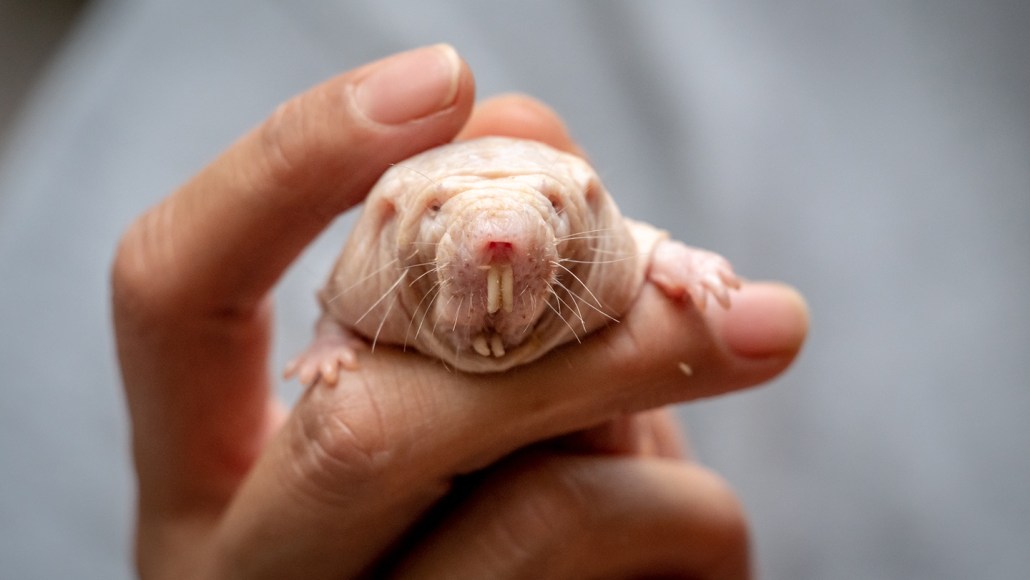
Teamwork is important for naked mole-rats, but they can be vicious fighters. Scientists recently discovered a queen keeps her colony’s members calm by emitting a special scent. John Brighenti/Flickr ( CC BY 2.0 )

A Queen's Smell Keeps Naked Mole-Rats Peaceful

Naked mole-rats are small animals that live in groups. They work together, but they can also fight. A new study found that the queen mole-rat releases a special smell. This smell keeps other mole-rats calm. It stops them from fighting and from having babies. This helps the queen stay in charge.\n\nIn a naked mole-rat colony, only the queen has babies. Other mole-rats find food or care for the young. When the queen dies, other mole-rats start fighting. They fight until a new queen wins.\n\nScientists at the Max Delbrück Center in Berlin, Germany, studied this. Gary Lewin is a neuroscientist there. He found that naked mole-rats use smell to tell friends from strangers. He wondered if smell also matters inside a colony.\n\nThe team found a chemical that only queen mole-rats make. It is called isopropyl myristate. People cannot smell it, but it is very strong to mole-rats. It makes their brain's smell center active.\n\nTo test this, the scientists took the queen away from a colony. Then they put isopropyl myristate on the colony every day for three months. During that time, there was no fighting and no mating. But when they stopped adding the smell, the mole-rats started fighting. Within a week, one mole-rat died. Soon after, they started mating, and a new queen appeared.\n\nThe team also did another experiment. They put male and female mole-rats in pairs. Some pairs got the queen smell. Others did not. After four weeks, none of the females that smelled the queen scent were pregnant. But five out of six females without the scent were pregnant.\n\nBlood tests showed that the queen's smell changes hormones in female mole-rats. It lowers progesterone and raises prolactin. This stops them from getting pregnant.\n\nThe queen only makes this smell when she is pregnant or about to be. If she stops making it, the other mole-rats know she is not doing her job. Then they may kill her.\n\nThis kind of teamwork is rare in mammals. Lewin says, "We think of that as something uniquely human. But it's actually something that mole-rats have been doing for millions of years."\n\nThe study was published in the journal Nature on July 15.
📖 New Words
  • colony — A group of animals that live together. (群落)
  • scent — A smell. (气味)
  • hormone — A chemical in the body that controls things like growth or pregnancy. (激素)
  • neuroscientist — A scientist who studies the brain and nerves. (神经科学家)
  • mammal — A warm-blooded animal that has hair and feeds its babies milk. (哺乳动物)
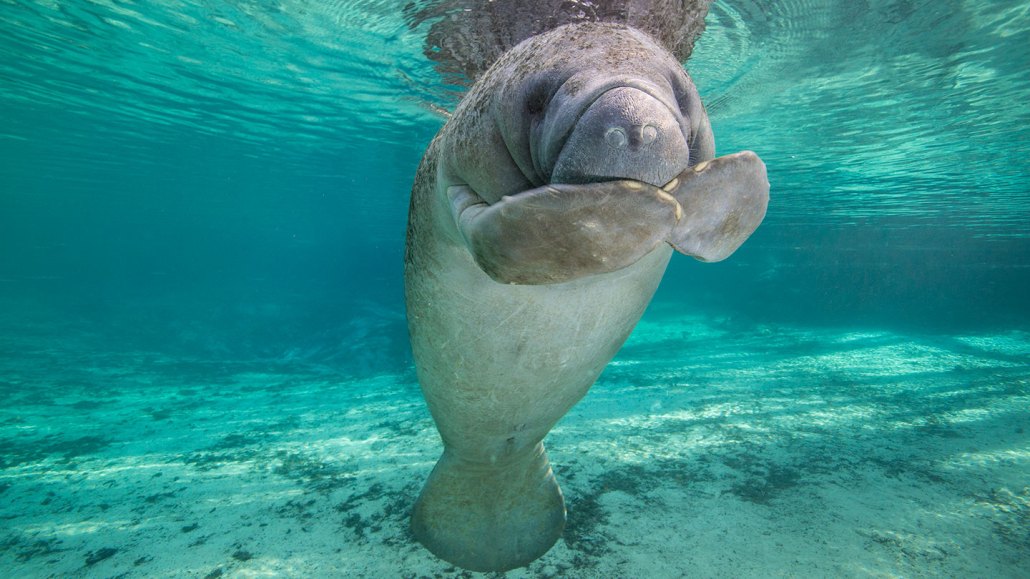
“Did I do that?” Florida manatees store gas in their guts to help them float — and may release some to dive. Gregory Sweeney/Moment/Getty Images

Farting Fish and Tooting Manatees: How Some Animals Use Gas

People are not the only animals that fart. Dogs do it too. Dakota was an English cocker spaniel. When she got older, she could not hold in her gas. She would fart during a nap. Then she would wake up and run around the kitchen. Her gas was worse when she ate rawhide. It smelled very bad. Her owner said it smelled like a dead animal in the sun. Dakota even looked sad when she farted.

We might think farts are funny or gross. But some animals use them for important things. A fart is gas that comes out of the anus. The anus is where poop comes out. Manatees are large sea animals. They have a similar opening. But for manatees, farting helps them in the water.

Nick Caruso wrote a book called Does it Fart? He says Florida manatees can store air in their guts. The gas comes from swallowed air or from digesting food. Gas is lighter than water. So more gas in the gut helps manatees float. Manatees have strong muscles in their belly. They can squeeze the gas out to dive deeper. Manatees eat a lot of seagrass. This grass is hard to digest. Their large gut and the microbes inside make a lot of gas.

Not every animal has an anus. Dani Rabaiotti co-wrote Does It Fart? She says many animals have a cloaca. A cloaca is one opening for waste and reproduction. Birds, sharks, reptiles, amphibians, and some fish have a cloaca. Most mammals have separate openings for pee and poop. Animals with a cloaca send both out together. Sometimes they also release gas.

David Shiffman is a shark expert. He says the sand tiger shark farts. But it is not from food. It farts to float. Most bony fish have a swim bladder to help them float. Sharks do not have bones or swim bladders. They have oily livers. Oil is lighter than water, so it helps them float. But many sharks swim all the time so they do not sink. The sand tiger shark sometimes hovers in the water. It gulps air at the surface. Then it uses the air to hover. The air must come out. It comes out through the cloaca.

Some animals breathe through their bum. Rabaiotti says some turtles can take in water through their cloaca. Oxygen from the water goes into their blood. The white-throated snapping turtle in Australia gets 48 percent of its oxygen this way. When the air comes out, it looks like a fart. But it is not really a fart because it does not come from digestion.

Herring fish also make something like a fart. Brittnie Spriel is a marine ecologist. She says herring expel air through their anal duct. The fish gulp air at the surface to fill their swim bladders. Later, they squeeze some air out the other end. This is called a fast repetitive tick, or FRT. It sounds like a fart. The sound lets other fish know they are nearby.

In the 1980s, the Swedish Navy heard these sounds. They thought the sounds might be from Russian submarines. But they were actually herring. Herring mostly make these sounds at night. Scientists think the sounds help herring stay together in the dark. Spriel and her team are still studying FRTs. They want to know where herring go and how they behave. They also want to know if ocean noise makes it hard for herring to hear each other.

📖 New Words
  • flatulence — Gas that comes out of the body through the anus (肠胃气胀)
  • buoyant — Able to float (有浮力的)
  • cloaca — A single opening in some animals for waste and reproduction (泄殖腔)
  • microbes — Very tiny living things, like bacteria (微生物)
  • swim bladder — An organ in fish that helps them float (鱼鳔)
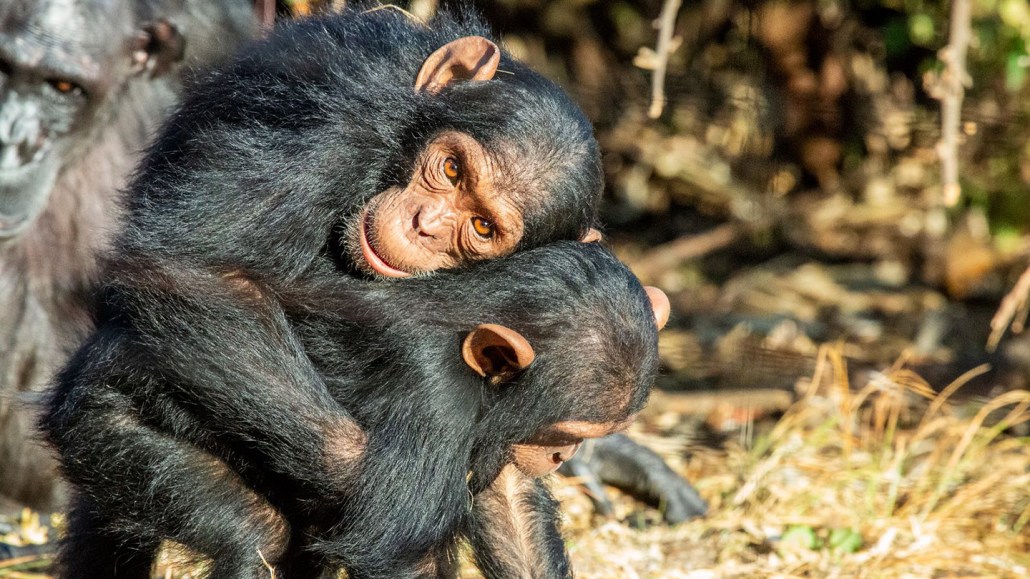
Little Jake and Little Joey embrace in a protected forested area in Zambia. Hugs like these could help these apes strengthen social bonds before stressful situations. Jake Brooker/Chimfunshi Wildlife Orphanage Trust

Hugs Help Apes Keep Peace

Hugs and kisses might help apes stay calm. A new study shows that chimpanzees and bonobos use friendly touches to keep peace when they feel stressed.

Chimps and bonobos are large apes without tails. They hug, pat, and touch each other. They even hold hands and put fingers in each other's mouths. These friendly actions help them bond, says Zanna Clay, a scientist at Durham University in England. She says humans can learn from apes about the power of touch. Touch can calm us before exciting events, like sports games.

Scientists already knew that apes touch to solve fights. But Clay's team saw apes being friendly even when there was no fight. Jake Brooker, a scientist at Utrecht University, wondered if cuddles help prevent fights.

The team watched five groups of chimps and bonobos in Zambia and the Democratic Republic of Congo. They gave the apes peanuts, a favorite snack. When the apes saw the peanuts, they got nervous because there might not be enough for everyone. The scientists filmed the animals before, during, and after giving peanuts. They found that the more the apes cuddled before eating, the more they ate together peacefully. This was true for both chimps and bonobos.

Chimps are often seen as mean, while bonobos are seen as peaceful. But the study shows they might be more alike than we think. Clay says it's not clear if touching causes peace, or if peaceful groups just touch more. It probably works both ways.

📖 New Words
  • primates — A group of mammals that includes humans, apes, monkeys, and lemurs. (灵长类动物)
  • conflict — A fight or disagreement. (冲突)
  • stressful — Making you feel worried or nervous. (有压力的)
  • cuddle — To hold someone closely in a loving way. (拥抱)
  • tolerant — Willing to accept differences or things you don't like. (宽容的)