World In Brief · Senior Edition
October 3, 2026
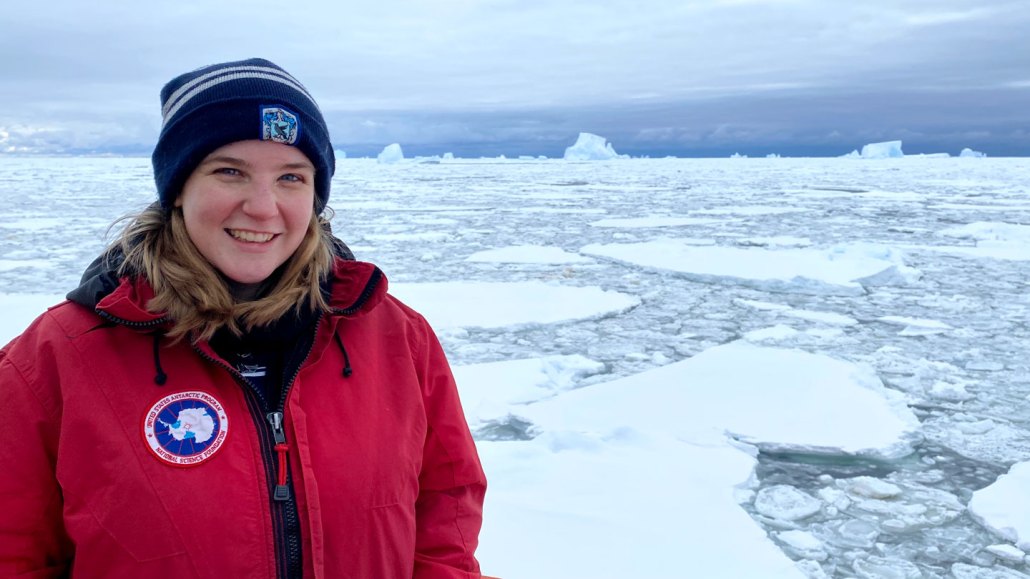
Oceanographer Lily Dove wants to know how climate change is affecting the Southern Ocean that surrounds Antarctica. Isa Rosso

Seals Helped This Oceanographer Study the Southern Ocean

Lily Dove is an oceanographer who studies how climate change affects the Southern Ocean around Antarctica. She has used some unusual helpers: Antarctic seals. "They're oceanographers," she says. "They regularly dive in areas we don't often get to sample." Dove didn't work with the seals directly. Instead, she used data from the Marine Mammals Exploring the Oceans Pole to Pole program. This international group puts sensors on the foreheads of southern elephant and Weddell seals. The seals don't mind. They dive more than 100 meters (330 feet) to find food. This lets researchers measure temperature, salinity, and pressure at depths human divers can't reach. Dove used this data to study how climate change is affecting the Southern Ocean. That's the vast ocean circling Antarctica. In some areas, heat from the atmosphere moves from the surface to the deep ocean. Once there, the heat is usually trapped for hundreds of years, which makes ocean temperatures rise even more. Now at the Georgia Institute of Technology, Dove works with autonomous robots to study polar oceans. Some, like floats, ride ocean currents. Others, like gliders, are underwater vehicles she can pilot. This means she can target specific locations. "And this is all remote," she says. "I can sit here in Georgia and tell my glider in a whole different hemisphere where I want it to go." This technology is also more predictable than her past assistants. "Seals are very independent," she says. Unlike a glider, "seals very much tell me where they want to go." In this interview, Dove shares her experience and advice with Science News Explores. (This interview has been edited for content and readability.)

What inspired your career? Growing up in Florida, the ocean interested me as this powerful system that we take for granted. But I didn't really consider it as a career back then. I knew I loved science, like physics and chemistry. In college, I knew I wanted to do one of those things or some combination. I changed majors like five times. Then I realized that I liked those topics because they could help explain what I cared about: the Earth and the environment. I learned that you need all different kinds of science to understand the Earth system. Biology, physics, chemistry, geology — all of them. I ended up researching atmospheric chemistry.

How did you get to where you are today? In graduate school, I took those skills from studying atmospheric chemistry and started doing oceanography instead. The atmosphere and ocean have the same physics. That made it feel like it was the perfect transition for me. I landed in a group that was investigating polar oceans, which wasn't something I'd even considered before. I went to the Southern Ocean for the first time in 2020. The polar oceans are pretty remote and far away from where most people live. But they have massive impacts on our climate system, especially the Southern Ocean. It wasn't until I was there that I realized that. That's when I knew that this is exactly what I wanted to be doing.

What was your biggest challenge, and how did you overcome it? I've experienced quite a bit of discrimination in this field as a woman. There are a lot of assumptions people have about who is welcome to do polar science. Historically, women have not been included on research cruises. Women used to stow away on ships to get data for their research theses. There's a famous case at the Woods Hole Oceanographic Institution of a woman stowing away on a research vessel in the 1950s. That stigma is still present to an extent, but it's changing a lot. And it's not just about women. People of color, queer people and disabled individuals are also experiencing this less-overt discrimination. Throughout my time in the field and in academia, there have been times when people have assumed I can't do something. That's really frustrating, but it's also given me the skill to really speak up and advocate for myself.

What advice would you give to your younger self? Say "yes" to as many opportunities as possible. That could be attending an event, talking with a scientist or taking a course. The worst-case scenario is that you learn something new that's just not super interesting to you. The best-case scenario is that something grabs your attention, and you can't let it go. I am also glad that I didn't hyperfixate on a particular area of study super early. I'm glad I got a strong basis in a lot of different scientific fields before I decided on a focus. It allowed me to be really flexible and open to new ideas. If you already know that you'd want to do something specific, listen to your gut. But if you are not quite sure, lean into just learning a lot.
Think Critically
Dove says that saying 'yes' to many opportunities helped her career. Do you agree that trying many things is better than focusing early on one path? Use evidence from the article and your own experience to support your opinion.
See It Differently
Imagine you are an Antarctic seal with a sensor on your forehead. How might you feel about helping scientists study the ocean? What concerns might you have, and how would you want researchers to address them?
Write About It
In a short paragraph, describe a time when you tried something new and it led to an unexpected opportunity or interest. What did you learn from that experience?
Scientists hope it could be used to reconstruct a person’s inner thoughts, mental images, or even dreams.

An AI 'Mind-Reading' Tool Can Reconstruct What You're Looking At From a Brain Scan

Scientists have built an AI tool that can look at your brain scans and figure out what you're seeing — then recreate that image with surprising accuracy. It works in reverse, too: show it an image, and it can predict what your brain activity would look like.

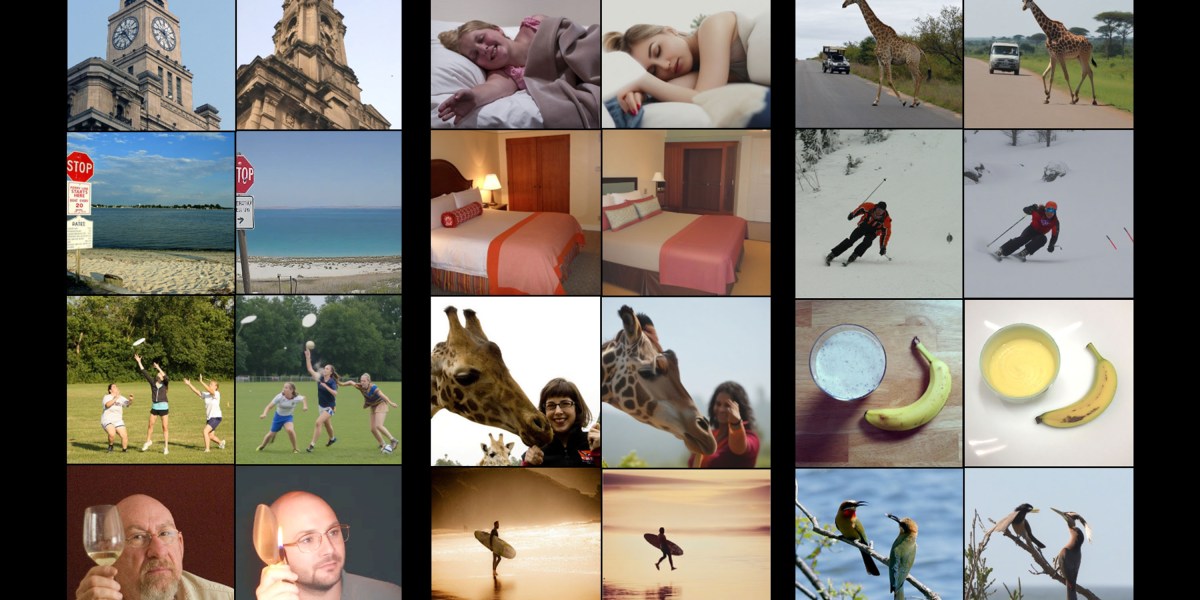
In the image pairs above, the left side is what a person actually saw. The right side is what the AI reconstructed from their brain scan alone.

Michal Irani and her team at the Weizmann Institute of Science in Israel developed the tool. She hopes it will eventually help scientists understand how the brain works, allow people who are paralyzed and unable to communicate to share their thoughts, and maybe even let researchers recreate dreams.

Judy Illes, a neuroethicist at the University of British Columbia who was not involved in the research, calls the work 'magnificent.' She says the idea of using this approach to help people with neurological conditions is 'tremendously exciting.'

But other scientists warn that a similar approach could be used to extract people's private thoughts and mental images — potentially without their consent. Tommy Sprague, a neuroscientist at the University of California, Santa Barbara, says the results seem very impressive. But he warns that if there's a way to secretly pull information about what you're thinking, then '150 years of sci-fi can come true anytime, and that's worrisome in a lot of ways.'

Peeking into the brain

Neuroscientists have spent years trying to use fMRI (functional magnetic resonance imaging) to reconstruct what people see and what's happening in their minds. The first attempts produced blurry, hard-to-understand images. Better technology — both in the scanners themselves and in the tools that analyze the results — has led to improvements over time.

Irani and her colleagues started by analyzing publicly available brain-scan data. Other researchers had already collected scans from volunteers who were shown hundreds of images while lying in fMRI scanners.

fMRI uses a giant magnet to track the flow of oxygenated blood through the brain. Areas that 'light up' on the scans are thought to be especially active at that moment. The results aren't very specific — in typical fMRI scanners, one highlighted 'voxel' (a 3D pixel) of activity covers about three cubic millimeters. Each cubic millimeter contains around 16,000 neurons.

But Irani's team used newer datasets from higher-resolution scanners, where each voxel covered about one cubic millimeter. Those datasets showed what volunteers' brain activity looked like when they viewed various images.

Other teams have done this too, and several tools have been used to recreate images from brain-scan data. But Irani says they're not good enough. If a person saw a banana, these models can generate an image of a banana, but it would look different — 'It wouldn't have the same structure, the same position.'

A better decoder

The researchers wanted to more closely recreate the images people had seen. First, they trained an AI model on existing data from eight people who had each been shown about 9,000 images while in a high-resolution fMRI scanner.

Crucially, their 'brain decoder' has two branches — one to predict the structure of an image (where the colors are, for instance) and another to predict its content (like a bunch of bananas on a plate). These predictions allow a diffusion model — a type of AI best known for creating images and video by gradually cleaning up a noisy mess of pixels — to produce a much more accurate representation of what the person saw.

But to improve the models, they needed more data — far more than was actually available.

To get around this problem, Irani and her colleagues trained another model — an encoder that can predict brain activity from an image. The team then used the encoder and decoder together to improve both tools.

Here's how it works: Start with a new image of, say, a leopard. Use the encoder to predict what someone's fMRI brain scan would look like when they saw that picture. Then use the decoder to reconstruct the image. At first, the reconstruction probably won't look much like a leopard, Irani says. But repeatedly training the models this way eventually leads to dramatic improvements.

This approach also lets the team train their models on as many images as they want — even images that have never been shown to a person in an fMRI scanner. Irani says about 70% of the training data comes from images that were not originally paired with fMRI scans.

By combining data from multiple studies, they were also able to identify brain regions that seem to share functions across all individuals. One region seemed to respond to images of food, for example, while another responded to images of sports. Irani, a computer scientist, says she is now working with neuroscientists 'to see if we can actually use these tools that we've developed to really find out new things about the brain.'

The resulting 'universal brain encoder' can work on a scan from a new person with minimal calibration. In other attempts, a tool typically required about 40 hours of fMRI data on a new person before it could predict what they were seeing. Irani's decoder only needs one hour of data, she says. The finding was presented at the Cognitive Computational Neuroscience conference in New York last month.

That could make it valuable for neuroscientists studying the brain, says Sprague. 'None of us can afford 40 hours of imaging for a new subject,' he says. 'It's something like $600 to $1,000 an hour.' Tools like this one could speed up research, he says.

State of the art

The encoder and decoder aren't perfect. 'Of course we have failures,' says Irani. Over a Zoom call, she pointed out an image of a cake that her tool reconstructed as a pile of three sandwiches, and another of a dog in a bathtub that was reconstructed as a similarly colored goat in a bathtub.

But they represent the state of the art. In a comparison test, the tool was found to be much better than previously described ones. 'All in all, really we outperformed the others by a significant margin,' Irani says. 'Mind reading' is a 'cute, jazzy name' for what they're doing, she adds.

Irani is now planning to move beyond images to video and audio. She wants to be able to reconstruct what people are thinking about or imagining, and the contents of their dreams. 'That's something we don't have yet,' she says. 'But we're striving to achieve it.'

Such a tool might enable people who are 'locked in' and completely paralyzed to communicate using their brain activity alone, she says. It could also help scientists unravel enduring mysteries about the inner workings of our minds, such as what PTSD flashbacks look like.

Advances like this inevitably raise questions about mental privacy. What if a bad actor could reconstruct someone's thoughts or memories?

'If you'd asked me that 10 years ago, I'd have laughed a lot,' says Sprague. Getting a willing person to lie still in a scanner and actively engage with a research question is hard enough; imagine making someone do it involuntarily. But Irani and other scientists are working on similar approaches to decode brain activity from EEG — electrical brain activity measured via a cap of electrodes or even through other means.

Think Critically
Do you think the potential benefits of this technology (like helping paralyzed people communicate) outweigh the risks to mental privacy? Use evidence from the article to support your opinion.
See It Differently
Imagine you are a neuroscientist who wants to use this tool for research. How would you address the ethical concerns raised by critics like Tommy Sprague?
Write About It
In one paragraph, explain how the encoder and decoder work together to improve the AI's ability to reconstruct images from brain scans. Use your own words.
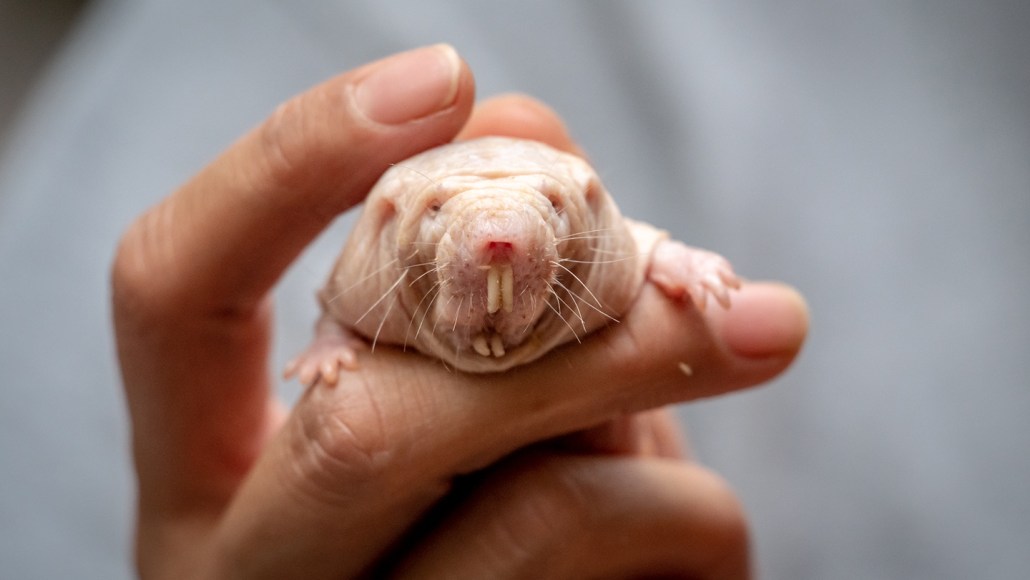
Teamwork is important for naked mole-rats, but they can be vicious fighters. Scientists recently discovered a queen keeps her colony’s members calm by emitting a special scent. John Brighenti/Flickr ( CC BY 2.0 )

Among Naked Mole-Rats, a Royal's Scent Keeps the Peace

Naked mole-rats are known for their teamwork, but they can also be fierce fighters. Now, scientists have discovered that the queen of a naked mole-rat colony releases a special scent that keeps the other members calm and prevents them from fighting or mating. This finding helps explain how these unusual mammals maintain their complex social structure.

Imagine a superhero whose superpower is a smell so strong it stops enemies from fighting. For naked mole-rats, the queen has that power. A new study shows that naked mole-rat queens release a calming scent to control their colonies. When other mole-rats smell this odor, they won't fight or mate until the queen and her scent are gone.

These powers are crucial for keeping order in the colony. Some mole-rats search for food, while others care for the young. But only the queen reproduces. She maintains her status by preventing everyone else from mating. When she dies, high-ranking mole-rats start mating and fight viciously until one becomes the new queen.

Gary Lewin, a neuroscientist at the Max Delbrück Center in Berlin, Germany, studies how naked mole-rats use their senses. He previously discovered that they use scent to identify mole-rats from other colonies. This made him wonder: Do odors also matter within a colony? Lewin and his team found a chemical called isopropyl myristate that is produced only by queen mole-rats. To humans, it has no smell. But to naked mole-rats, it must smell very strong, because it activates their olfactory cortex, the brain region that processes smells.

To test the scent's effects, the team removed a queen from her colony. Then they applied isopropyl myristate to the colony every day for three months. "In the entire three months, there was no fighting. Everybody was cool with each other … and there was no mating," says Lewin. But as soon as the researchers stopped adding the odor, the naked mole-rats started fighting. "Within a week we had the first death," Lewin says. "A few weeks later, we saw mating events — and a new queen emerged." The team published its findings on July 15 in the journal Nature.

The researchers also uncovered more clues about how the queen's special odor works. In one experiment, they separated pairs of male and female mole-rats from the colony. Some pairs were exposed to the queen scent, while others were not. After four weeks, none of the females exposed to the scent had mated. However, five of six females from the other pairs were pregnant. Blood tests showed that isopropyl myristate affects hormones in female mole-rats. It lowers their levels of progesterone and raises prolactin, which prevents pregnancy.

A queen naked mole-rat only produces isopropyl myristate when she is pregnant or preparing to be. If she stops producing it, the other mole-rats know she is not doing her job — having babies — and they kill her. This level of teamwork is rare among mammals, Lewin adds. "We think of that as something uniquely human. But it's actually something that mole-rats have been doing for millions of years — before we even appeared on the scene."

This discovery gives us insight into how chemical signals can control complex societies. It also shows that even in the animal kingdom, chemistry plays a powerful role in maintaining peace and order.

Think Critically
Do you think it's fair that the queen mole-rat uses a scent to control the entire colony? Is this a form of cooperation or manipulation? Use evidence from the article to support your opinion.
See It Differently
How might the other mole-rats in the colony view the queen's scent? Consider the perspectives of different colony members, such as workers or potential future queens.
Write About It
Imagine you are a scientist studying naked mole-rats. Write a short paragraph describing what you would want to investigate next about their use of scent, and explain why.
✻ ✻ ✻
📝 Read & Respond
Read. Think. Write.
1 Comprehension Check
1. Based on "Seals Helped This Oceanographer Study the Southern Ocean", what is the main idea of this article? Write one sentence.
2. Based on "An AI 'Mind-Reading' Tool Can Reconstruct What You're Looking At From a Brain Scan", what is the main idea of this article? Write one sentence.
3. Based on "Among Naked Mole-Rats, a Royal's Scent Keeps the Peace", what is the main idea of this article? Write one sentence.
4. What evidence does the article provide to support its main argument?
2 Vocab Builder
WordDefinition / Sentence
...
Write a word from this week's reading that was new to you:
...
Use it in a sentence:
...
Write another word and its definition:
...
Use it in a sentence:
3 Critical Thinking
Dove says that saying 'yes' to many opportunities helped her career. Do you agree that trying many things is better than focusing early on one path? Use evidence from the article and your own experience to support your opinion.
4 See It Differently
Imagine you are an Antarctic seal with a sensor on your forehead. How might you feel about helping scientists study the ocean? What concerns might you have, and how would you want researchers to address them?
5 Quick Write
In a short paragraph, describe a time when you tried something new and it led to an unexpected opportunity or interest. What did you learn from that experience?