World In Brief · Senior Edition
October 10, 2026
Navi Pillay, a South African-born jurist and former U.N. human rights chief, has won the Nobel Peace Prize.

South African-born jurist Navi Pillay wins Nobel Peace Prize for her work in international justice

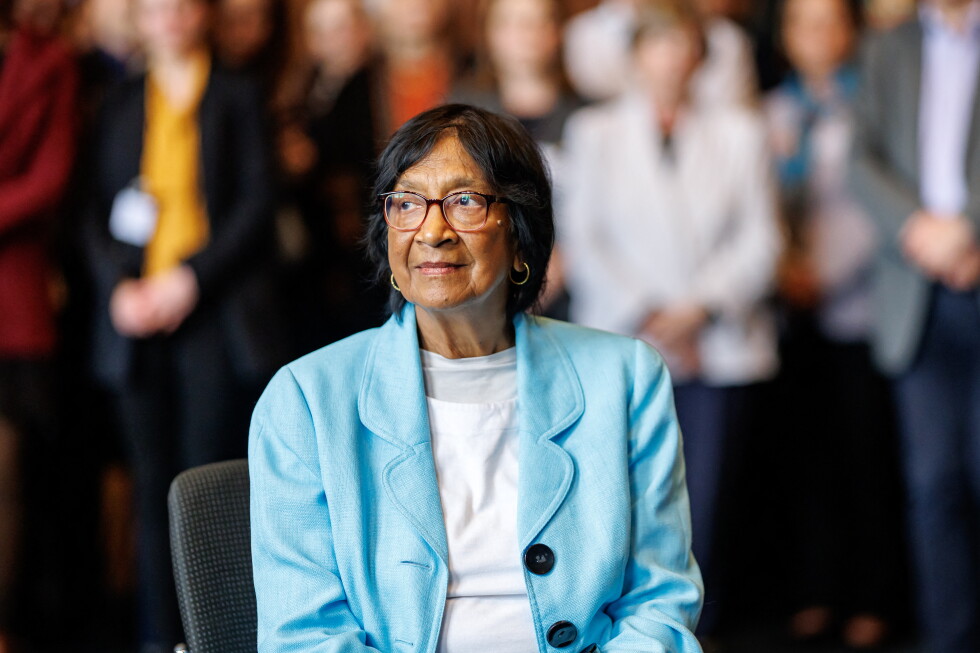
Navi Pillay, a South African-born lawyer and former United Nations human rights chief, has won the Nobel Peace Prize. The Norwegian Nobel Committee announced the award on Friday, recognizing her efforts to promote peace and international law. At 85 years old, Pillay has had a long career, from defending Nelson Mandela when he was in prison to leading a U.N. panel that found Israel committed genocide in Gaza.

Pillay received the news while attending the Nuremberg Forum in Germany, a gathering to discuss international law. Nuremberg is where Nazi war criminals were tried after World War II, helping to establish the foundations of modern international law. She was in the same room where those trials took place when the prize was announced.

The award is likely to be seen as a strong criticism of U.S. President Donald Trump and Israeli Prime Minister Benjamin Netanyahu. Both leaders have rejected the findings of the U.N. commission Pillay led on Gaza. They have also been highly critical of the International Court of Justice (ICJ) and the International Criminal Court (ICC), where Pillay has worked. Just hours after the Nobel announcement, the Trump administration imposed new sanctions on the ICC, continuing its campaign to dismantle the tribunal over investigations into the United States and its allies, including Israel.

Jørgen Watne Frydnes, chair of the Norwegian Nobel Committee, said the prize, now in its 125th year, aims to remind the world that the rule of law, both national and international, is the foundation of a peaceful system for resolving conflicts without violence. "Peace requires justice," he said. He added that judges "guard the thin red line between order and chaos" and that the world needs jurists with courage, vision, and determination—qualities he said Pillay has shown throughout her career.

Pillay has worked on some of the world's most painful and sensitive legal issues, including in apartheid-era South Africa and in Israel. She said that efforts to weaken international criminal justice "endanger the progress painstakingly made since Nuremberg, and they risk returning us to a world in which power, rather than law, determines whose suffering matters."

Pillay chaired the U.N. Commission of Inquiry on the Occupied Palestinian Territory and Israel, created by the U.N.-backed Human Rights Council. A year ago, the commission concluded that Israel was responsible for genocide in Gaza, with the specific intent to destroy Palestinians there. The commission also found that the Israeli president, prime minister, and former defense minister "have incited the commission of genocide." Israel has refused to cooperate with the commission since it was established in 2021 and strongly denies the accusations. On Friday, Pillay said of Gaza, "What's happening there is genocide," which drew applause.

Her win has been praised by many, but Israel criticized the selection. The prize highlights the ongoing debate over international justice and the role of international courts in holding leaders accountable.
Think Critically
Do you agree with the Nobel Committee's decision to award the Peace Prize to Navi Pillay? Use evidence from the article to support your opinion.
See It Differently
How might someone who disagrees with the U.N. commission's findings on Gaza view this award? What arguments might they make?
Write About It
In one paragraph, explain why the rule of law is important for achieving peace, using examples from the article.
A powerful 7.7 magnitude earthquake has struck Panama, collapsing buildings and prompting evacuations.

Powerful Earthquakes Shake Panama, Triggering Evacuations and Regional Response

Two powerful earthquakes and a series of aftershocks struck southern Panama on Friday afternoon, collapsing buildings near the epicenter and forcing people to evacuate across the country. The first quake, magnitude 7.7, was felt as far away as neighboring Colombia. It hit about 10 kilometers (6 miles) southwest of the remote community of Pitaloza Arriba, in the central province of Herrera, at a depth of 10 kilometers (6 miles), according to the U.S. Geological Survey. The USGS initially reported the quake as magnitude 8, then revised it to 7.6 and later to 7.7. A second quake of magnitude 6.6 followed, along with multiple aftershocks, including several measuring 5.8, 5.5, and 5.2. Seismologists at the University of Panama recorded more than 45 aftershocks, though many were too weak to be felt.

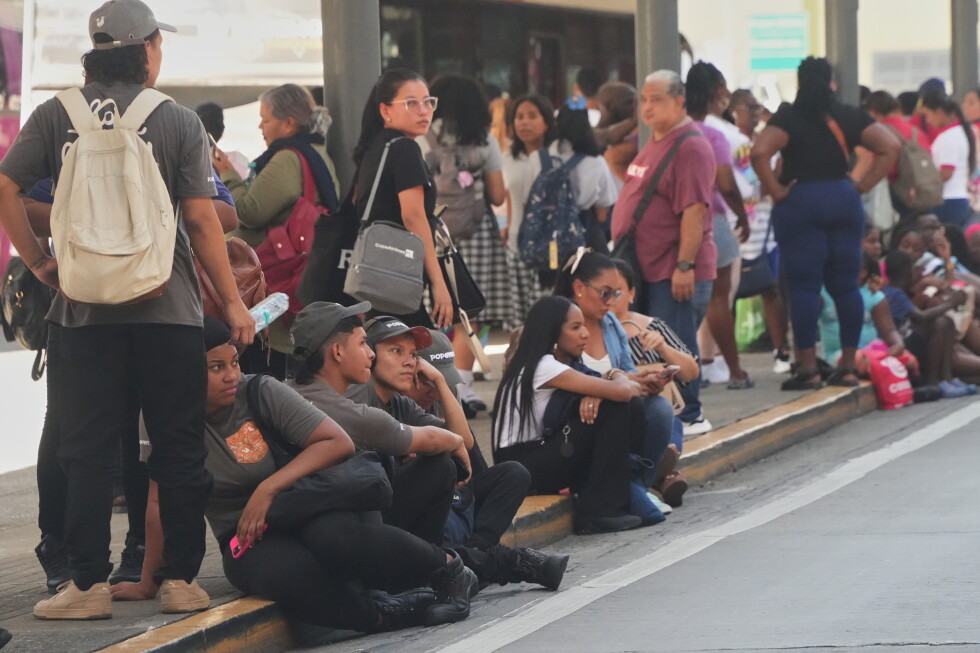
In Panama City, the capital, visibly shaken residents gathered outside, waiting for news. "We felt it very strongly. It knocked things over in the kitchen, but we're okay, though we're very scared," Rosendo Domínguez, 60, who is from Herrera province, told The Associated Press by phone. "Everyone is outside, scared."

Despite the strength of the quakes, Panamanian President José Raúl Mulino said authorities had not documented anyone killed or injured as of Friday evening, though he cautioned that could change in the coming hours or days. "Nobody was ready, and no one is ever ready for this type of disaster," Mulino said, after calling for calm earlier in the day.

Images of crumbling buildings and deep fissures slicing through roads added to fears across a region already battered by a series of devastating earthquakes in recent months. Two back-to-back 7.2 and 7.5 magnitude earthquakes struck Venezuela's La Guaira state in June, killing more than 6,500 people and leaving 17,000 homeless. In August, a 7.4 magnitude earthquake in Colombia killed at least 289 people.

Omar Smith of the National Civil Protection Service said on the Telemetro Reporta news channel that damage was concentrated in the central provinces of Veraguas, Herrera, and Los Santos. He said there were no reports of damage in the capital, which is known for its hundreds of skyscrapers. Smith said several injuries had been reported, including one person struck by debris from a partially collapsed structure in the city of Penonomé, around 93 miles (150 km) from the capital. He confirmed a partial collapse and cracks at the St. John the Baptist Cathedral in the district's main square, as well as damage to the governor's office building and the Dos Continentes hotel. Local news outlets also reported that the Church of San Atanasio, a colonial-style Catholic church in Panama's Los Santos province, had collapsed. The church was declared a National Historic Heritage Site in 1938. Elsewhere, including in Veraguas province, large fissures ran along roadways.

Tocumen International Airport in Panama City, one of the region's busiest airports with more than 20 million passengers in 2025, temporarily suspended operations after the first quake but said Friday afternoon that it was reopening. The Panama Canal Authority said operations were continuing normally along the global trade route. It said its priority was the safety of employees, vessels, and crews, and that specialized technical teams were inspecting facilities for possible damage.

The last major earthquake to cause widespread damage in Panama struck in 1991. A magnitude 7.4 quake, centered in nearby Costa Rica, killed 23 people, injured 559, and left thousands homeless in the border Bocas del Toro region. Earthquakes are common, especially along Panama's border with Costa Rica and its Pacific coast, because of the interaction of several tectonic plates, including the Cocos, Nazca, and Caribbean plates. Panama lies along the "Ring of Fire," a 40,000-kilometer (25,000-mile) arc of volcanoes and fault lines around the Pacific Basin, where most of the world's earthquakes occur.

The National Weather Service lifted a tsunami warning issued shortly after the quakes on Friday for the coasts of Panama, Colombia, Ecuador, Nicaragua, and Guatemala. Alerts issued by El Salvador and Chile for Easter Island were also lifted. Néstor Luque, director of the Geosciences Institute at the University of Panama, said waves between 3 to 10 feet (1 and 3 meters) were expected around Isla Cañas and the southern coast of Los Santos province, but major waves weren't expected beyond that. Seawater had already reached homes near the coast on Isla Cañas, he said.

Messages of support and offers of assistance flooded in from across the region on Friday afternoon. Mulino thanked fellow Latin American leaders for their support, saying he had spoken with the presidents of Chile, Uruguay, and Guatemala, among others. U.S. Secretary of State Marco Rubio said he was closely watching the situation in Panama and "rapidly mobilizing resources and personnel to assist" at the request of Panama's government. "The United States stands with the people of Panama," Rubio wrote on X. Colombian President Abelardo de la Espriella, whose country was recently hit by earthquakes, expressed his solidarity with the Panamanian people and their government during what he called "difficult times." Acting Venezuelan President Delcy Rodríguez, Costa Rican President Laura Fernández Delgado, Ecuadorian President Daniel Noboa, and Peru's government also offered assistance.

Think Critically
The article mentions that Panama had not documented any deaths or injuries from these earthquakes, while recent quakes in Venezuela and Colombia were far deadlier. What factors might explain this difference? Use evidence from the article to support your opinion.
See It Differently
Imagine you are a resident of Panama City who felt the earthquake. How might your reaction differ from someone living in a remote area near the epicenter? Consider factors like building safety, access to information, and government response.
Write About It
In one paragraph, explain why Panama is prone to earthquakes, using details from the article about tectonic plates and the Ring of Fire. Then suggest one way the country could prepare for future quakes.
Our reporters and editors evaluated dozens of climate tech companies from around the world for potential impact, scalability, and signs of commercial progress.

How Our Climate Team Picked 10 Companies to Watch

Every year, MIT Technology Review puts together a list of climate tech companies worth watching. This year, choosing just ten was harder than ever. 2026 is on track to be one of the hottest years ever recorded. The effects of climate change are already here: wildfires, floods, and other disasters are killing thousands of people and costing billions of dollars. At the same time, political changes and international conflicts have slowed progress, especially in the United States.

Technology alone can't solve climate change. But we believe new ideas can help us make real progress and improve lives around the world. So we look for companies developing technologies that can help us face the climate crisis. Some are working to cut the greenhouse gas emissions that cause climate change. Others are trying to reduce the dangers that communities face from extreme heat, drought, and other effects of a warming planet. We focus on companies that have already shown some success, whether through research, raising money, or actually using their technology.

To build our list, we start by asking our reporters and editors for suggestions. We also reach out to experts, academics, researchers, investors, and analysts. Once we have a group of nominees, we dig into each one. We read studies, reports, and patents to check both the technology and the business. We judge each company on its own, but also on how it fits into the list as a whole. We want the final list to cover different industries and include companies from around the world at different stages of development. We also try to balance companies we've highlighted before with new names. Finally, we look at the biggest trends and events of the year and find nominees that reflect them.

This year, one big story is the rising demand for electricity, driven partly by AI data centers. Energy storage is a key part of that puzzle because it can smooth out changes in electricity supply as grids use more renewable power. We've included several energy storage companies. Energy Dome is building long-duration storage systems that use compressed carbon dioxide. Moment Energy, a Canadian company, repurposes electric vehicle batteries for grid storage. And Form Energy, which we also included in 2024, makes iron-based batteries that can store energy for many days.

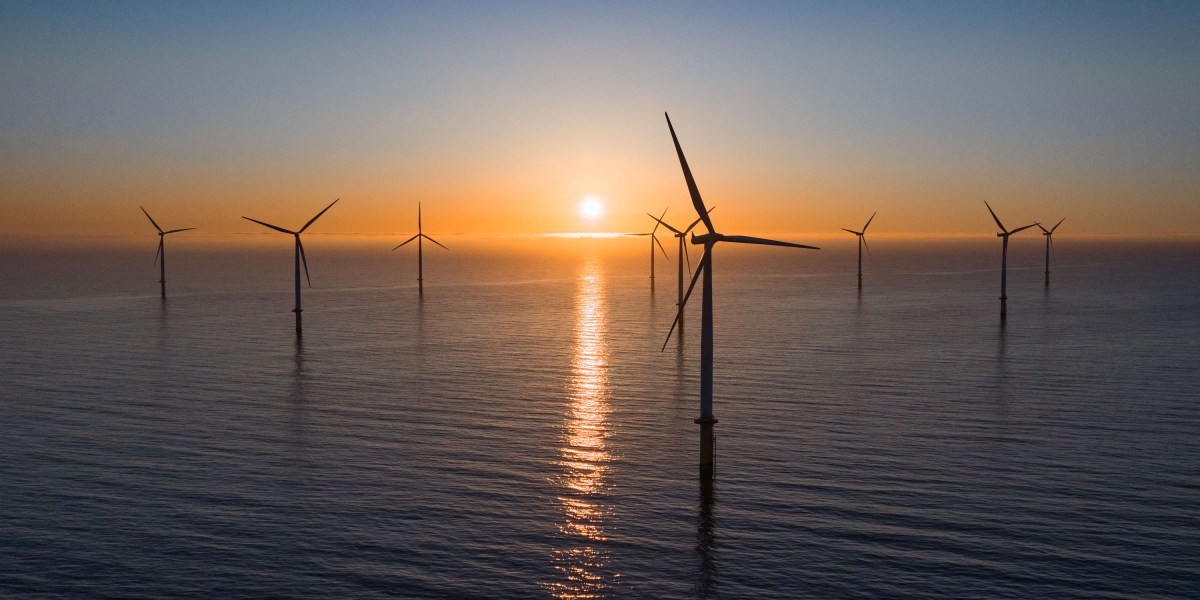
Because the US has weakened its federal regulations and cut government incentives for innovation, it is no longer a leader in climate tech. Like last year, most companies on the 2026 list are based outside the US. China is a hotspot for energy and climate innovation. This year's list includes two Chinese companies: WeLion, which is building semi-solid-state batteries for electric vehicles, and Envision Energy, which is installing large amounts of wind power and energy storage in China and around the world.

The list covers a wide range of technologies, from mobile flood barriers to next-generation nuclear reactors. Some of these companies you might recognize from our past coverage. Others are just emerging and may be less well known. We believe we've put together a list of businesses that are rising to the challenge of this moment. Political will has weakened even as the damage from climate change grows. By helping us make progress on the climate crisis in such difficult times, these companies point to a better way forward.

Think Critically
The article says technology alone can't solve climate change, but it can help. Do you agree? Use evidence from the article to support your opinion.
See It Differently
Imagine you are a government leader in a country that has cut climate incentives. How would you explain that decision to a young person worried about climate change?
Write About It
In one paragraph, describe a climate tech company you would like to see on next year's list. Explain what problem it solves and why it matters.
The Chinese company is making liquid-solid hybrid cells to pack more power into products like electric cars and cargo ships.

WeLion New Energy and Its Semi-Solid-State Batteries

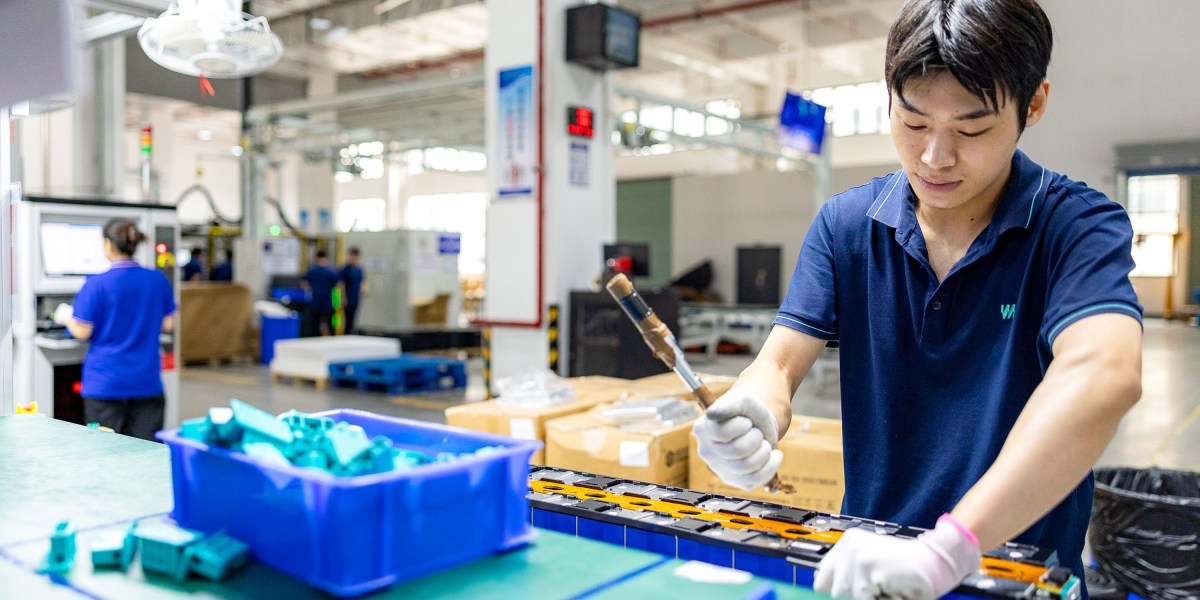
WeLion New Energy is a Chinese company on a mission to build safer, more powerful batteries. Its semi-solid-state cells could make electric cars, boats, and drones run longer and safer than today's lithium-ion batteries.

From the electric vehicles that carry people to work to the cargo ships that transport goods across oceans, more and more machines are powered by batteries. Lithium-ion batteries are the standard for phones and cars today. But as demand for batteries grows, so does the need for cells that can store more energy on a single charge. There's also a safety issue: in lithium-based batteries, the electrolyte—the substance that allows ions to move—is a flammable liquid that can catch fire.

Several companies, including WeLion, are working on solid-state batteries, which use a solid electrolyte instead of a liquid one. This could boost energy density (the amount of energy stored per kilogram) and improve safety. However, fully solid-state cells are extremely hard to manufacture. So WeLion is focusing on semi-solid-state cells, which have an electrolyte that is part liquid and part solid.

They've made steady progress. In 2023, WeLion released a battery pack with Shanghai-based EV maker Nio, known for its battery-swapping technology. That pack had an energy density of 360 watt-hours per kilogram (Wh/kg)—much higher than the 200 Wh/kg average for today's lithium-ion packs. It gave a range of over 1,000 kilometers (621 miles). However, only about 200 packs were made because of high production costs. WeLion says they are still being used by Nio.

WeLion has also built batteries for cargo ships and ferries through a subsidiary. And it's developing even more powerful batteries. In 2025, WeLion's engineers tested a semi-solid-state battery that reached an impressive 824 Wh/kg—more than three times the energy density of a standard lithium-ion battery available today.

Key facts: Industry: Energy storage Founded: 2016 Headquarters: Beijing, China Notable fact: WeLion's cofounders include Chen Liquan, a scientist at the Chinese Academy of Sciences who led the development of China's first all-solid-state battery in 1988.

Potential for impact

China emits more carbon dioxide than any other country, and its transportation sector accounts for about 10% of that total. Scaling up production of safer, higher-capacity batteries could help move more vehicles away from fossil fuels. Batteries that power electric ships could be especially helpful. Carbon dioxide emissions from vessels that move goods along China's lakes, canals, and rivers are projected to grow by about 25% this decade alone, reaching 18.7 million metric tons by 2030.

Caveats

One big challenge WeLion faces is scaling up production of its semi-solid-state batteries and competing on cost in a crowded battery market. WeLion says its semi-solid-state batteries are more expensive than conventional lithium-ion batteries made by larger Chinese battery companies like CATL. And while lab tests showing high energy density are impressive, it can be hard to translate lab results into real-world performance. The company declined to give more details about its 2025 prototype test results, saying it's far from commercialization. Key details remain unclear, including how many times the cell can be charged and discharged, and how its capacity degrades over its lifetime.

Next steps

WeLion plans to bring a new semi-solid-state battery for drones to market with an energy density of 410 Wh/kg by the end of this year. It also intends to introduce its first all-solid-state battery for cars in 2027, expected to have an energy density of 400 Wh/kg. Two inland cargo ships powered by WeLion's batteries are expected to launch in October 2026 in Huzhou, a city in eastern China. Each ship's battery pack will be able to carry nearly 4,000 kilowatt-hours of electricity—enough to sail up to 250 kilometers (155 miles), according to the company. Today, WeLion has an annual manufacturing capacity of 11 gigawatt-hours (GWh) spread across four production bases in China. Two additional plants with a combined yearly capacity of 18 GWh are under construction.

Think Critically
Do you think the benefits of semi-solid-state batteries (like higher energy density and improved safety) outweigh the challenges of high cost and manufacturing difficulty? Use evidence from the article to support your opinion.
See It Differently
Imagine you are a battery engineer at a competing company like CATL. How would you view WeLion's progress and claims? What concerns or advantages might you see?
Write About It
In one paragraph, explain how semi-solid-state batteries could help reduce carbon emissions from transportation in China. Use details from the article.
✻ ✻ ✻
📝 Read & Respond
Read. Think. Write.
1 Comprehension Check
1. Based on "South African-born jurist Navi Pillay wins Nobel Peace Prize for her work in international justice", what is the main idea of this article? Write one sentence.
2. Based on "Powerful Earthquakes Shake Panama, Triggering Evacuations and Regional Response", what is the main idea of this article? Write one sentence.
3. Based on "How Our Climate Team Picked 10 Companies to Watch", what is the main idea of this article? Write one sentence.
4. Based on "WeLion New Energy and Its Semi-Solid-State Batteries", what is the main idea of this article? Write one sentence.
5. What evidence does the article provide to support its main argument?
2 Vocab Builder
WordDefinition / Sentence
...
Write a word from this week's reading that was new to you:
...
Use it in a sentence:
...
Write another word and its definition:
...
Use it in a sentence:
3 Critical Thinking
Do you agree with the Nobel Committee's decision to award the Peace Prize to Navi Pillay? Use evidence from the article to support your opinion.
4 See It Differently
How might someone who disagrees with the U.N. commission's findings on Gaza view this award? What arguments might they make?
5 Quick Write
In one paragraph, explain why the rule of law is important for achieving peace, using examples from the article.