South African-born jurist Navi Pillay wins Nobel Peace Prize for her work in international justice
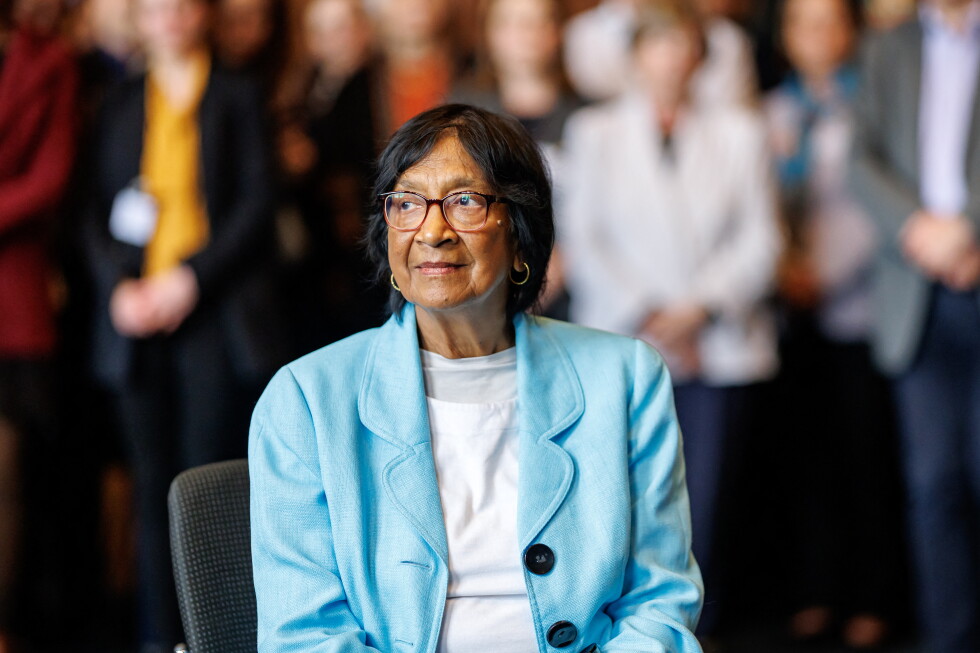
Navi Pillay, a South African-born lawyer and former United Nations human rights chief, has won the Nobel Peace Prize. The Norwegian Nobel Committee announced the award on Friday, recognizing her efforts to promote peace and international law. At 85 years old, Pillay has had a long career, from defending Nelson Mandela when he was in prison to leading a U.N. panel that found Israel committed genocide in Gaza.
Pillay received the news while attending the Nuremberg Forum in Germany, a gathering to discuss international law. Nuremberg is where Nazi war criminals were tried after World War II, helping to establish the foundations of modern international law. She was in the same room where those trials took place when the prize was announced.
The award is likely to be seen as a strong criticism of U.S. President Donald Trump and Israeli Prime Minister Benjamin Netanyahu. Both leaders have rejected the findings of the U.N. commission Pillay led on Gaza. They have also been highly critical of the International Court of Justice (ICJ) and the International Criminal Court (ICC), where Pillay has worked. Just hours after the Nobel announcement, the Trump administration imposed new sanctions on the ICC, continuing its campaign to dismantle the tribunal over investigations into the United States and its allies, including Israel.
Jørgen Watne Frydnes, chair of the Norwegian Nobel Committee, said the prize, now in its 125th year, aims to remind the world that the rule of law, both national and international, is the foundation of a peaceful system for resolving conflicts without violence. "Peace requires justice," he said. He added that judges "guard the thin red line between order and chaos" and that the world needs jurists with courage, vision, and determination—qualities he said Pillay has shown throughout her career.
Pillay has worked on some of the world's most painful and sensitive legal issues, including in apartheid-era South Africa and in Israel. She said that efforts to weaken international criminal justice "endanger the progress painstakingly made since Nuremberg, and they risk returning us to a world in which power, rather than law, determines whose suffering matters."
Pillay chaired the U.N. Commission of Inquiry on the Occupied Palestinian Territory and Israel, created by the U.N.-backed Human Rights Council. A year ago, the commission concluded that Israel was responsible for genocide in Gaza, with the specific intent to destroy Palestinians there. The commission also found that the Israeli president, prime minister, and former defense minister "have incited the commission of genocide." Israel has refused to cooperate with the commission since it was established in 2021 and strongly denies the accusations. On Friday, Pillay said of Gaza, "What's happening there is genocide," which drew applause.
Her win has been praised by many, but Israel criticized the selection. The prize highlights the ongoing debate over international justice and the role of international courts in holding leaders accountable.